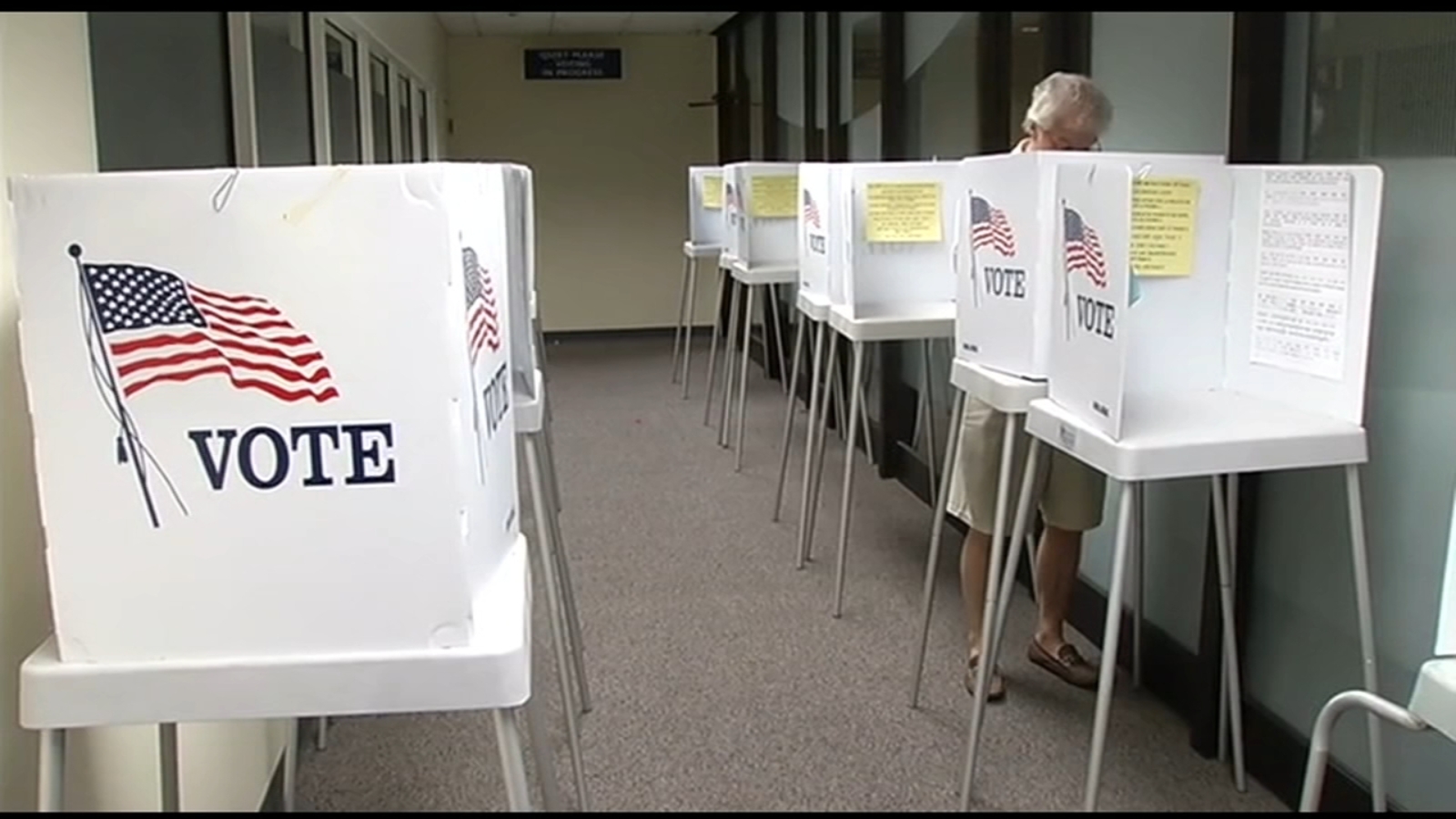
The California governor's race came within one man's scandal of producing a November ballot with no Democrat on it — and that near-miss is forcing a hard reckoning with the state's 16-year experiment in open primaries.
California's top-two primary system, which voters approved in 2010 and which has shaped every statewide race since 2012, has always carried a design flaw: there's no party guardrail. In a crowded field, the same party can take both November slots, shutting millions of voters out of a meaningful general-election choice. This year's governor's race brought that scenario closer than it has ever come — and the thing that averted it wasn't the system working as intended. It was Eric Swalwell's exit amid sexual assault allegations.
When California voters approved Proposition 14 in 2010, the pitch was clean: replace partisan primaries with a single unified ballot, let the top two vote-getters advance to November regardless of party, and let moderation win. The system took effect in 2012, and its architects promised less gridlock, more competitive general elections, and candidates who'd actually have to appeal to voters beyond their base.
Sixteen years in, the 2026 governor's race has become the stress test no one wanted.
With more than a dozen candidates crowding the Democratic side of the field, polls showed a credible path for two Republicans — former Fox News host Steve Hilton chief among them — to grab both top-two slots and erase Democrats from November's ballot entirely. Democratic leaders didn't respond with confidence in the system. They responded with public pressure campaigns, urging lower-polling candidates to quit. Xavier Becerra — now the Democratic nominee — was himself among those told to step aside at one point.
What finally cleared the logjam was Swalwell's withdrawal in April following sexual assault allegations from multiple women, including a former staffer. His exit consolidated the Democratic vote around Becerra, and the two-Republican nightmare scenario dissolved. The top-two system didn't deliver that outcome. A personal scandal did.
That distinction has not been lost on the people who study California elections for a living.
"I think Democrats and Republicans should be thinking about changing this top-two primary system so that we don't have the potential for millions of Californians to be facing a general election without a candidate from their party on the ballot," Paul Mitchell, vice president of Political Data, told ABC7 News.
Hilton — one of two Republicans who did advance, and who will face Becerra in November — agrees the system should go, though for different reasons. "We need to end this top-two system and move back to something that will guarantee voters have a real choice — that's what democracy is all about," he told ABC7.
Not everyone is ready to scrap it. Political analyst Dan Schnur argues the reform has quietly delivered, just not where most people look. "If you look at the California State Legislature, while it's dominated by Democrats, what we've seen over the years is two separate Democratic caucuses emerge: one that is much more traditionally progressive" and another more willing to work with the business community, Schnur told ABC7. In his view, the top-two's moderation dividend has shown up in Sacramento even when it hasn't on the statewide ballot.
A June 4 analysis by CalMatters reached a more skeptical verdict, noting that despite the system's founding promise, most races still resolve in a conventional Democrat-versus-Republican match-up — raising the question of whether the reform has ever delivered the competitive, cross-partisan races it was supposed to produce.
No ballot measure or legislative proposal has yet emerged to reform or repeal Prop 14. But with a Becerra-Hilton general election now locked in, California is heading into the fall with a debate about its primary rules that is more live than it has been in years — and a growing bipartisan consensus that the system, as designed, left democracy in 2026 a little too dependent on luck.
The Discussion
Loading…