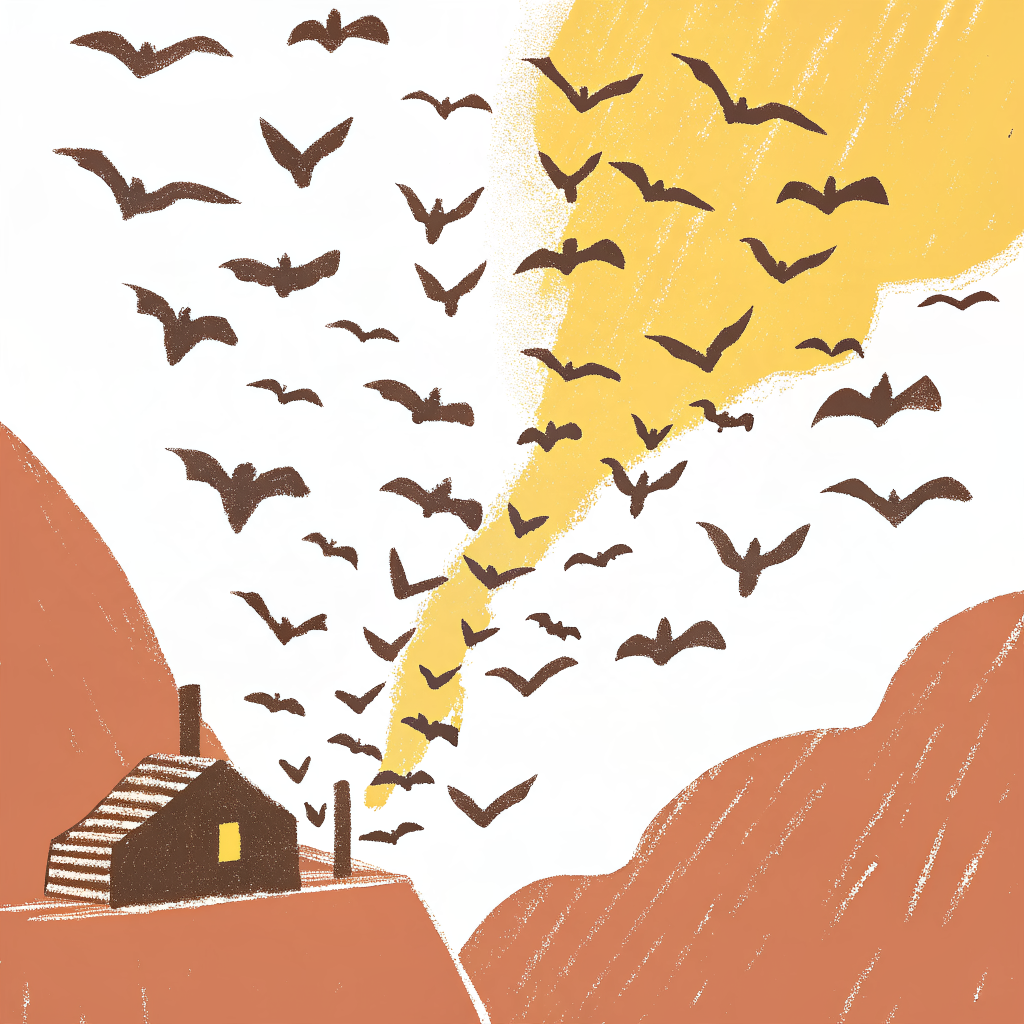
If watching a quarter-million bats spiral into the dusk was on your summer list, you're too late for this year: the Yolo Basin Foundation's guided "Bat Talk & Tour" outings to the Yolo Causeway colony — California's largest urban roost of Mexican free-tailed bats — are completely sold out for 2026.
Roughly 75 minutes from the Bay Area, an estimated 250,000 Mexican free-tailed bats spend the summer beneath the causeway raising pups and, each evening from June through August, pour out in a swirling ribbon locals call a "bat-nado." The spectacle has become one of Northern California's most accessible wildlife draws — and a case study in why a maligned animal is worth protecting, as the state's bat populations face habitat loss, pesticides, white-nose syndrome and climate change.
The colony roosts beneath the causeway that carries Interstate 80 traffic between the Bay and Sacramento, and it is one of the largest urban gatherings of Mexican free-tailed bats in the country, KQED reported on July 31.
The Yolo Basin Foundation, a Davis-based nonprofit that has stewarded the 16,600-acre Yolo Bypass Wildlife Area since 1990, runs the only guided tours out to the roost. This year the demand outran the supply. "The Bat Talk and Tours have completely sold out for summer 2026," the foundation says on its website, which now points would-be visitors to a waitlist and early-bird access for members. A new all-outdoor pilot version of the tour, offered on evenings in July and August under the foundation's new Flyway Pavilion, also sold out.
For those who did get tickets, the program runs $17 for adults, $5 for youth ages 6 to 17, and is free for children 5 and under — an educational talk with live "ambassador" bats, a caravan tour of the wetlands and rice fields, and then the flyout itself.
Right now the colony is mostly mothers and their pups. Females give birth in early summer and stay with their young for about two months until the pups can fly, according to Corky Quirk, the foundation's bat program coordinator, who has led the tours since 2004. "I have always loved flight, and I've always loved the underdog, and a bat is sort of the mix of the two, right?" Quirk told KQED. "And they are out there doing ecosystem services that are underappreciated."
Those services have a dollar value to the region's farmers. The Yolo Bypass doubles as flood control for Sacramento and as working rice land, and the bats function as free pest control, devouring the moths whose larvae — armyworms — chew through crops. Charlie Russell, a decadeslong volunteer with the tours, told KQED that one rice grower never sprays insecticide on the field nearest the causeway because "he's got a quarter of a million bats taking care of the moths." Added Russell: "They're incredibly important to our environment."
The animals are also built for the job. Mexican free-tailed bats (Tadarida brasiliensis) forage on moths at altitudes reaching thousands of feet, and Russell told KQED they are the world's fastest mammal: "They've been clocked up to 98 mph, so that's faster than your cheetahs." They also eat mosquitoes, flying ants, weevils and beetles — quiet ecological labor that largely vanishes when a colony does.
The bats need the help. Colonies that once numbered in the millions have been sharply reduced by human disturbance, cave destruction and deliberate eradication, the foundation says, and the species now contends with habitat loss, pesticides, climate change and white-nose syndrome, the fungal disease that has killed millions of North American bats. Quirk argues the animals' fate is bound up in their image. "Bats are pretty misunderstood, and often when people learn more about them, they begin to appreciate them," she told KQED. "And we protect what we care about."
If you missed 2026, the move is the foundation's newsletter and member waitlist, which unlock early access when next summer's tickets go on sale. The bat-nado will be back in June.
The Discussion
Loading…