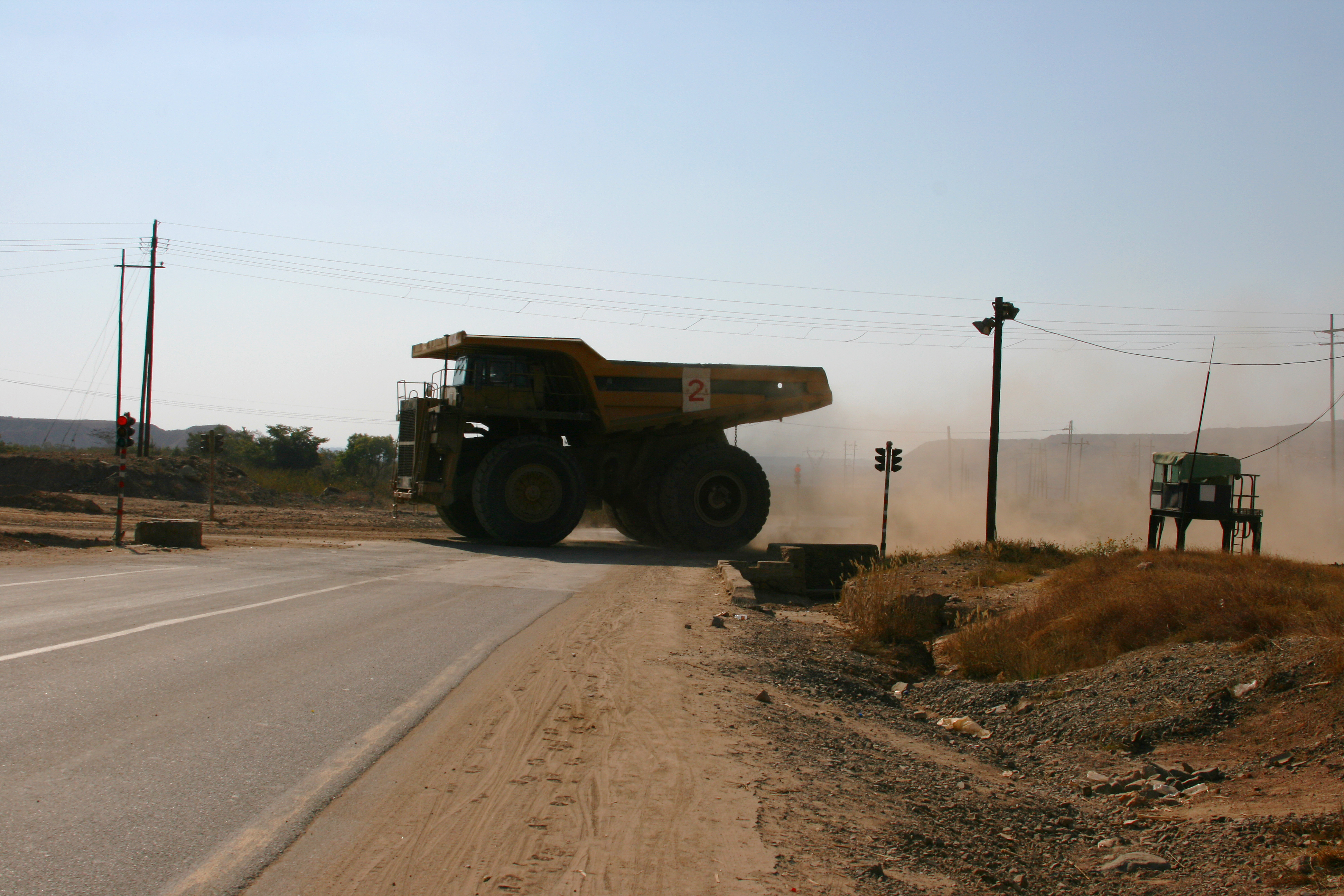
KoBold Metals, headquartered above a Berkeley tattoo parlor and backed by Bezos, Gates, Altman and Andreessen, raised at least $163M in its most recent disclosed round and claims to have found the largest copper deposit in a century. Mining experts say the harder question — whether they can actually get the ore out — is being glossed over.
KoBold Metals, the AI-powered mineral exploration startup operating out of Suite 210 at 2021 Shattuck Avenue in Berkeley — two floors above a tattoo parlor and a Korean fast food shop — filed a Form D with the SEC on November 14, 2025, disclosing a $200 million offering with roughly $163.4 million sold as of that date across 24 investors (accession 0001140361-25-042218). That round, the company's fourth or fifth disclosed exempt offering on EDGAR since 2022, helped push KoBold's valuation to approximately $3 billion, making it the second-most valuable tech company in Berkeley after quantum computing firm Rigetti, according to Berkeleyside.
The company, founded in Alabama in 2018 by CEO Kurt Zenz House and Josh Goldman and relocated to Berkeley in 2024, has assembled a cap table that reads like a tech-billionaire social graph: Jeff Bezos, Bill Gates, Mark Zuckerberg, Sam Altman, Marc Andreessen, Michael Bloomberg and Jack Ma are among its investors. The investor list isn't incidental to the thesis — Altman's OpenAI is part of the $500 billion Stargate data-center consortium, and hyperscale data centers require copper at industrial scale. KoBold's backers are, in effect, betting on their own supply chain.
The flagship play is a copper deposit in Zambia's Copperbelt region, where KoBold broke ground in April 2026 on what the company has described as one of the largest copper finds in a century. KoBold's AI approach — feeding decades of geological survey data into what it calls the "KoBold Hyperpod," a high-resolution magnetic-field camera — is the product that sold those investors. "No one else in the world is doing anything like it," Altman wrote in a testimonial on the company's website, a quote that landed in Berkeleyside's detailed profile published Monday.
The problem: KoBold has not released an independent assessment of the Zambia deposit. That's the standard by which the mining industry evaluates resource claims, and without it, the "largest in a century" characterization cannot be externally verified. Mining consultant Mothusi Pahl, who spent decades on power projects for African mining operations, told Berkeleyside he doesn't question whether the copper exists — the deposit sits adjacent to an established copper lode. What he questions is the extraction math. The ore lies approximately a mile underground in one of Zambia's wetter regions, and "the complex cost and energy requirements to get that copper out of the ground, and the political and economic risk associated with that work, are where the complexity is, and that's the part being glossed over."
KoBold has received a tailwind from the Trump administration, which has pursued critical-mineral diplomacy in Greenland, the Democratic Republic of Congo, and Zambia — markets where KoBold operates across 60 projects in 14 countries. That political support can open doors; it doesn't make the ore cheaper to extract.
A secondary SEC entity, "Kobold Metals Jan 2025 a Series of CGF2021 LLC," filed its own Form D in August 2025, suggesting at least one investor is accessing the company through a fund-of-funds or special-purpose vehicle structure — a standard arrangement for large family offices or institutional co-investors, but one that adds another layer between the company's disclosed financials and its actual capital structure.
What still isn't settled: KoBold remains private and has disclosed no revenue figures. The $163.4M raised in the most recent round had $36.6M of the offering still unsold as of November 2025; the January 2026 amendment may have updated that figure, but the amended document's raise total isn't publicly parsed in the XML. An independent geological and feasibility report on the Zambia site — the document that would let anyone outside the boardroom evaluate the "largest deposit in a century" claim — has not been filed. That's the filing to watch.
The Discussion
Loading…