Glen Galaich, president of San Francisco's Stupski Foundation, has published a book arguing that America's wealthy donors use tax-subsidized philanthropic vehicles to exercise private control over what are effectively public dollars — and that the system is rotting democracy from the inside.
In Control: Why Big Giving Falls Short, Galaich — who came up at Human Rights Watch, helped found the Global Philanthropy Forum, and spent years advising wealthy donors on how to give — bites the hand that feeds him. American foundations held $1.6 trillion in assets as of 2024, with another $18 trillion projected to flow into philanthropy over the next 25 years, according to figures Galaich cites in his interview with Mission Local. Almost none of it is required to move: federal law mandates only a 5 percent annual disbursement. The rest sits under private management, tax-shielded, while donors pick winners according to their own priorities.
Glen Galaich has spent his career inside American philanthropy — at Human Rights Watch, helping found the Global Philanthropy Forum, then running the Philanthropy Workshop, a network that counseled wealthy donors on how to give. That background makes his new book a notable act of institutional self-criticism.
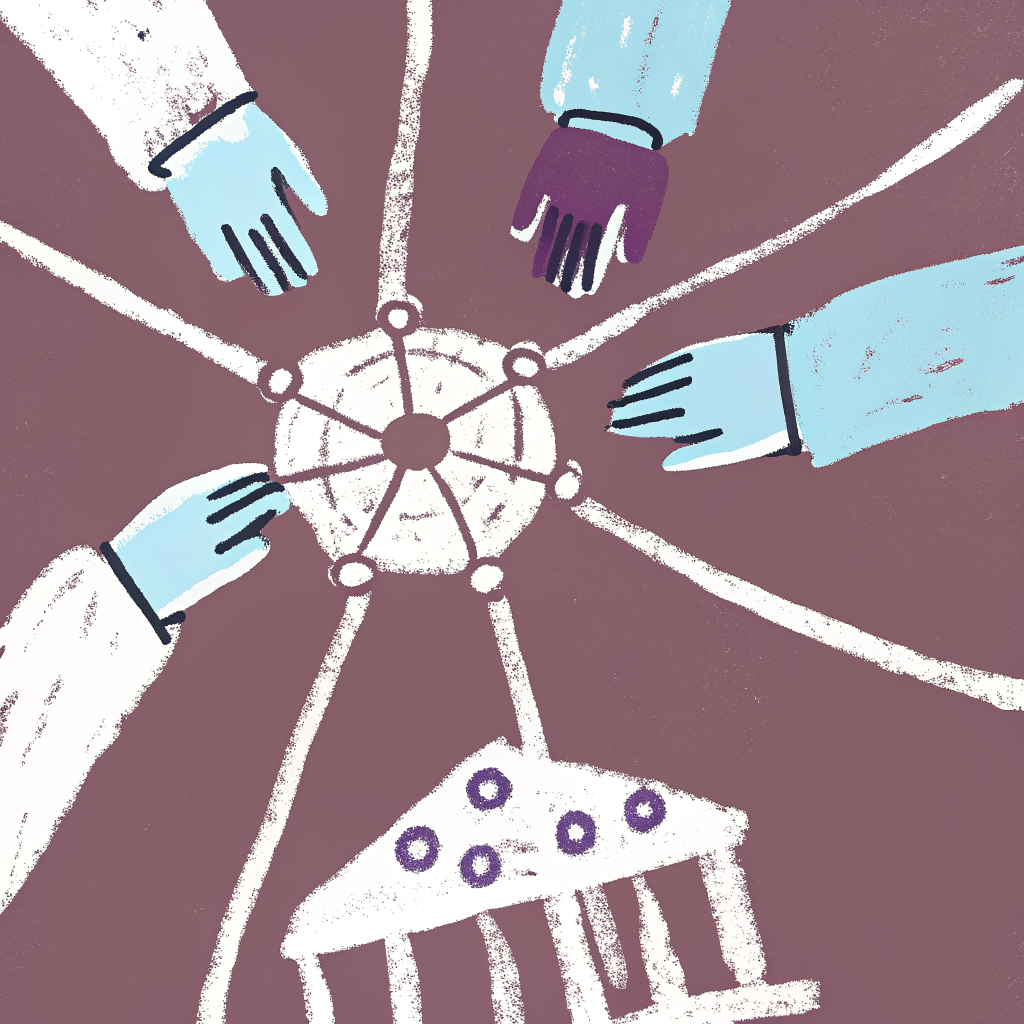
In Control: Why Big Giving Falls Short, Galaich argues that modern philanthropy has become a tax-sheltered vehicle for private power, not genuine public benefit. Wealthy donors, he told Mission Local in an April interview, "kind of launder" their charitable funds: they receive a public tax subsidy, park the money in donor-advised funds or foundations, and then exercise near-total control over how it gets spent — if it gets spent at all.
The structural problem is federal. Foundations are required to disburse only 5 percent of their assets per year. The rest accumulates. American foundations held $1.6 trillion in assets as of 2024, according to the Nonprofit Times, and wealth-management firm Cerulli estimates another $18 trillion will transfer into philanthropic vehicles over the next 25 years.
"These tax vehicles, which we call foundations — that's all they are, tax vehicles — are designed to house assets," Galaich told Mission Local. "The donor is giving money and the donor is getting a subsidy from the public. Therefore these dollars really are public dollars. But the way the mindset operates, the people who work in those foundations approach it in a private way, and therefore they want to give the money in ways that are beneficial to them, versus doing what the community needs."
He calls this the "mindset of control" — wealthy donors importing executive habits from their businesses into charity, selecting grantees the way they'd manage a portfolio. The framework, Galaich argues, goes back to Andrew Carnegie, who hardwired a founding arrogance into American philanthropy: the assumption that economic success confers the wisdom to remake society for everyone else. "He had this patronizing view on other people in society," Galaich told Mission Local. "That in many ways is the challenge we're dealing with."
These tax vehicles, which we call foundations — that's all they are, tax vehicles — are designed to house assets," Galaich told Mission Local.
To illustrate the scale of the stakes, Galaich offered Mission Local a comparison: in the 2027–2028 cycle, foundation donors will disburse roughly $200 billion in charitable funds — more than thirteen times the projected cost of that same cycle's entire federal election. A lot of social architecture, designed by a very small number of people.
What sharpens the critique is who is making it. As president of the Stupski Foundation — a San Francisco organization committed to disbursing its full $581 million endowment by 2029 — Galaich runs what he holds up as a counter-model. Stupski is a "spend-down" foundation: it will give away everything it has, on a fixed timeline, and then cease to exist. The mission's success, as Mission Local noted (external source, opens in a new tab), will eventually cost Galaich his own job.
In San Francisco, where the same donor class simultaneously funds ballot measures, backs supervisor candidates, and holds enormous philanthropic portfolios, Galaich's argument isn't abstract. It's a description of the city's existing power structure — and a challenge to whether any of it is actually accountable to the people it claims to serve.
The Discussion
Sign in to join the discussion.
Loading…