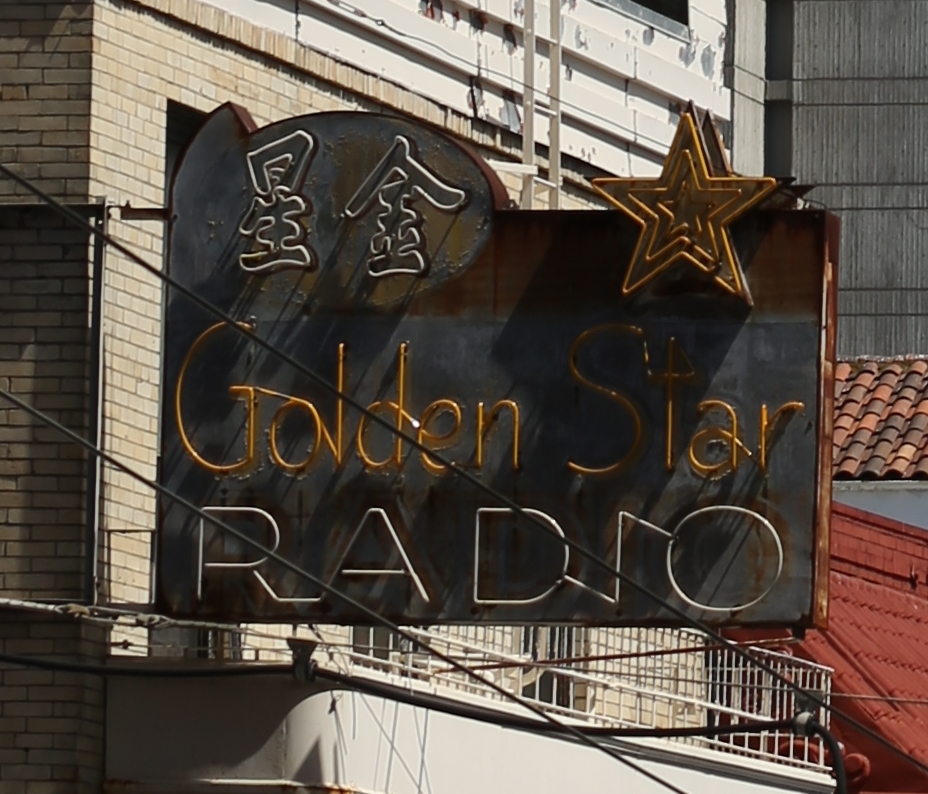
After decades in disrepair, the iconic Golden Star Radio neon sign at 846 Clay Street in San Francisco's Chinatown was relit this week after a community-funded, $65,000+ restoration, bringing back a vibrant piece of the neighborhood's rich cultural and broadcast history.
On the 800 block of Clay Street, a luminous blue-and-red phoenix has risen, literally. The iconic neon sign for Golden Star Radio, long a muted relic on the facade of 846 Clay Street, was officially relit this week in San Francisco's Chinatown, marking the return of a beacon that once announced a vibrant hub of Chinese-language broadcasting and community life.
The dedication of the restored sign, observed on July 10th, was more than just flipping a switch; it was the culmination of a dedicated community effort to reignite a piece of San Francisco's soul. For decades, the sign had been a faded ghost, its once proud glow dimming into disrepair. Now, the bold characters "Golden Star Radio" again illuminate Spofford Alley, a testament to the enduring legacy of immigrants who built bridges through airwaves.
Golden Star Radio Company was founded in 1939 by Tommy and May Chin Tong, operating out of the basement of 846 Clay Street. What began as a retail shop selling radios and appliances upstairs evolved into a vital cultural institution, a recording studio and broadcasting hub that produced "The Chinese Hour"—a pioneering Chinese-language radio program. Tommy Tong, an FCC-licensed radiotelegraph operator since 1934, handled the technical and business operations, while May Chin Tong became the voice that resonated with Chinese-speaking communities across the Bay Area. The building, a family legacy, remains under the ownership of the Ronald G. Tong Revocable Trust, ensuring continuity in the story of 846 Clay Street.
The extensive restoration project was spearheaded by the California Historical Radio Society (CHRS), which raised over $65,000 to bring the sign back to life. Jim Rizzo of Neon Works led the intricate work, ably supported by painter Manny Fabregas and team members Adam Taylor and Nate Macey. Their meticulous efforts have returned the sign to its former glory, a vibrant blue and red that cuts through the San Francisco fog. District 3 Supervisor Danny Sauter, who participated in the relighting ceremony, underscored the sign's importance, stating, "There are families who passed down this memory, who know about this. But then there are others who don't, who need to learn about this. And it's a physical sign. It's a physical representation to tell that story."
As walkers turn into Spofford Alley today, they'll be greeted not by a relic, but by a shining reminder of Chinatown's rich broadcast history, a physical representation of the cultural threads that continue to weave through the city's fabric.
The Discussion
Sign in to join the discussion.
Loading…