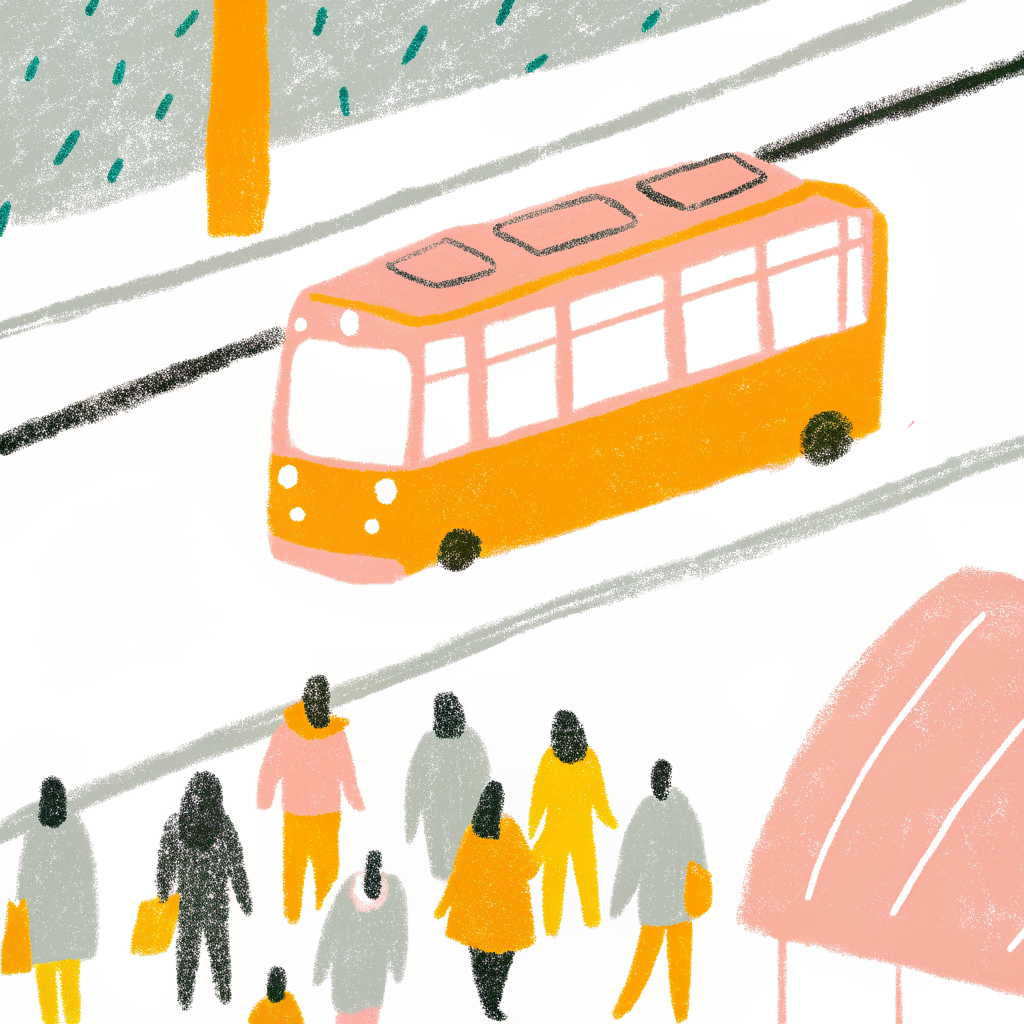
San Francisco's plan to move 75,000 Outside Lands fans a day without a July 4th–style gridlock mostly held — but the SFMTA's own decision to funnel departing crowds through a single choke point at 30th Avenue and Fulton, loading one bus at a time, left riders stranded for nearly 40 minutes as the park emptied.
A month after Waymos and holiday traffic snarled the city on the Fourth of July, SFMTA managed the sold-out 18th Outside Lands with extra Muni, rideshare and autonomous-vehicle pickup restrictions, and a "don't drive" message. The topline worked — no repeat of July 4th's chaos — but firsthand accounts from the festival's final nights show the failure point wasn't the cars the city restricted, it was the buses it ran, and how it loaded them. The gap between a plan that reads well on paper and one that works at the curb at 10 p.m. is where this weekend's transit story actually lived.
For the 18th year, Outside Lands sold out Golden Gate Park — capacity was pegged at 75,000 people a day across the three-day run, with tickets gone faster than in recent memory, SFist reported. And for the first time in a while, the story going in wasn't the festival but the city around it: the plan arrived a month after Waymos and holiday crowds choked San Francisco streets on the Fourth of July, when driverless cars were caught in late-night traffic across the city, NBC Bay Area reported.
So the SFMTA advised fans not to drive, ran extra Muni before and after the sets, and pushed rideshares and autonomous vehicles blocks away from the entrances — Uber and Lyft no closer than Balboa Street, Waymo held back to Geary, as NBC Bay Area's Christie Smith reported. By the coarse measure of avoiding a July 4th repeat, it worked. "I think it gets better and more efficient every year," a neighbor identified as Denise told NBC Bay Area. "It seems very organized."
The trouble showed up where the crowd was thickest: the exit. In a firsthand account of the final nights, SFist editor Jay Barmann described the SFMTA's designated pickup for 5X and 5R buses at 30th Avenue and Fulton — a single choke point where workers loaded "only one bus at a time," even as thousands more streamed out of the VIP exit six blocks west at 36th Avenue and others doubled back to 25th. After one full 5-Fulton pulled away on Sunday, Barmann wrote, the next bus was 38 minutes out, with no express 5Rs or 5Xs running until the headliner finished.
I think it gets better and more efficient every year," a neighbor identified as Denise told NBC Bay Area.
He wasn't the only one puzzled by it. Da'Von Griffin, a self-described Muni guide and transit enthusiast from Oakland, had stationed himself behind the 30th-and-Fulton stop to direct confused riders, and told SFist he couldn't understand why the buses were spaced so far apart while people were leaving early after a long weekend.
The rideshare picture was no gentler. Wait times to even connect with a driver ran long, and SFist reported some Uber and Lyft drivers simply parking along the side avenues to catch off-app fares — one group said a driver charged them $100 to reach the Castro, then bumped it to $150 mid-ride as traffic thickened. On the ground during the festival, ABC7's Suzanne Phan heard the same friction from a rideshare driver working the crowd. "It's a nightmare on Fulton," driver John Quinn told the station, even as he logged 10 trips and planned to run until midnight.
There were bright spots the city can build on. Festivalgoers noted their wristbands doubled as free Muni fare, and riders who hiked up to Balboa for the 31 or Geary for the 38 beat the crush — and often beat the cars. The autonomous-vehicle limits that drew skepticism after July 4th produced no reported Waymo gridlock this time, according to SFist and ABC7.
Still, the recurring complaint across accounts was frequency and flow, not the absence of service: over-packed inbound 5-Fulton buses in the afternoon, slow N-Judah trains at night, and the self-inflicted single-file loading at 30th and Fulton. Eighteen years in, the city has clearly learned how to keep Outside Lands from becoming the Fourth of July. What it hasn't solved is the 9:30-to-10 p.m. window when the music stops and everyone leaves at once — the moment neighbors say is the real test.
The Discussion
Sign in to join the discussion.
Loading…