Hope House, the Salvation Army's drug-free shelter on Sixth Street, has moved 83% of its residents into housing in its first nine months — better than most city-funded programs — but its strict abstinence model has drawn a politically toxic label from critics who call it an RFK Jr. "MAHA priority," threatening the $8.1 million contract that keeps it open.
San Francisco has exactly one shelter that requires sobriety as a condition of entry, and by the numbers it is outperforming the city's prevailing Housing First approach. Yet Hope House now sits at the center of a policy war that has little to do with its outcomes: as the federal MAHA agenda pushes abstinence-based housing nationally, local advocates are using that association to cast doubt on a program that, on its own terms, is working. The city's two-year contract is the forcing function — and the debate over renewal will define which direction SF's homelessness system moves next.
Before Tyrone Lewis found a bed at Hope House, he spent 15 years on San Francisco's streets, cycling through shelters where staying clean felt nearly impossible. "It was a lot of temptation and triggers," Lewis, 51, told the SF Standard. "The environment was very volatile."
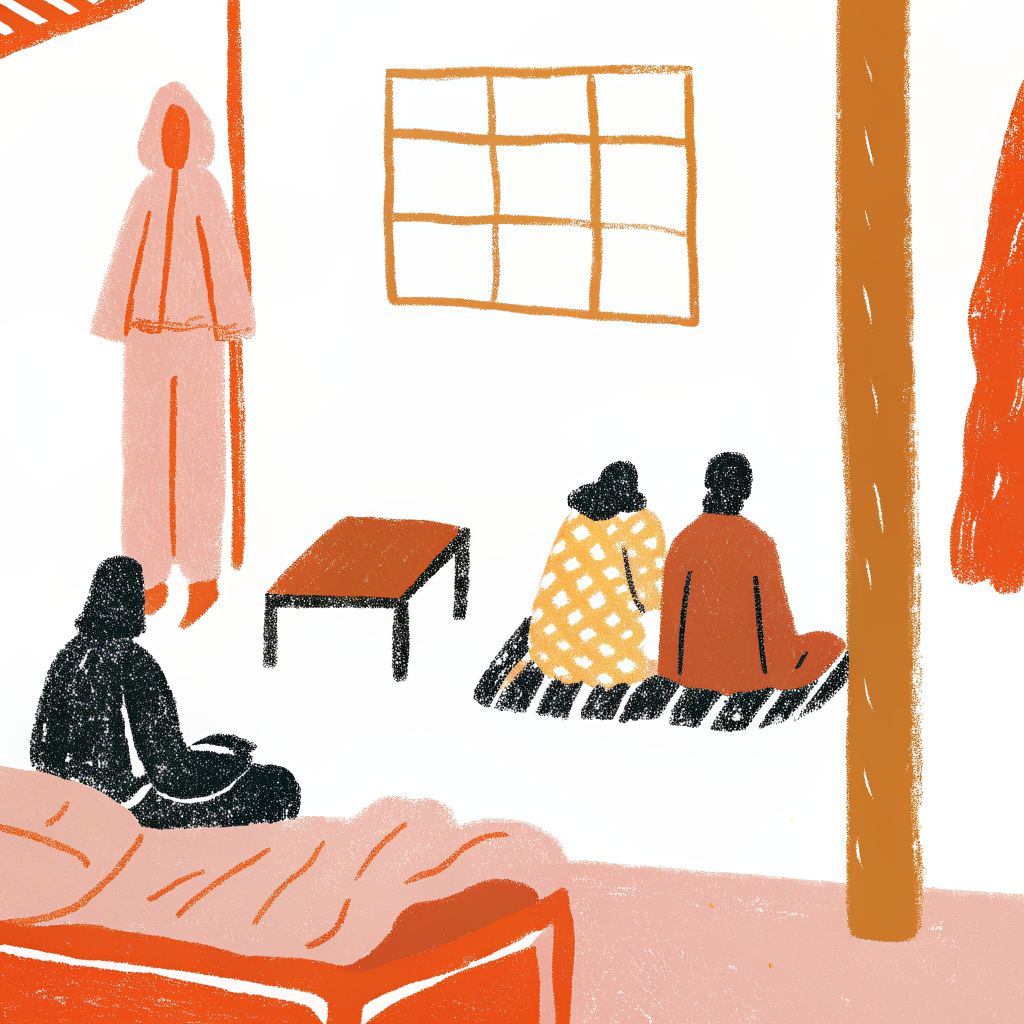
Hope House, the Salvation Army's sober shelter at Sixth and Howard, is different by design. Residents are breathalyzed every time they enter. They work with staff to build what program director Destiny Pletsch calls an "individualized transition plan." They fill their days with a schedule of their own choosing — NA meetings, yoga, therapy, Bible study — but they must fill it. Drugs and alcohol are grounds for removal, though the program offers two 48-hour grace periods before compelling someone into treatment.
The results, by the Salvation Army's own accounting, are striking. Between Hope House's opening on September 1, 2025, and the end of May 2026, the facility served more than 170 people, 83% of whom exited into housing, according to Steve Adami, who runs the umbrella Salvation Army program. As of late June, the shelter was operating at 58 residents — over its official 55-person capacity — with 25 people on the waitlist. Mayors Daniel Lurie and Matt Mahan have both toured the facility.
"Instead of a lifetime of subsidies like with permanent supportive housing, it's a four-and-a-half-year runway," Adami told the Standard.
They work with staff to build what program director Destiny Pletsch calls an "individualized transition plan."
Adami came to the homelessness response world after completing a prison sentence and getting sober himself. He is explicit about the program's argument: "The narrative for so long has been that the best option for somebody who is addicted to drugs is just let them use safely, and we like to just counter that argument," he said. "The city, state, and federal governments need to continue to enlarge the solution space and ensure that there are a lot of paths for people to get better."
That framing puts Hope House squarely in the crossfire of San Francisco's most durable policy fight. Supervisor Matt Dorsey, who has spoken openly about his own history with addiction, has championed the model and voiced skepticism of the Housing First doctrine that has guided the city's homelessness spending for years. But critics argue the abstinence approach is neither new nor scientifically validated — and they've found a damaging political shorthand.
"Funding this as a solution is a MAHA priority," advocate Christin Evans said, invoking U.S. Health Secretary Robert F. Kennedy Jr.'s Make America Healthy Again agenda, which has elevated sober housing as a federal priority. Evans pointed to published literature questioning the evidence base for abstinence-first models.
Adami pushed back on a strict abstinence characterization: Hope House accepts residents on medically assisted treatments including methadone, he noted, and the program's framework is structured recovery, not cold-turkey punishment.
Resident Brad Gaines, sober for two years, described the shelter's communal dimension as the thing that holds people. He arrived alongside four friends he first got clean with at another facility, and they've stayed together since. "It always helps to have friendly faces when you come home," he said. "You have a group of people together, they start to bond into a community, whether they like it or not."
The political timing makes the debate urgent. Hope House operates on a two-year, $8.1 million city contract — the clock on which is already running. As San Francisco wrestles with budget shortfalls and a shelter bed count that, despite Mayor Lurie's promises, has grown far slower than pledged, the question of whether to expand models like Hope House or double down on Housing First is no longer theoretical. It's a budget line item approaching renewal.
What happens next may say as much about San Francisco's political moment as its homelessness strategy.
The Discussion
Sign in to join the discussion.
Loading…