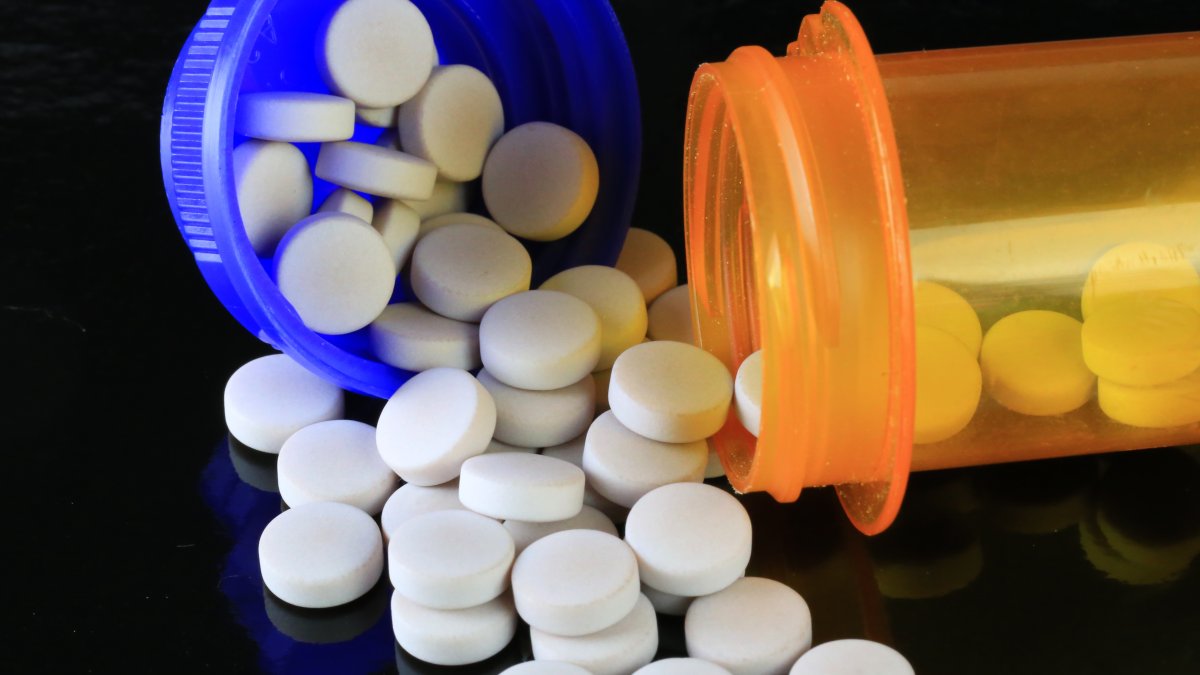
San Francisco logged its two lowest months for drug overdose deaths on record in April and May 2026 — but city health officials are warning that a new wave of counterfeit pills, some containing synthetic opioids ten times more potent than fentanyl, is being marketed directly to teenagers on social media.
The dual message from the San Francisco Department of Public Health captures the city's complicated relationship with its overdose crisis: real, measurable progress on the numbers, shadowed by an emerging threat that could undo it. While May's death toll of 35 represents a 40 percent year-over-year drop and the city's second-lowest monthly figure since tracking began in 2020, health officials are sounding alarms about counterfeit pills that look like Xanax or oxycodone but may contain novel synthetic opioids that can slip past standard test strips — and are being peddled to young people on platforms they already use.
San Francisco recorded just 35 drug overdose deaths in May 2026, according to data released at a Tuesday press conference by the city's Department of Public Health. That figure is 40 percent lower than May 2025, and marks the second-lowest single-month total since the SF Medical Examiner's Office began tracking overdose deaths in 2020. The lowest month on record? The one right before it — April 2026.
"I'm pleased by the trajectory of these numbers," said Daniel Tsai, director of the city's Department of Public Health, at the press conference. "And five months into the year we still have 219 overdose deaths, that is 219 too many."
The cautious optimism from Tsai captures where the city stands: the numbers are moving in the right direction, but the arithmetic of overdose death doesn't leave much room for celebration. 219 people dead in five months — roughly one and a half deaths per day — remains a public health emergency by any measure.
A new threat hiding in plain sight
Even as fentanyl-linked deaths have declined, health officials are focused on a separate and newer danger: counterfeit pills engineered to look like common prescription drugs but laced with ultra-potent synthetic opioids.
In April, a San Francisco youth became the city's first recorded fatality involving two novel synthetic opioids — N-Propionitrile Chlorphine (known as cychlorphine) and N-Desethyl Isotonitazene. Both compounds had previously appeared in overdose deaths across the United States, but the April case was the first time either had been linked to a death in San Francisco. The Dissent reported on that case when it first emerged.
Cychlorphine is estimated to be approximately ten times more potent than fentanyl. No additional deaths in San Francisco involving these substances have been recorded since April, according to the DPH. But health officials say they are not treating that as a reason to stand down.
Social media as the delivery mechanism
What makes this threat distinct from previous waves of synthetic opioids is how it reaches victims. Counterfeit pills are being advertised and sold directly on social media platforms, with sellers specifically targeting adolescents and young adults.
"We also know from national data that young people are more likely to use pills or counterfeit pills and are more likely to experience overdose related to counterfeit pills," said Dr. Christy Soran, San Francisco's deputy medical director for substance use treatment, at the press conference.
The pills are pressed to resemble familiar medications — Xanax bars, oxycodone tablets — making them difficult to distinguish by sight. Standard fentanyl test strips, the harm reduction tool most widely distributed in San Francisco, are not designed to detect novel synthetics like cychlorphine or isotonitazene. That means users relying on the city's existing harm reduction infrastructure may have no reliable way to know what they're actually taking.
The bigger picture
San Francisco's overdose crisis reached a grim peak in 2020 and 2021, with annual death tolls exceeding 700. The city has spent hundreds of millions of dollars on interventions — Narcan distribution, safe sleeping sites, treatment programs — with uneven results. The back-to-back record lows in April and May 2026 are the most concrete sign yet that something in the intervention mix may be working.
But the counterfeit pill warning is a reminder that drug markets evolve faster than public health policy. The fentanyl test strip, once a cutting-edge harm reduction tool, is already obsolete against the newest compounds. And if social media platforms become the primary marketplace for drugs targeting teenagers, the city's street-level outreach model faces a significant blind spot.
DPH did not announce any new specific programs to address the counterfeit pill threat at Tuesday's press conference.
The Discussion
Loading…