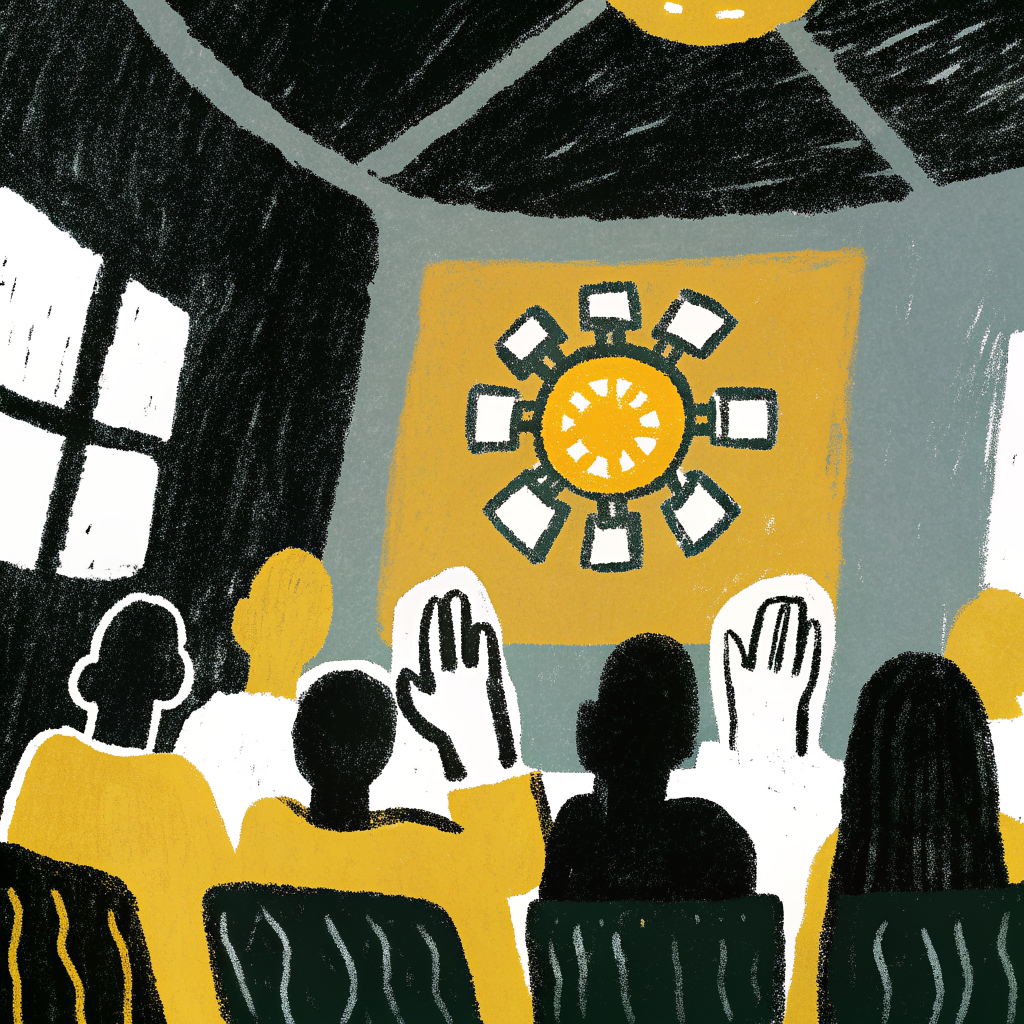
About 3,500 San Jose city workers in IFPTE Local 21 and MEF-AFSCME Local 101 are voting this week on whether to authorize a strike after contract talks stalled at the city's 3% offer. The unions' non-wage demands include contract language barring the city from using AI to eliminate their jobs.
Roughly 3,500 San Jose city workers spent this week voting on whether to authorize a strike, after contract talks between the city and its two largest labor unions hit impasse. The contract covering them expired June 30. Union officials told ABC7 that nearly 1,000 ballots were cast by Tuesday, with thousands more expected before voting closes at week's end. As of Wednesday the outcome was unresolved.
The number at the center is small and specific: 3%. That is the annual raise, over three fiscal years, in the city's "last, best and final" offer, documented June 11. The Municipal Employees' Federation (AFSCME Local 101) — librarians, code inspectors, city planners — and the City Association of Management Personnel (IFPTE Local 21) — engineers and architects — countered with 4% this year, 4.5% next, and 5.5% in 2028-29. Mayor Matt Mahan says 3% is the ceiling. "To go any higher than a 3% raise over the next three years, we would have to make significant service cuts," he told KQED.
The books behind that line: San Jose closed a $50.3 million shortfall this cycle by tapping reserves and cutting more than a dozen positions, and projects deficits of $26.8 million in 2027-28 and $11.8 million after. It runs one of California's leanest workforces — roughly 112 residents per employee, per a 2024 Mercury News analysis. Three of the city's unions have already accepted 3%; the two largest have not.
There is a 2023 rhyme here. That year the council approved raises of 14.5% over three years; Mahan, then a councilmember, cast the lone no vote.
The tech angle is the non-wage clause. Under an MEF proposal filed in March, the city would be barred from using AI "for the purpose of eliminating bargaining unit work." The city's counter: consider training and reassignment before AI-driven layoffs. In the industry's home city, its government's own clerks are now bargaining over the machines. A strike — the first in nearly two decades — would hit libraries, permits and some airport operations. Any deal needs council ratification. Watch the vote count, and the ratification math.
The Discussion
Sign in to join the discussion.
Loading…