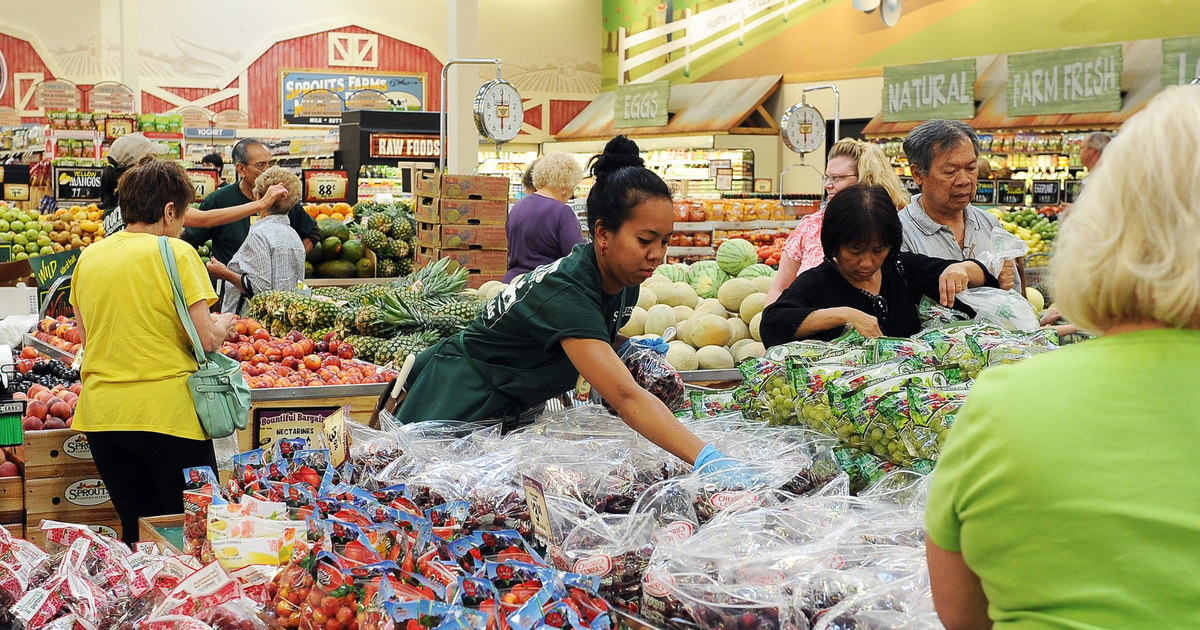
Supervisor Bilal Mahmood announced Tuesday two November ballot measures aimed at SF's worsening grocery desert: a public subsidy fund to lure food retailers back into underserved neighborhoods, and a tax on chain corporations that deliberately leave grocery stores and pharmacies sitting empty.
The package — which Mahmood said was directly inspired by New York City Mayor Zohran Mamdani's push for city-owned grocery stores — is the most ambitious public-sector response yet to a problem The Dissent has documented over the past year: the steady exit of major grocers from San Francisco neighborhoods, leaving some residents without walkable access to fresh food or prescription drugs.
The announcement, reported first by the SF Standard, comes as New York City Mayor Zohran Mamdani has been rolling out plans for city-backed grocery stores — a high-profile campaign promise that has reframed conversations about food access in urban America. Mahmood said he took notice.
"Mayor Mamdani definitely led the way in showing comprehensive solutions and innovative, bold ideas for addressing food insecurity," Mahmood told the Standard. "I'm definitely inspired by his leadership."
What the measures would do
The first ballot measure would establish a fund capable of drawing both city appropriations and private philanthropic money. According to the SF Standard's reporting, the fund could be used to subsidize grocery prices, help corner stores convert into full-service markets carrying fresh food, and allow the city to purchase vacant commercial buildings and lease them below market rate to grocers who commit to keeping prices low.
The second measure targets what Mahmood calls "zombie stores" — storefronts that chain corporations have deliberately shuttered and left empty, effectively blocking competitors from moving in. Under the proposal, companies that keep such stores intentionally vacant would face a tax penalty. Mahmood estimated that revenue from the zombie-store measure could reach several million dollars annually, though a full cost analysis from the city controller is still pending.
Beyond the ballot measures, Mahmood plans to introduce two related ordinances at the Board of Supervisors: one creating tax credits to incentivize pharmacies and grocers to open, and another establishing a task force to govern how the fund's money gets allocated.
The political math
To land both measures on the November ballot, Mahmood needs commitments from at least three fellow supervisors. The SF Standard reports he already has pledges from four: Myrna Melgar, Stephen Sherrill, Danny Sauter, and Chyanne Chen. He'll need additional support to pass the related ordinances.
Business skepticism, labor support
The business community is not sold. Chris Wright, senior vice president of Advance SF — a group representing major corporations — told the Standard that while the need for more grocery stores is beyond dispute, the measures address the wrong problem.
"Everyone agrees San Francisco needs more grocery stores and pharmacies," Wright said. "The question is about whether a new tax will bring them back, or whether we should focus more on addressing the underlying reasons those businesses left in the first place."
On the other side, Ademola Oyefeso, an international vice president with the United Food and Commercial Workers union — which advised New York City on Mamdani's grocery plan — expressed support. "San Francisco has an opportunity to bring affordable groceries back to neighborhoods and create good-paying, union jobs for communities," he said, as quoted by the Standard.
The backdrop
San Francisco has lost a string of major grocers in recent years. The Lucky supermarket on Fulton Street announced its closure earlier this year, compounding the loss felt in the Western Addition and NoPa neighborhoods after the Safeway on Webster shuttered. The city's southeastern quadrant has seen the steepest deprivation: The Dissent reported in April on the cascading closures that have left Visitacion Valley, Sunnydale, and Bayview among the most food-insecure corridors in a city otherwise awash in food options.
The city opened a free grocery store in Bayview in 2024 specifically for low-income residents — a proof-of-concept that government can play a role, though the scale is limited. Private solutions are emerging too: Bi-Rite is planning a nonprofit grocery outlet in Sunnydale. But advocates argue these projects can't move fast enough without policy scaffolding.
"Everyone deserves access to fresh food, prescription medications, and everyday essentials close to home," Mahmood said.
Whether San Francisco voters agree enough to approve new taxes on corporations — and enough to trust a new city-backed fund — will be decided in November.
The Discussion
Loading…