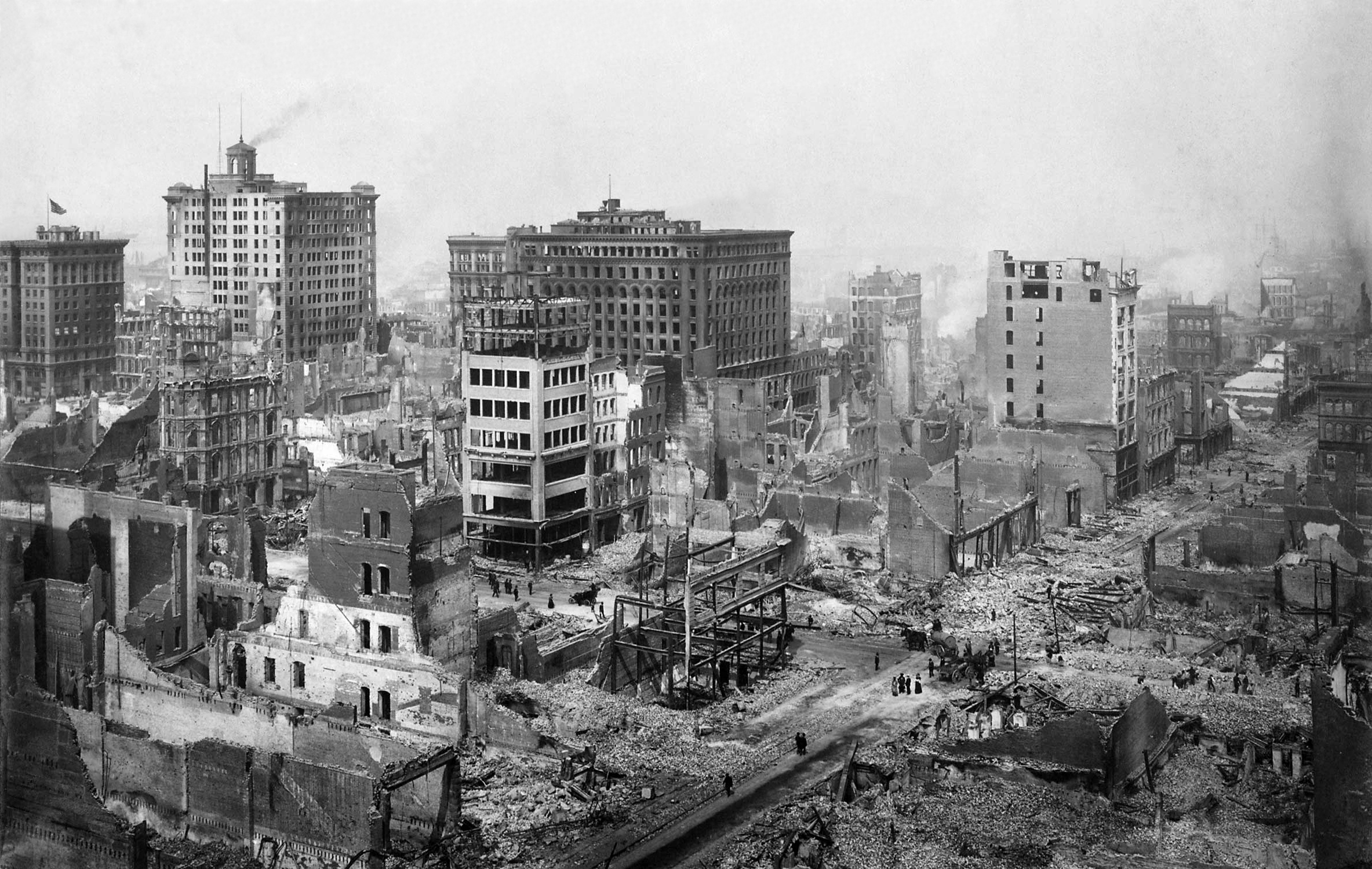
On Sacramento Street in 1898, the storefronts ran tight and continuous — awnings layered over awnings, hand-lettered signs in two languages stacked above doorways, wooden crates sitting at the curb in the particular way of a block that does most of its business before noon. A photograph circulating on local forums this week, posted without much context to r/sanfrancisco, shows the 900 block as it looked eight years before the earthquake and fire erased almost all of it.
The image is worth sitting with, not for the nostalgia it invites — that reflex is easy and not especially useful — but for what it documents about how the block was actually used. The street is busy in a working way. Produce, probably. Dry goods. The pedestrians visible at the edges aren't posing; they seem to have been caught mid-errand. Somebody's horse is tied up near what might be a butcher's sign, though the resolution makes that a guess.
Chinatown in 1898 was already a compressed geography — ten or so blocks housing a population that the city had spent decades legislating into smaller and smaller space. The Cubic Air Ordinance, the queue-cutting, the long campaign to push the neighborhood out entirely after the earthquake gave city planners a temporary opening. They didn't succeed. Residents and business owners moved back to the same blocks, and much of the street grid you can walk today follows the same lines visible in that photograph, even if almost none of the buildings do.
What's legible in the image is the density of transaction — the sense that every square foot of frontage was doing something. Sacramento Street still runs the same direction, still terminates at the same hill. The Sing Chong and Sing Fat buildings at the Gate went up after 1906 with deliberately tourist-facing architecture, a deliberate rebranding. But a few blocks in, the commercial texture — the layering, the signage, the morning deliveries — wouldn't look entirely foreign to whoever took that photograph.
Anyone walking that block today would see a produce stand on the corner and a hand-lettered awning two doors down. Some continuities don't require comment.
The Discussion
Sign in to join the discussion.
Loading…