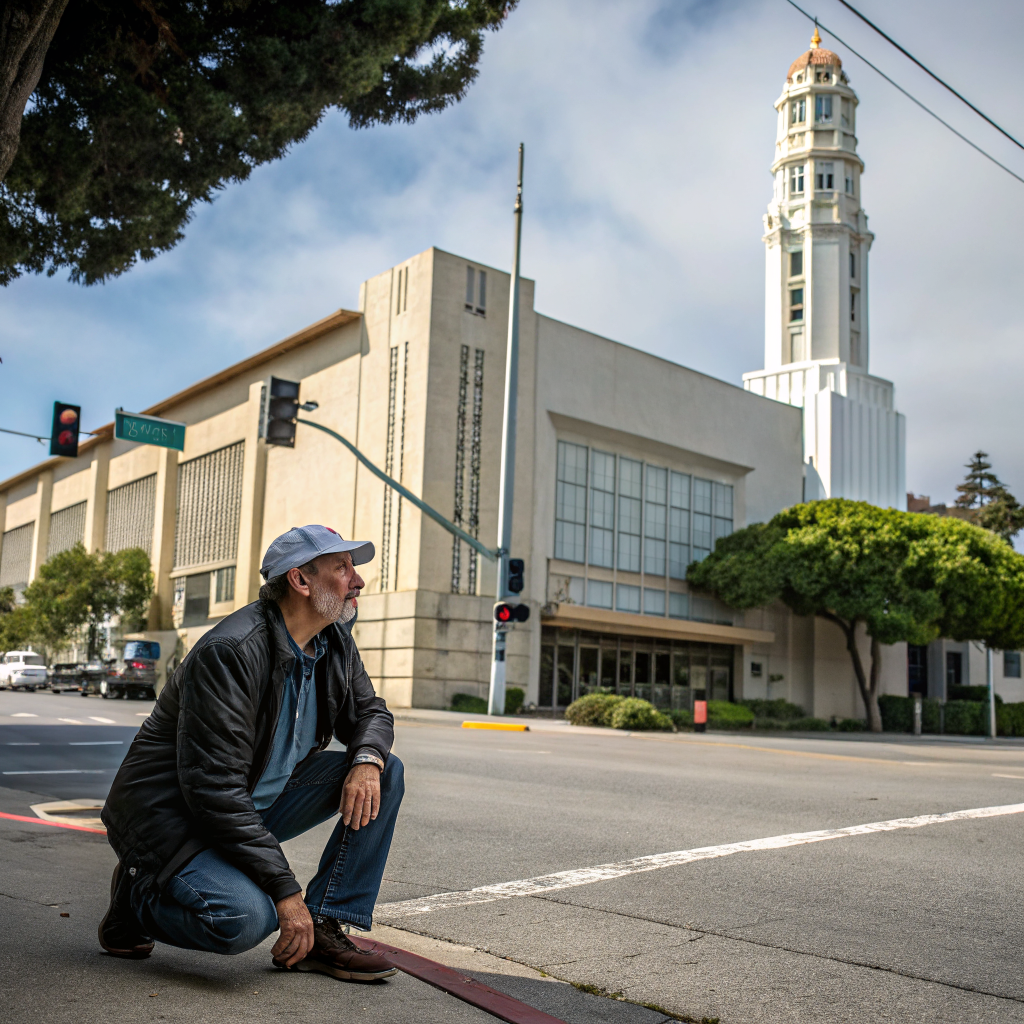
The Berkeley Art Museum and Pacific Film Archive is running an August-long film series celebrating the legacy of Fantasy Studios and producer Saul Zaentz, even as the former studio building at 2600 Tenth Street in Berkeley faces a new commercial future and is currently for sale.
On the corner of Tenth and Carleton, at 2600 Tenth Street in Berkeley, the former home of the renowned Fantasy Studios—now known as the Saul Zaentz Media Center—is undergoing yet another transformation. While the building's future is uncertain, the Berkeley Art Museum and Pacific Film Archive (BAMPFA) is dedicating the month of August to a film series, "Made in Berkeley: The House That Zaentz Built," celebrating the studio's enduring cultural footprint.
Fantasy Studios, founded by legendary producer Saul Zaentz, was a cornerstone of the Bay Area's creative scene for decades, hosting countless iconic recording sessions and film sound production. However, it ceased operations as an active recording studio in 2018. Its current owner, Wareham Development, listed the entire 121,200-square-foot campus for sale in February 2025, signaling a significant shift for this historically rich industrial-turned-creative space.
The BAMPFA series, described as "August-long," aims to connect the public with the artistic output fostered at this Berkeley address. The lineup includes films made at or tied to the studio, such as Vivien Hillgrove’s “Vivien’s Wild Ride” (2025), and Steven Okazaki’s “White Light / Black Rain” (2007), which is scheduled for an August 7 screening. Other films mentioned in connection with the series, and appearing on BAMPFA's August calendar, include Philip Kaufman’s “The Unbearable Lightness of Being” (1988), Justine Shapiro, B.Z. Goldberg and Carlos Bolado’s “Promises” (2001), Vivian Kleiman’s “No Straight Lines” (2021), Marlon Riggs’ “Tongues Untied” (1989), and Denise Zmekhol’s “Skin of Glass” (2023).
This retrospective at BAMPFA highlights the block's ongoing texture-shift: a building with a storied past in the arts transitioning to an uncertain commercial future, while its legacy is simultaneously honored by a local institution. The series offers a chance to reflect on the creative history embedded in 2600 Tenth Street as changes continue to unfold around this significant West Berkeley corner.
The Discussion
Loading…