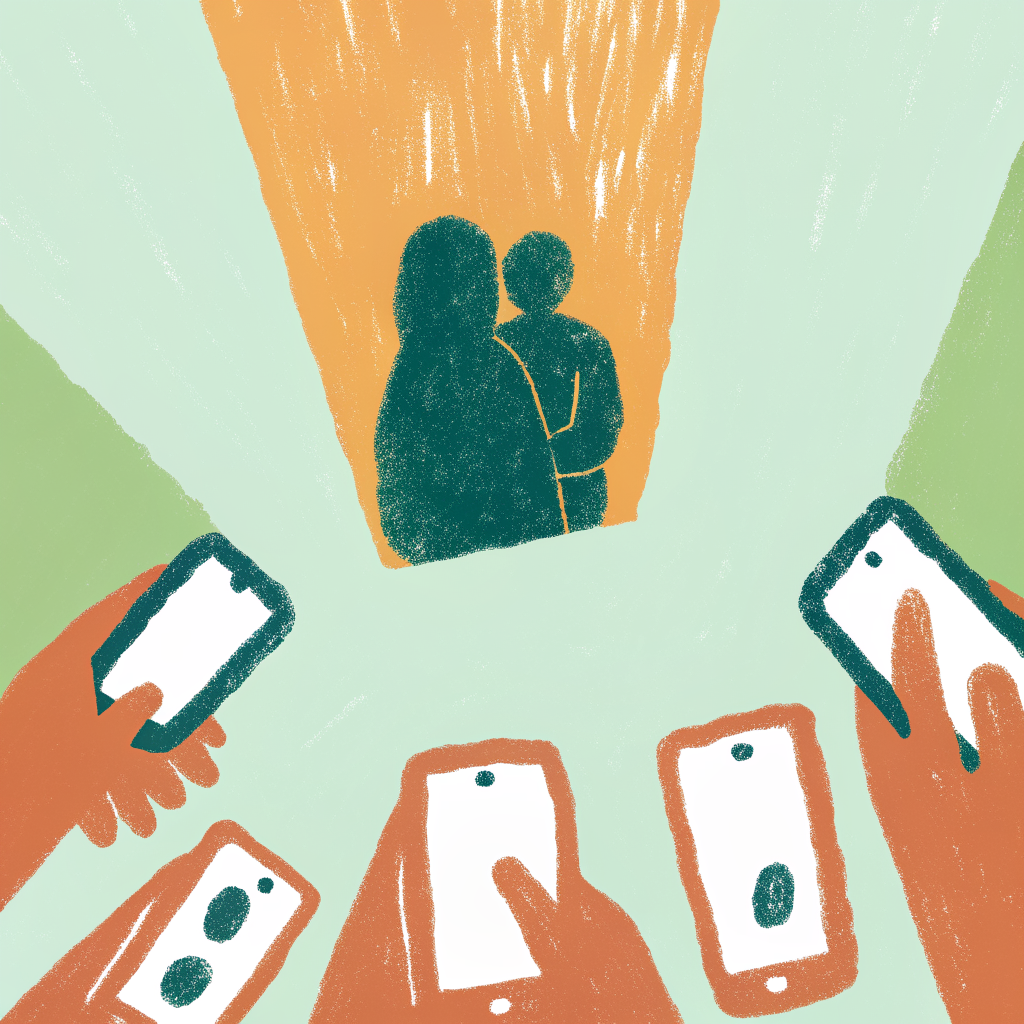
When a fight at Castlemont High ended with a teenager hospitalized and the East Oakland campus locked down Thursday, some parents learned about it the same way they now learn most things during the school day: not from the district, and not from their kids — whose phones were sealed inside locked pouches.
Oakland Unified rolled out one of the Bay Area's strictest cellphone bans just 10 days before the Aug. 20 stabbing, requiring secondary students to lock devices in Yondr pouches for the entire school day. District leaders promised the policy left emergency communication intact. The first real test of that promise — a bladed-weapon attack that hospitalized a minor and triggered a lockdown — has parents asking why they weren't notified and whether a ban sold on focus and safety cut them off at the worst possible moment.
A juvenile was hospitalized after a fight on the Castlemont High campus in East Oakland spilled into a stabbing on Thursday morning, NBC Bay Area reported (external source, opens in a new tab). Police were called to the school at 8601 MacArthur Blvd. around 10:15 a.m. Investigators said a disagreement among students in a back parking lot turned violent when someone drew a bladed weapon and wounded the teen, whose injuries were described as not life-threatening. Several juveniles were detained, and the district held students in place until officers cleared the campus around 11:30 a.m. A witness who saw the victim on a stretcher described a head wound, as SFist reported (external source, opens in a new tab). What set off the fight remains unclear.
For a number of families, the more frightening problem wasn't the fight — it was the silence. Several parents told KTVU they were not quickly informed of what had happened and pieced it together only after seeing the police massing outside, SFist reported. Those parents questioned Oakland Unified's new rules keeping student phones locked away all day, arguing that a policy pitched as a safety upgrade had left them unable to reach their children at the worst possible moment.
Without a phone, I think people will be completely left in the dark," she said.
The calendar sharpened the grievance. On Aug. 10, the first day of classes, OUSD — the Bay Area's second-largest district — began barring students from using phones, smartwatches, or other devices during class, between periods, and at lunch, according to an earlier KTVU report (external source, opens in a new tab). Secondary students seal their devices in locking Yondr pouches they carry but cannot open until dismissal. The rules trace to California's Phone-Free Schools Act, AB 3216, which required every district to restrict student phone use by July 1.
District leaders had anticipated this exact worry — and said they had it covered. Superintendent Denise Saddler, speaking to KTVU as the ban launched, insisted campuses keep the same protocols they always have for parents to reach students, and that safety was a priority. Her letter to families, as detailed by KQED (external source, opens in a new tab), lays out that students may use their phones in a health or safety emergency, or when a teacher, administrator, or doctor authorizes it, and that staff can pop the pouches open when they need to.
Whether that carve-out actually functioned Thursday is unknown. Neither OUSD nor police have said whether any student was allowed to unlock a pouch during the lockdown, or what the district did to reach parents while it was underway.
The unease predates this incident. Before the ban started, Oakland Tech senior Blake Rodgers told KQED she feared being unreachable in a crisis, pointing to recent violence on OUSD campuses. "Without a phone, I think people will be completely left in the dark," she said. Two weeks later, at another Oakland school, that fear had a real event attached to it.
The friction is the point. Oakland's ban was pitched on two promises at once — sharper focus and undiminished safety — and Thursday forced them into the same room. A district that spent the summer assuring families the pouches would never come between them and their children in an emergency now has to explain why, during an actual emergency, so many parents felt exactly that.
The Discussion
Sign in to join the discussion.
Loading…