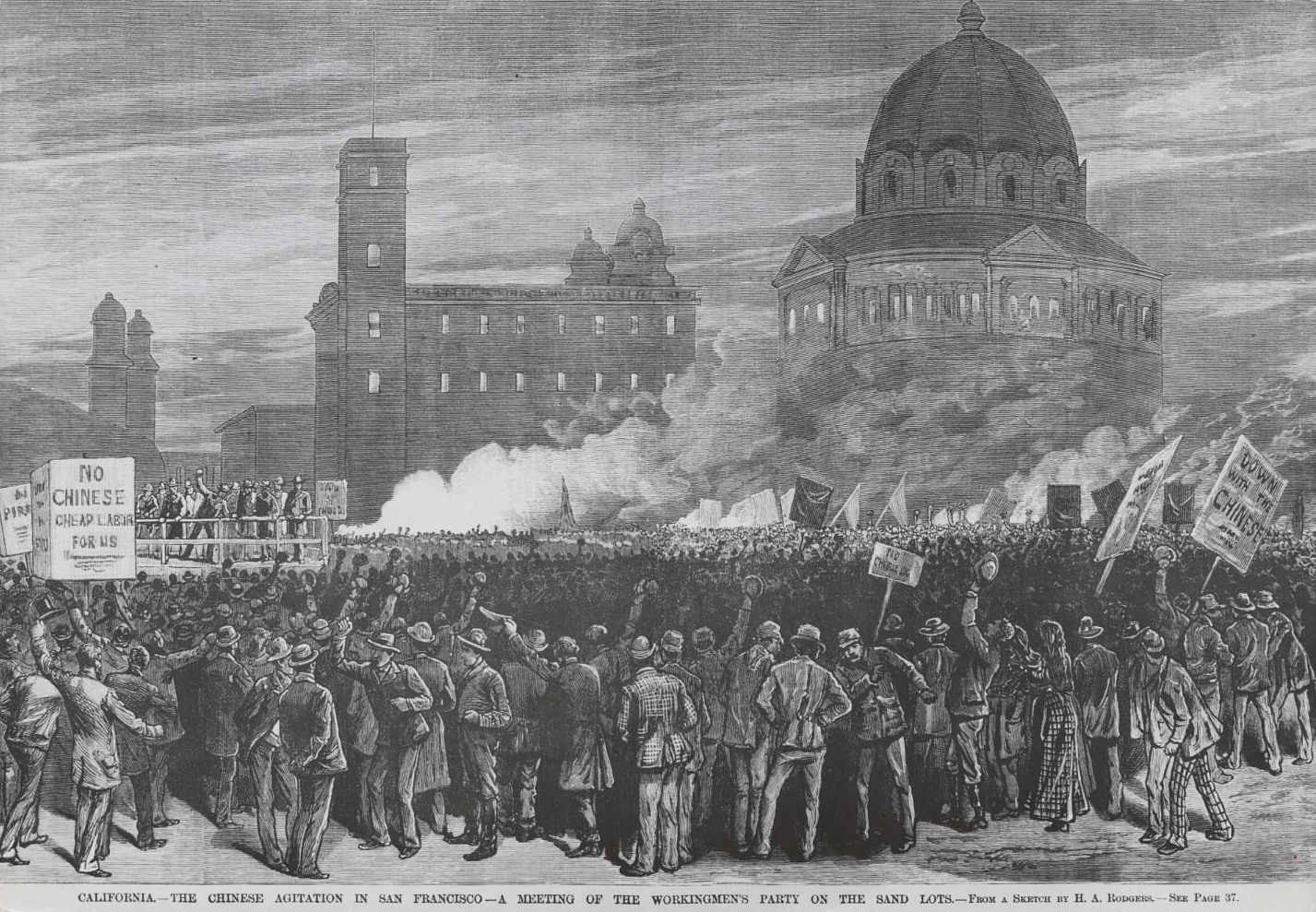
Before the civil rights movement had a name, before landmark cases like Brown v. Board of Education reshaped American law, a group of Chinese laundrymen in San Francisco did something remarkable: they fought a city government that was using "neutral" regulations as a weapon of discrimination — and they won.
This year marks 140 years since Yick Wo v. Hopkins, a Supreme Court case that originated right here in San Francisco and established one of the most important constitutional principles in American law: that the Equal Protection Clause of the Fourteenth Amendment applies to everyone on U.S. soil, not just citizens.
Here's what happened. In the 1880s, San Francisco's Board of Supervisors passed an ordinance requiring laundry operators in wooden buildings to obtain a permit. Sounds reasonable on its face — fire safety, right? Except the city granted permits to nearly every white applicant and denied them to virtually every Chinese applicant. The law was written neutrally but enforced with surgical bigotry.
Lee Yick, who operated a laundry on Sacramento Street, was arrested for working without a permit. His case made it all the way to the Supreme Court, which ruled unanimously that a law applied with "an evil eye and an unequal hand" is unconstitutional regardless of how it reads on paper.
This matters beyond the history books. The principle at the heart of Yick Wo — that government power must be exercised equally, and that bureaucratic discretion can become bureaucratic tyranny — is one every San Franciscan should take seriously. We live in a city where permits, variances, and regulatory approvals can make or break a small business. The question of who gets approved and who gets buried in red tape is not hypothetical.
San Francisco's Chinese community and local preservationists are rightly commemorating this anniversary. It's a reminder that the fight for individual liberty against government overreach isn't abstract — it started in a laundry on a San Francisco street, 140 years ago.
Sometimes the most important Supreme Court cases don't come from fancy law firms. They come from people who just wanted to wash clothes and be left alone.
The Discussion
Sign in to join the discussion.
Loading…