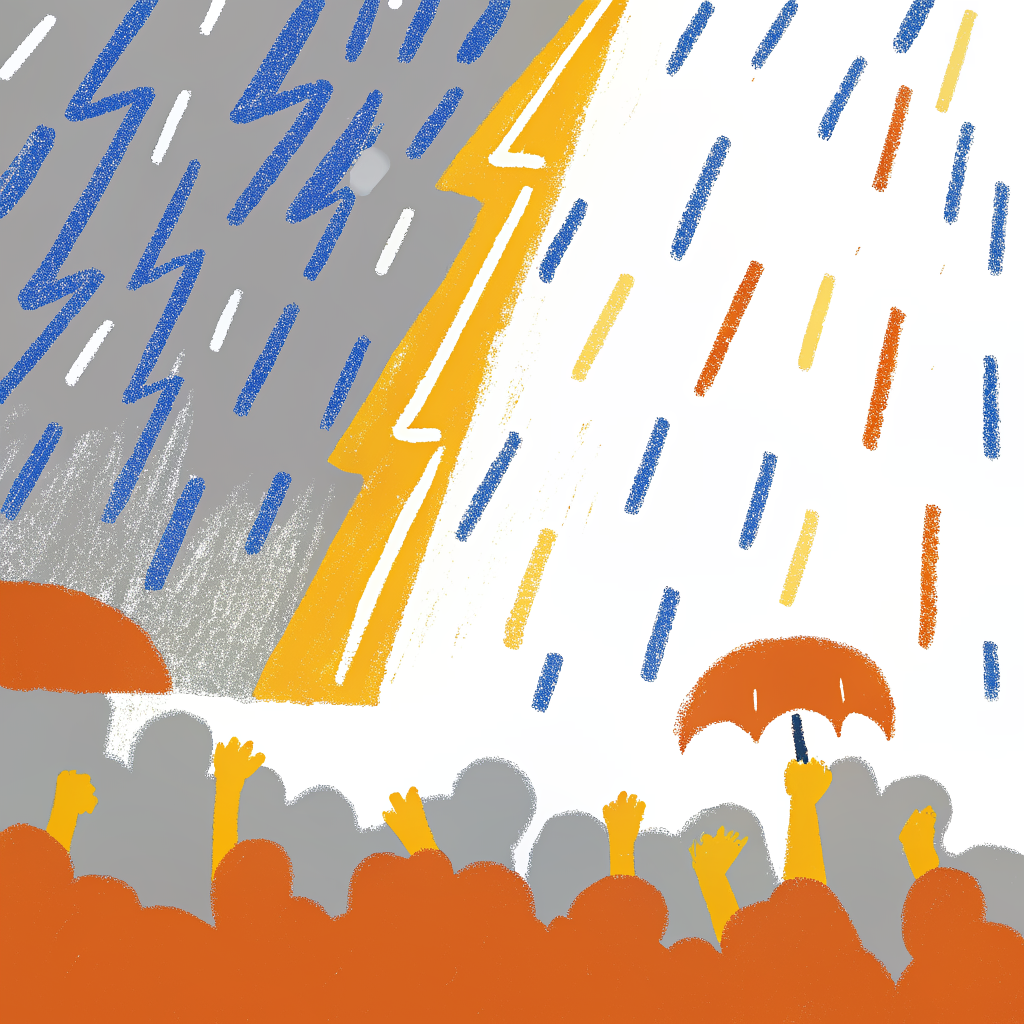
When San Jose's World Cup watch party at San Pedro Square devolved into violence with two stabbings and attacks on officers, it exposed a fundamental flaw in the city's approach to hosting global events: betting on intimate urban spaces to handle massive crowds without planning for when success becomes dangerous. The incident reveals how Bay Area cities are learning the hard way that World Cup hosting requires more than stadiums — it requires public spaces designed for scale, not just charm.
The crowd hit its limit before halftime. That's the detail that sticks — not the two stabbings, not the bottles flying at cops, not the ambulance surrounded by people climbing on its roof like it was the last lifeboat off a sinking ship. It's that San Pedro Square, the heart of San Jose's downtown revival, was full before Mexico had even scored against Ecuador.
You could see it coming if you knew where to look. The city had been scaling up for weeks, each match bringing more bodies than the last. More than 30,000 fans packed the square for Mexico-South Korea on June 18th, so many people that security had to turn some away. By July 2nd, the number had swelled beyond 40,000 — a sea of green jerseys spilling onto Santa Clara Street, onto parking garage roofs, anywhere a screen could be seen. The official watch party had become an unofficial occupation.
Then it broke.
Two separate stabbings in the chaos. Officers getting hit with bottles when they tried to clear space for an ambulance. The police declaring an unlawful assembly at 11:30 p.m., then another dispersal order after midnight near Post and First. This wasn't just a rowdy crowd anymore; this was what happens when you pour forty thousand people into a space designed for maybe half that, add alcohol and midnight kickoff times, and hope for the best.
Mayor Matt Mahan's response was telling: "We will have to make adjustments before the next team Mexico match. It isn't safe to have that many people crowded into a small space like that." The city announced future watch parties would move from San Pedro Square to SAP Center and Discovery Meadow — bigger venues, more room to breathe, easier to control.
But the real story isn't about moving parties from Point A to Point B. It's about what this episode reveals about San Jose's relationship with its own public spaces during the World Cup. The city bet big on downtown revival, on turning San Pedro Square into the kind of place where thousands gather spontaneously. And in one sense, they succeeded — people came, they created that electric atmosphere every city dreams about.
The problem is that success became its own kind of failure. The very features that make San Pedro Square work as a dining destination — intimate spaces, narrow streets, limited sightlines — make it terrible as a massive viewing venue. The city learned the hard way that you can't just declare a space a "watch party location" and expect physics to cooperate.
What's happening in San Jose is a microcosm of the broader Bay Area challenge with the World Cup. We're building stadiums and planning transit routes, but we're not really thinking about the in-between spaces — the plazas, the squares, the streets where people actually gather when the game is on. San Francisco dealt with its own version when Spark Social SF canceled watch parties after a shooting in Mission Bay. These aren't isolated incidents; they're stress tests revealing the gaps in our urban fabric.
The city learned the hard way that you can't just declare a space a "watch party location" and expect physics to cooperate.
The city's solution — more police, private security, bigger venues — makes sense in the short term. Assistant Police Chief Ali Miri says they'll put "more officers, including special operations people in the downtown core." The San Jose Sports Authority contracted 40 to 50 private guards for crowd and traffic control. But you can't police your way out of a space problem. You can't add enough officers to make a square physically bigger than it is.
What San Jose needs now is what urban planners call "capacity thinking" — not just how many people can fit safely, but how many can fit comfortably, how many can move through without creating bottlenecks, how many can gather without turning celebration into survival mode. The next watch party at Discovery Meadow might be safer, but it's also an admission that the downtown experiment failed.
The irony is thick: San Jose, the city that's been trying to prove it belongs in the same conversation as San Francisco and Oakland, just learned that being a World Cup host city means more than having stadiums. It means having public spaces that can handle the pressure. It means understanding that when you invite the world to party, you better have a big enough house.
The stabbings will heal. The police reports will be filed. But the lesson about San Pedro Square should linger: sometimes the crowd doesn't just fill a space — it breaks it.
The Discussion
Sign in to join the discussion.
Loading…