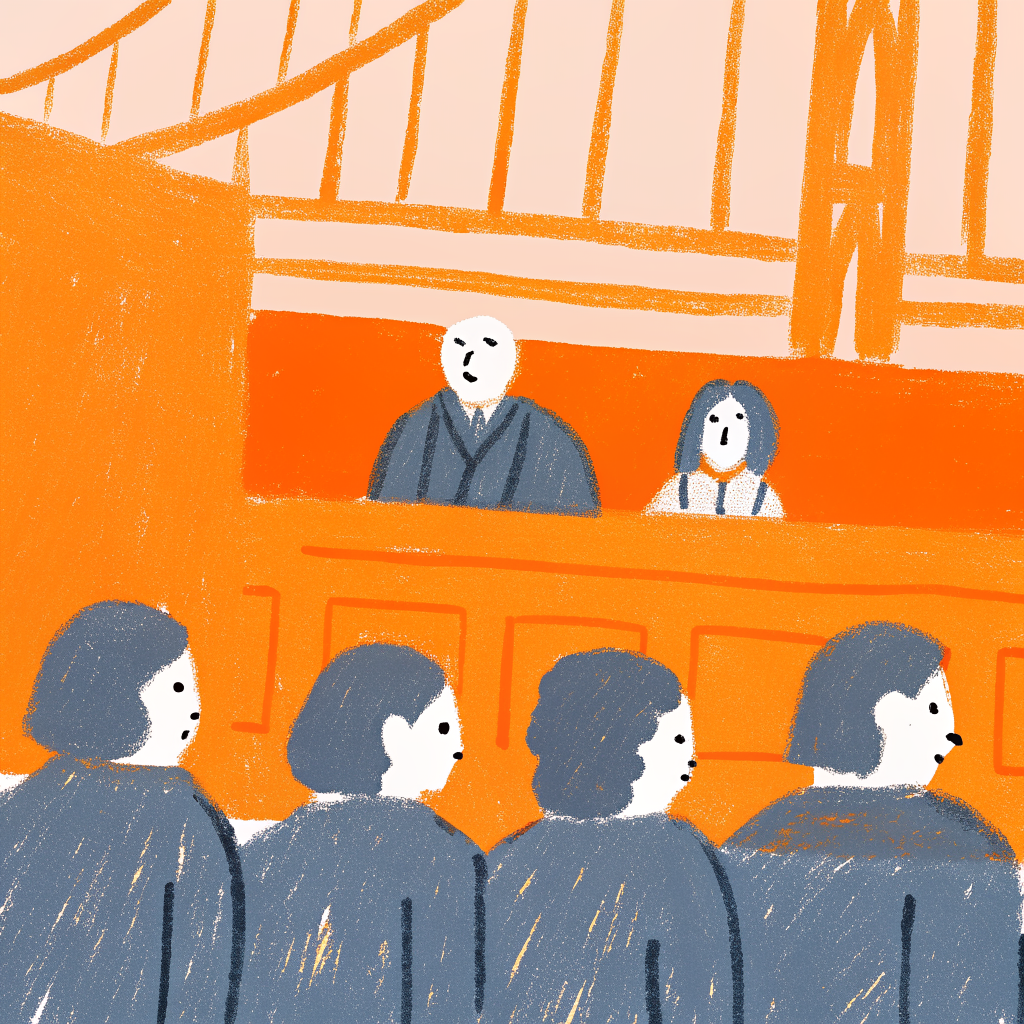
Seven pro-Palestine activists who chained themselves across the Golden Gate Bridge in 2024, freezing traffic into the city for a four-hour stretch, are due in San Francisco Superior Court on Friday afternoon to be sentenced for a string of misdemeanors — the only members of a 26-person group to face jail, and the only ones who insisted on a jury.
Their convictions carry a ceiling of about five years in county jail. But the sentence Judge Teresa Caffese hands down is not the last word: the same jury deadlocked on a felony conspiracy count, the judge declared a mistrial, and that far graver charge remains legally alive and refileable even as the misdemeanor punishment is imposed. The result is a two-track outcome that turned on a single choice — whether a defendant cut a deal or exercised the right to a trial.
The protest unfolded on April 15, 2024. About two dozen demonstrators crossed in from Marin, brought their vehicles to a standstill in a line spanning the southbound deck, and threaded their arms through lengths of pipe to bind themselves together. Traffic into the city seized up for four hours, as Mission Local documented (external source, opens in a new tab). District Attorney Brooke Jenkins charged 26 people that August. Eighteen saw their cases diverted or dismissed; of eight first hit with felonies, a judge threw one out. That left seven to stand trial.
The gap between those groups is the story. Demonstrators who accepted diversion earlier had their records wiped clean after paying restitution and performing as little as five hours of community service. The seven who chose to fight the charges before a jury were convicted of false imprisonment and other misdemeanors — and now face the prospect of jail.
The felony count is where the exposure runs deepest. Jurors convicted on the lesser charges but hung on the felony (external source, opens in a new tab), breaking 10-to-2 in favor of guilt, and could not reach agreement on a misdemeanor trespass count either. A mistrial is not an acquittal. The conspiracy charge — the one prosecutors most wanted, and the one that carried the heaviest potential prison term — can be brought again, which means Friday's hearing may resolve the misdemeanors without closing the case.
At trial, the two sides fought over whether planning a protest is evidence of a crime. Assistant District Attorney Angela Roze walked jurors through the night before the blockade, when the group gathered in the East Bay and divided up roles, and argued those preparations showed intent. Their motive "may have been to get their lawmakers' attention and stop the genocide in Gaza," Roze allowed, but their aim was to stop traffic, and "they knew the crimes that they were going to engage in were illegal," she said, per Mission Local's account.
The defense built on the opposite premise — that the political message and the act could not be pried apart. "The message is their intent," public defender Nuha Abusamra, who represents defendant River Allen, told the jury in her closing. "The message shows a lack of criminal thought … The message is protected by the law."
That argument did not carry the misdemeanors, but it framed a broader worry among civil-liberties advocates: that prosecuting the coordination behind a demonstration — the meetings, the assigned roles, the shared plan — reaches past any single act on the bridge and toward the organizing itself. It is the same theory embedded in the conspiracy count now left open by the mistrial.
The July verdict was read into a courtroom packed with supporters, who cried "shame" as deputies cleared them out and chanted "Viva viva Palestina" in the hallway. The defense has said it will appeal the guilty verdicts regardless of what Caffese decides.
The message is their intent," public defender Nuha Abusamra, who represents defendant River Allen, told the jury in her closing.
Whatever number the judge announces Friday, two things will still be true: an appeal is coming, and the felony question has not gone away. The hearing closes one chapter of the Golden Gate 26 case. It does not close the case.
The Discussion
Sign in to join the discussion.
Loading…