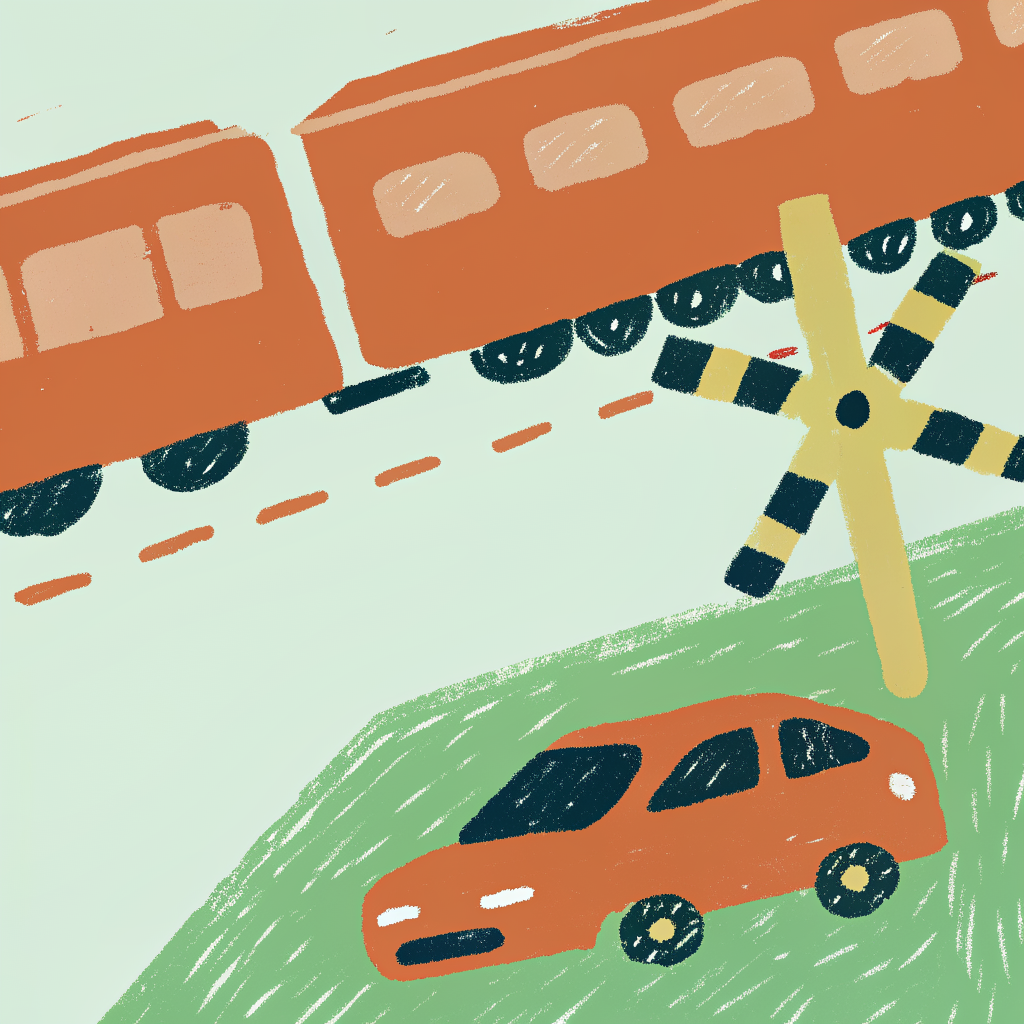
Palo Alto finished the federal safety work to silence train horns at its northernmost Caltrain crossing back in June. Then Caltrain's new LiDAR sensors caught cars from El Camino Real backing up onto the tracks — and the quiet zone was put on hold.
The city's long-sought "quiet zone" at the Palo Alto Avenue grade crossing — where trains are supposed to stop sounding their 100-decibel horns in favor of hardened gates — has slipped past its expected finish line. The reason isn't paperwork: a newly installed detection system flagged a live safety hazard the city says it can't ignore, forcing more review before the Federal Railroad Administration will sign off. It's a revealing wrinkle in a project residents have chased for years, and it lands against a far heavier backdrop at a second crossing near Palo Alto High School.
Anyone who lives near the Caltrain tracks in Palo Alto knows the horn: four blasts, up to 100 decibels, starting with the first train around 5 a.m. and running past midnight. For years the city has worked to earn federal "quiet zone" designations at all four of its at-grade crossings — Palo Alto Avenue, Churchill Avenue, Meadow Drive and Charleston Road — where a quiet zone lets trains skip the horn in exchange for more secure gates that keep cars, bikes and pedestrians off the tracks as a train passes.
Palo Alto Avenue, the northernmost crossing near the Menlo Park border, was first in line. The city completed the work the Federal Railroad Administration required in June, leaving only a pavement restriping before the horns could legally go quiet. Then the project stalled.
The culprit was Caltrain's newly installed RailSentry system, a LiDAR array that tracks vehicles and pedestrians around the crossing. "Caltrain's new RailSentry system identified occurrences where cars backed up from El Camino Real extended onto the rail crossing," city spokesperson Meghan Horrigan-Taylor told Palo Alto Weekly. "This is obviously a problem with oncoming trains, and the city agrees with Caltrain that additional safety measures should be pursued prior to implementation of a quiet zone."
In other words, the sensing technology bound up with the modern crossing didn't clear the way for a quiet zone — it documented exactly why one isn't safe yet. As a stopgap, the city has stepped up police enforcement at the crossing to watch for drivers illegally stopped on the tracks, which Horrigan-Taylor said is being handled within existing police resources at no added cost.
Caltrain's new RailSentry system identified occurrences where cars backed up from El Camino Real extended onto the rail crossing," city spokesperson Meghan Horrigan-Taylor told Palo Alto Weekly.
City Manager Ed Shikada laid out the holdup in his summer recess report to the City Council, writing that the city will keep working with Caltrain, federal officials and the California Public Utilities Commission, which regulates railroads statewide. "These additional reviews and evaluations have extended the implementation timeline for the Quiet Zone while the City works collaboratively with the regulatory agencies to address the requested safety enhancements," Shikada wrote, according to the report described by Palo Alto Weekly.
How long the added review will take is unclear. Horrigan-Taylor said the safety restriping itself should still fall within the existing fall 2026 window, and that the delay is specific to Palo Alto Avenue; the other three crossings are on their own timelines.
That distinction matters most at Churchill Avenue, steps from Palo Alto High School. During this year's budget process the city made a Churchill quiet zone a priority and committed $1 million to it — a decision that followed an emotional community push after a teenage girl died by suicide at the crossing in February, as reported by Palo Alto Weekly. Students, parents and teachers said hearing the horn multiple times a day reopened the loss; some urged the city to close the crossing to traffic entirely, which would end the horns there. The council declined to close it, citing traffic and logistical concerns and worries that even a temporary closure could jeopardize future quiet zone plans, but committed instead to installing hardened gates that would make Churchill eligible for the designation.
For Palo Alto Avenue, the next formal step is a Notice of Establishment from the Federal Railroad Administration — the document that finally lets the horns fall silent. For now, at the crossing the city thought it had finished, the 5 a.m. blast stays.
If you or someone you know is struggling, the 988 Suicide and Crisis Lifeline is available 24/7 by call or text.
The Discussion
Sign in to join the discussion.
Loading…