SFUSD told parents at Chinese Immersion School at De Avila that the lead paint work now underway during class hours would take "two weeks" and happen outside of school. The district's own project documents tell a longer story: Phase 1 completion has slipped to Dec. 30, and the replacement windows at the center of the delay aren't due until October.
An exterior job at a historic Haight elementary — a window swap paired with lead-based paint removal — was supposed to be finished over summer break. Instead, families arrived for the first day of school to find the campus shrouded in white containment tarp and lead abatement still in progress. The friction isn't only the delay; it's the gap between how the district is describing the work in public and what its own newsletters and schedule say. Parents say the district never flagged the hazard plainly, and some are now keeping their children home until they're convinced the campus is safe.
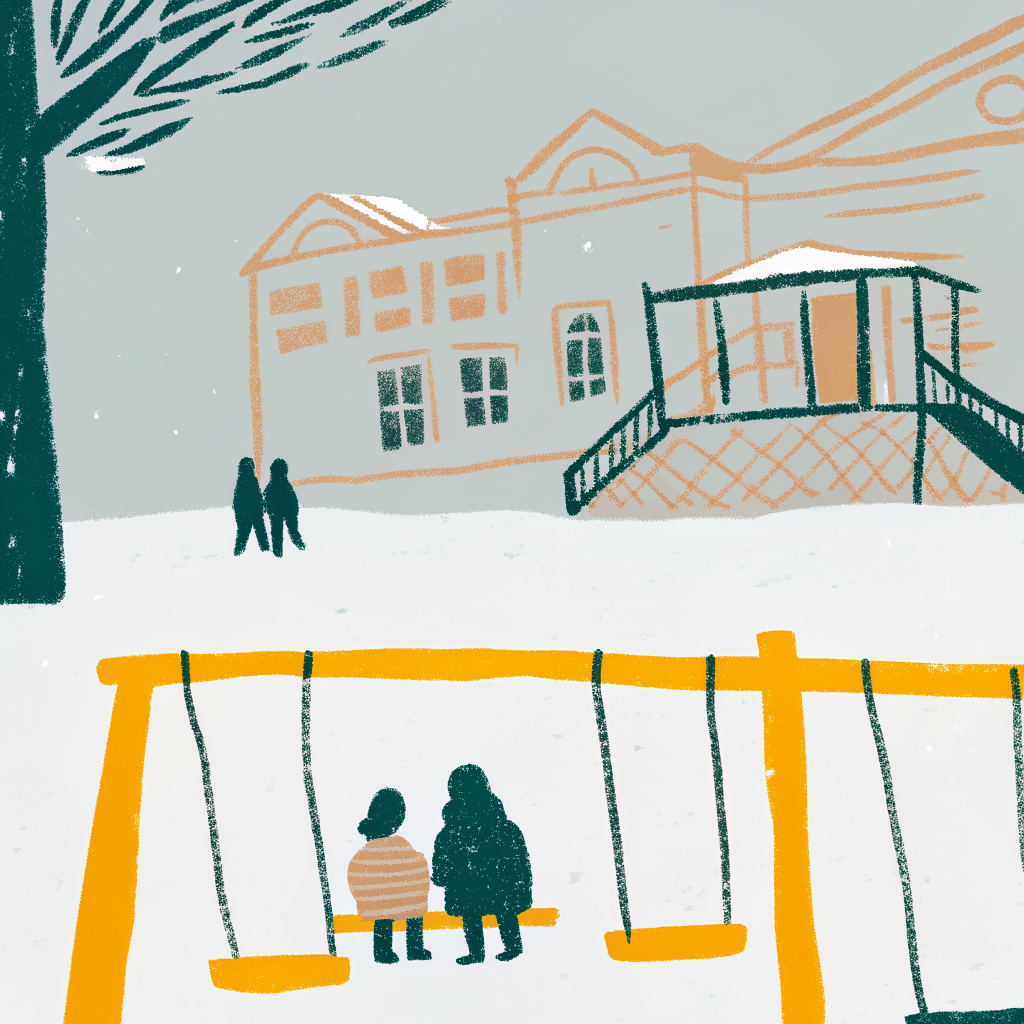
A historic elementary in the Haight opened the school year wrapped in plastic. White containment tarp still covered much of Chinese Immersion School at De Avila on the first day of class, the visible residue of a paint-removal project that was supposed to end before the first bell — and didn't.
A May 26 family newsletter promised the abatement would be finished over summer break, and the school is swapping out windows as part of the same job. As The San Francisco Standard reported (external source, opens in a new tab), the work wasn't done in time. And when the district did tell families about the hazard, it did so quietly: parent Lori Ronayne told the Standard that neither the May newsletter nor an Aug. 11 welcome-back email named the metal in its subject or its main text — you had to open a linked FAQ to learn the paint contained lead at all.
Here is the tension the district has not squared. SFUSD's public statement, provided to the Standard, says the remaining work "will last two weeks and be done outside of school hours" with a chemical stripping agent meant to prevent toxic dust. But the district's own August FAQ, obtained by the Standard, pushes Phase 1 paint removal — the school's south and east elevations — to a Dec. 30 completion, a two-month slip from the original October target. The replacement windows blamed for the holdup aren't expected until October, because the district had to line up a second contractor to supply them. Phase 2, on the north and west elevations, is now slated for March through August 2027. A two-week, after-hours task and a project that lingers on the campus into next year are not the same thing.
At a 9 a.m. auditorium meeting Friday, roughly 50 parents heard an SFUSD maintenance official acknowledge, per a transcript families shared with the Standard, that the project had run late and that they had been left out of the loop. When parents asked officials to halt the work until their safety worries were addressed, the district wouldn't commit to stopping, the Standard reported. An industrial hygienist told the room that early air samples taken from workers exceeded the permissible exposure limit for lead before later samples fell within legal limits, and that soil samples came in well under the state's threshold for children's play areas. The assurances haven't settled the room. Parent Edwin Zhang, who has an 8-year-old at the school, told the Standard he was weighing whether to keep her home or send her in a mask.
The district insists the campus is safe. "We want to emphasize that it is safe for students to be at school," spokesperson Katrina Kincade said in a statement to the Standard, adding that SFUSD is "committed to transparency throughout this work." That word carries weight at a district with a documented lead record. SFUSD says on its own water-testing page (external source, opens in a new tab) that it has tested for lead in drinking water since the 1980s; a 2017–18 round spurred by the Flint crisis pulled fixtures out of service at multiple campuses, and a 2022 modernization dig turned up lead and arsenic in another school's soil. The distrust parents are voicing isn't paranoia — it's institutional memory.
For families without a fallback, the abstraction is a daily choice. Katie Liu told the Standard she'll keep dropping her kindergartner off because she has to work: "We'll come back. We have to go to work." The district has offered no alternate location and, parents say, no remote option — which means "safe" and "attending" are, for now, the same bet.
The Discussion
Sign in to join the discussion.
Loading…