A year-long civil grand jury investigation has found San Francisco's jails overcrowded, dangerously understaffed, and running on booking software so outdated that administrators are afraid to reboot it — and the committee the city is legally required to convene when jails hit overcrowding thresholds has never once been called to order.
The 50-page report, released earlier this month, documents a compounding institutional breakdown across every layer of the county jail system. Arrests for misdemeanor drug crimes have surged. The jail is now the city's largest medical withdrawal management facility — a function it was never built to serve. And the Board of Supervisors, which in 2015 voted down a state grant that could have funded a 384-bed replacement facility, has left the sheriff to manage a population crisis with crumbling buildings and 20-year-old hardware. The report lands as The Dissent has documented a wave of related failures: women suing over denied sunlight and broken plumbing, deputies accused of beating handcuffed detainees, and a recorded mass strip search.
San Francisco's civil grand jury spent a year inside the county jail system. The 19-member panel toured facilities, reviewed state data, and interviewed staff. What they produced is a detailed accounting of institutional failure: a jail system pushed past its limits by policy choices the city made — and chose not to reverse.
The population and the committee that never met
The number of people booked into San Francisco's county jails has risen every year since 2021, driven by rapidly increasing misdemeanor drug arrests and what the jurors characterized as "harsher law-enforcement practices." By 2025, daily occupancy exceeded 80 percent of capacity — the threshold that legally triggers the sheriff to convene a "Crowding Committee" bringing together the district attorney, public defender, and other criminal justice actors to address the strain. That committee was never called, the jurors found. In 2026, the system is on pace to breach 80 percent again.
The failure to convene that committee is not incidental. It is, according to the report, a symptom of how the city has managed — or refused to manage — the jail population crisis. "The system is left at a breaking point with no end in sight," the jurors wrote.
The Sheriff's Department did not dispute the underlying conditions. "Our jail facilities are aging, our technology is outdated, and the population in our care has increasingly complex medical and mental health needs," Tara Moriarty, a department spokesperson, wrote in a statement included in the report, adding that the findings "highlight a challenge we have been raising for years."
The Annex and its dangerous workaround
When overcrowding began escalating in 2023, the city re-opened the Annex — a 372-bed minimum-security facility attached to County Jail No. 3 in San Bruno. As of February 2026, more than 80 percent of the men housed there should have been in a medium or maximum-security setting, according to the report. The jurors wrote that they "heard concerns that the current system may be under-rating dangerous individuals in order to fit available beds." The implication: security classification is being manipulated to solve a space problem, not to reflect actual risk.
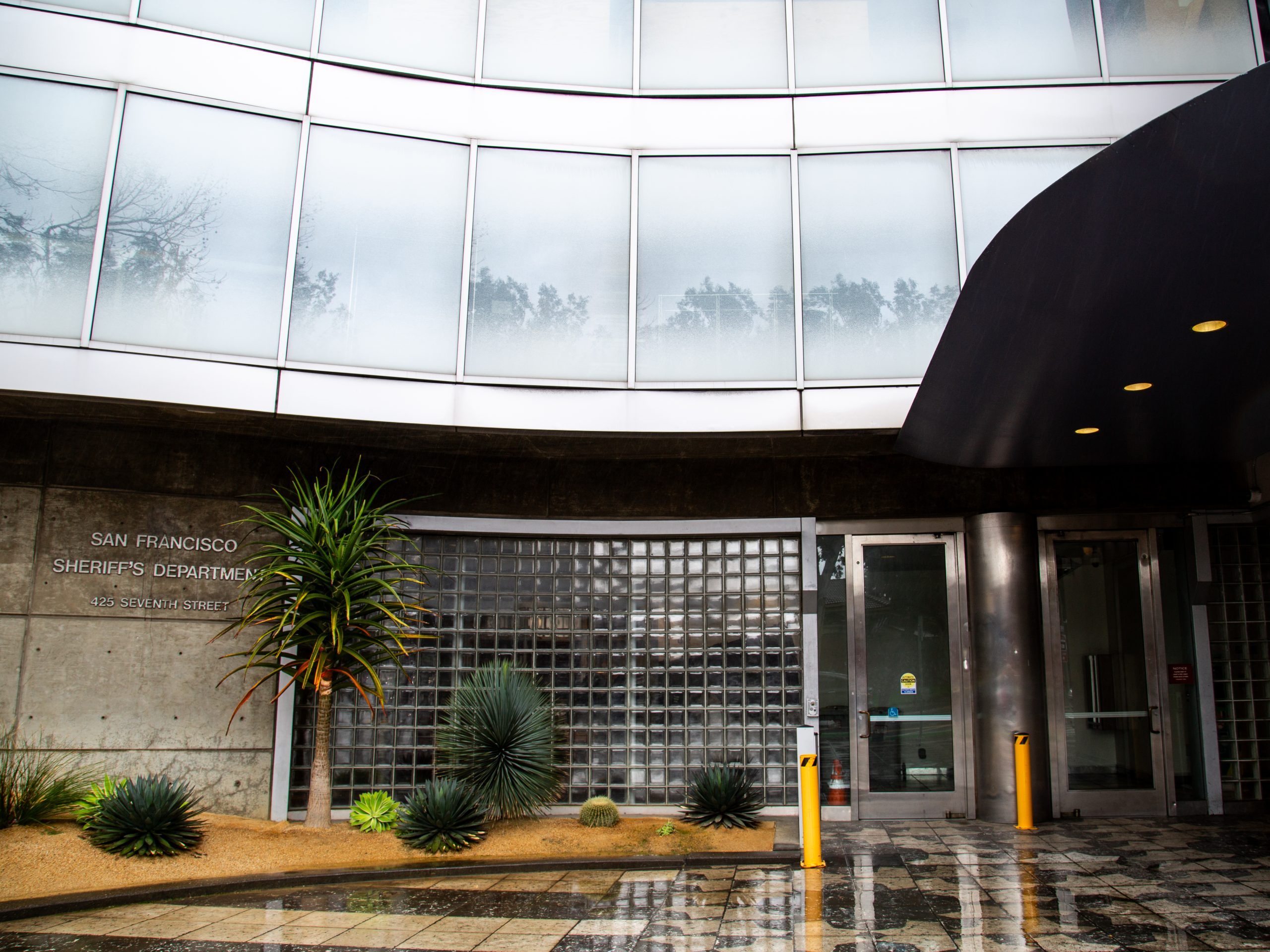
At County Jail No. 1 on Seventh Street, people awaiting court hearings are held alongside people undergoing intake or release. Overflow detainees are housed in the gym — which means the gym cannot be used for state-mandated exercise.
The system is left at a breaking point with no end in sight," the jurors wrote.
A city-funded detox ward
San Francisco's jails are now effectively the city's largest medical withdrawal management facility, according to Department of Public Health officials cited in the report. The jail's intake area is straining under the "strain of constant use as a detox facility," the jurors wrote. Mental health cases, psychiatric medication prescriptions, and calls for medical attention have all increased over the past six years. For many people cycling through — often on misdemeanor drug charges — serious health needs go unaddressed during the brief time they remain in custody.
Running on 2004 hardware
The jail's booking infrastructure was purchased in 2004 and installed in 2008. It is, according to the report, "so fragile that administrators are reluctant to reboot it" and "prone to catastrophic failure" — meaning a single crash could force the entire department onto paper record-keeping. There is a hiring freeze on non-sworn booking staff, leaving an inexperienced and short-handed crew to manage an accelerating flow of people on a system administrators fear to touch.
How the city got here
In 2015, the Board of Supervisors rejected a state grant that would have funded a 384-bed "Rehabilitation Detention Facility" to replace the jail inside the crumbling Hall of Justice. Five years later, the board voted to close that same Hall of Justice jail entirely — without providing funding for replacement court holding cells. The city has no clear plan for what happens when the current system hits its ceiling. The civil grand jury's report notes that once capacity is fully exhausted, detainees will likely be transferred to jails in Marin, Alameda, or San Mateo County.
The conditions the jury documented at active facilities include broken washing machines, inoperative dishwashers, failed dryers, cold showers from chronically faulty water heaters, walls punctured through flimsy gypsum board, and a fleet of aging transport buses that break down two to four times per month — vehicles responsible for over 37,000 "custody transports" per year.
A pattern in plain sight
The grand jury's findings arrive in the context of reporting The Dissent has published this year on the same facilities. In June, nine women detained at County Jail No. 2 sued the sheriff's department over "unhealthy" conditions including no outdoor access, chronic plumbing failures, and a starch-heavy diet — nearly three years after a federal judge ordered the city to provide daily sunlight to long-term detainees. In May, twenty women filed a federal civil rights lawsuit over a recorded mass group strip search. Deputy-on-detainee assault allegations have mounted across multiple complaints.
The civil grand jury's report provides a systemic frame for what those individual lawsuits have been describing one case at a time. The city knew what was happening. It knew what it was supposed to do. The Crowding Committee was never called.
The Discussion
Sign in to join the discussion.
Loading…