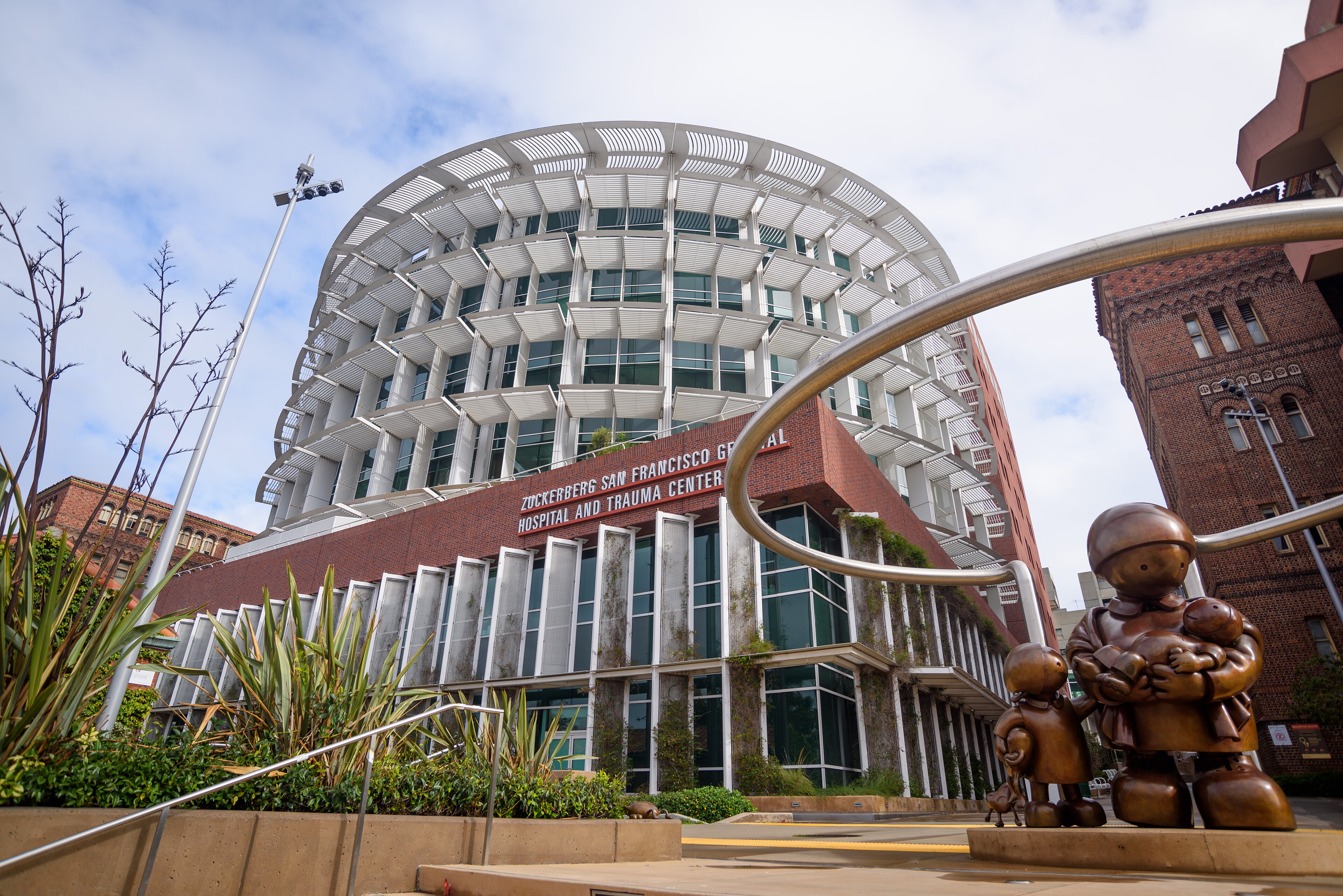
Alberto Rangel was stabbed to death at Zuckerberg San Francisco General Hospital on December 4, 2025. He was a social worker — one of the people we ask to sit across from the most volatile, most underserved, most unpredictable patients in the city's behavioral health system. He did it because he cared. And the institutions that employed him failed to keep him safe.
Months later, his colleagues at Ward 86 are still waiting for meaningful staffing and security changes. Let that sink in. A man died on the job, inside a public hospital, and the bureaucratic response has been... an internal audit.
To be fair, that audit — released last month by the SF Department of Public Health — is damning. It details exactly where leadership fell short on clinic safety. But a report identifying failures isn't the same thing as fixing them. And the frontline behavioral health workers who show up every day to do some of the hardest work in this city are watching the clock tick with nothing to show for it.
Here's where the institutional finger-pointing gets particularly galling: UCSF supplies the behavioral health staff who work in these DPH clinics, but according to workers on the ground, the university refuses to adequately invest in their safety. Meanwhile, DPH owns the facilities but apparently can't move fast enough to implement changes. Two massive institutions, one dead employee, and zero urgency.
This is a pattern San Francisco knows well. We commission reports. We hold press conferences. We express deep concern. And then we let the status quo grind on until the next tragedy forces another round of hand-wringing.
Social workers in behavioral health settings deal with patients in crisis — that's literally the job description. Nobody is saying the work should be risk-free. But there is a baseline of institutional responsibility here: adequate staffing levels, proper security protocols, panic buttons that work, and enough colleagues in the room that no one is left alone in a dangerous situation. These aren't extravagant asks. They're the bare minimum.
As one SF resident put it in an online discussion about the city's broader staffing challenges, "Nothing involving manual labor can function sustainably under these conditions and things are starting to crack under the pressure." That applies doubly to the people we task with managing behavioral health crises on the front lines of a public hospital.
Alberto Rangel deserved better. His colleagues — the ones still showing up to Ward 86 every morning — deserve better right now. Not after the next committee meeting. Not after the next fiscal year review. Now.
If UCSF and DPH can't figure out who's responsible for keeping these workers safe, maybe it's time the Board of Supervisors figures it out for them.
The Discussion
Sign in to join the discussion.
Loading…