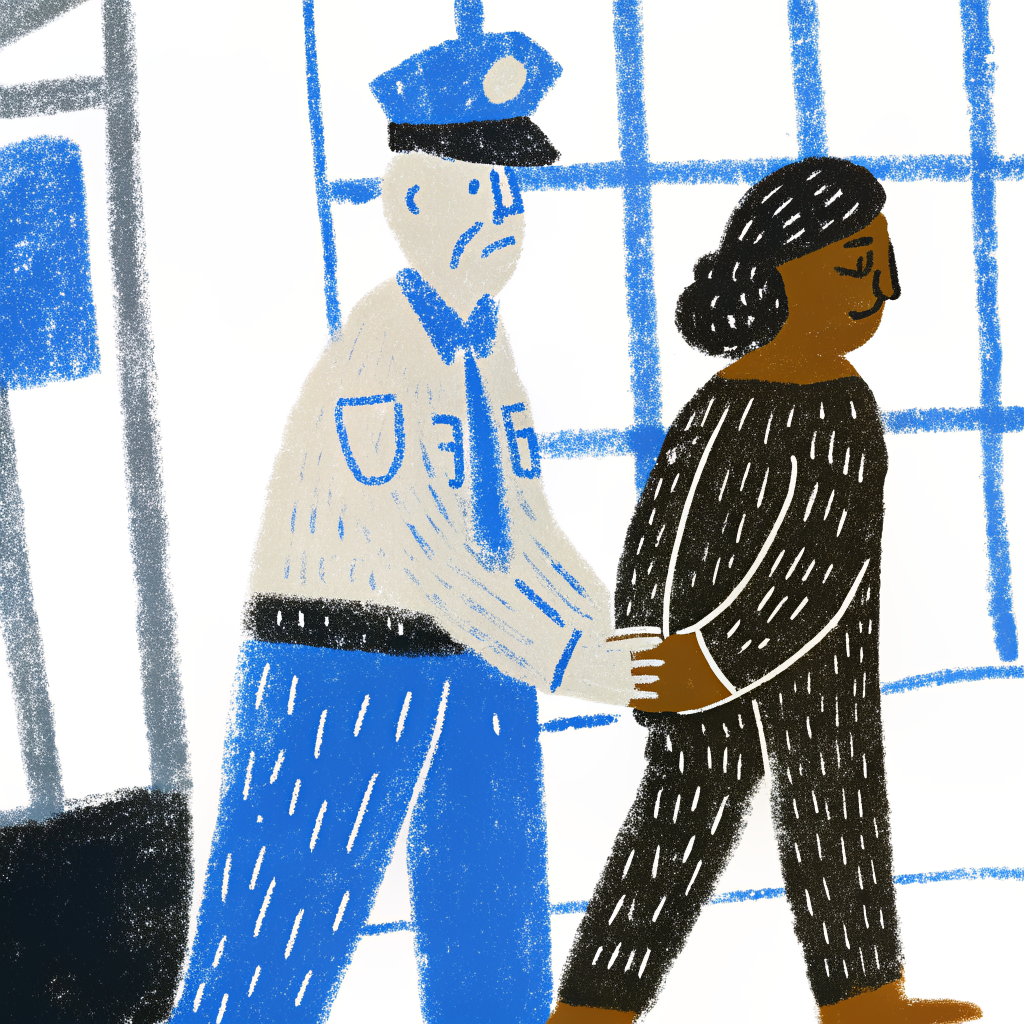
A retired California corrections officer was sentenced Friday to 165 years to life in a Napa County courtroom, but the sensational "San Quentin guard" label attached to the case obscures a quieter, more familiar horror: the three children he was convicted of assaulting were his own relatives, and the abuse had nothing to do with the prison where he worked.
Richard Phillip Bardouski, 66, drew headlines across the Bay Area for his job title. But the Napa County District Attorney's case describes crimes that were domestic, not institutional — assaults inside a west Napa home between 2010 and 2015, surfacing only when the survivors came forward years later. It is a reminder that most child sexual abuse is committed not by strangers or shadowy figures in uniform, but by family, and that these cases often reach a courtroom long after they begin.
Richard Phillip Bardouski was ordered on Friday to serve 165 years to life by Napa County Superior Court Judge Elia Ortiz, the Napa County District Attorney's Office announced. The sentence followed an eight-day jury trial in June, at the end of which Bardouski, 66, was convicted of sexual intercourse with a child under 10, sexual penetration with a child under 10, a lewd or lascivious act upon a child 14 or under, and a lewd or lascivious act upon a child 14 or 15.
The headline in nearly every outlet — including SFGATE, which carried the Bay City News wire, and The Press Democrat, which reported the sentence independently — led with the same phrase: former San Quentin guard. It is an accurate description of Bardouski's résumé. According to the California Department of Corrections and Rehabilitation, he worked as a corrections officer from 1997 until his retirement from San Quentin in 2022.
But the prison is essentially incidental to the crime. Prosecutors say Bardouski assaulted three children in his own family between 2010 and 2015 — one when she was 14, and two others at his home in west Napa when they were between 4 and 9 years old. None of it involved the institution in Marin County where he collected a paycheck. What the "guard" framing captures is the public's appetite for a villain in uniform; what it misses is that this was, in the language of the research, an intrafamilial case — the most common kind, and among the least likely to be reported quickly.
That delay is the other quiet fact in the file. According to the DA's account relayed by the wire, the victims came forward in 2023. By then Bardouski had retired and moved across the country to Montgomery, Alabama, where he was arrested in 2024. That a case built on childhood memories of events from a decade or more earlier could still be charged, tried and won speaks to California's expansive window for prosecuting the sexual abuse of children — and to the burden survivors carry in choosing when, or whether, to disclose.
"While I cannot give these girls their childhoods back or undo the immense pain they've suffered, I hope today's sentence and having the opportunity to have their voices heard gives them a sense of justice and is a big step toward closing this chapter in their lives," Deputy District Attorney Shashawnya Worley said in a statement released by the DA's office.
In addition to the prison term, Judge Ortiz ordered Bardouski to pay $950,000 in restitution to the three victims for their emotional suffering — a sum that, like the century-plus sentence, is more symbolic than practical for a 66-year-old man who will not leave custody.
The number itself, 165 years to life, is the kind of figure that lands in a headline and then disappears. It guarantees Bardouski dies in prison. It does not, as Worley acknowledged, return anything to the people the court called victims. What the case does offer is a corrective to its own framing: the danger here did not wear a badge on the job. It sat at a family table.
The Discussion
Sign in to join the discussion.
Loading…