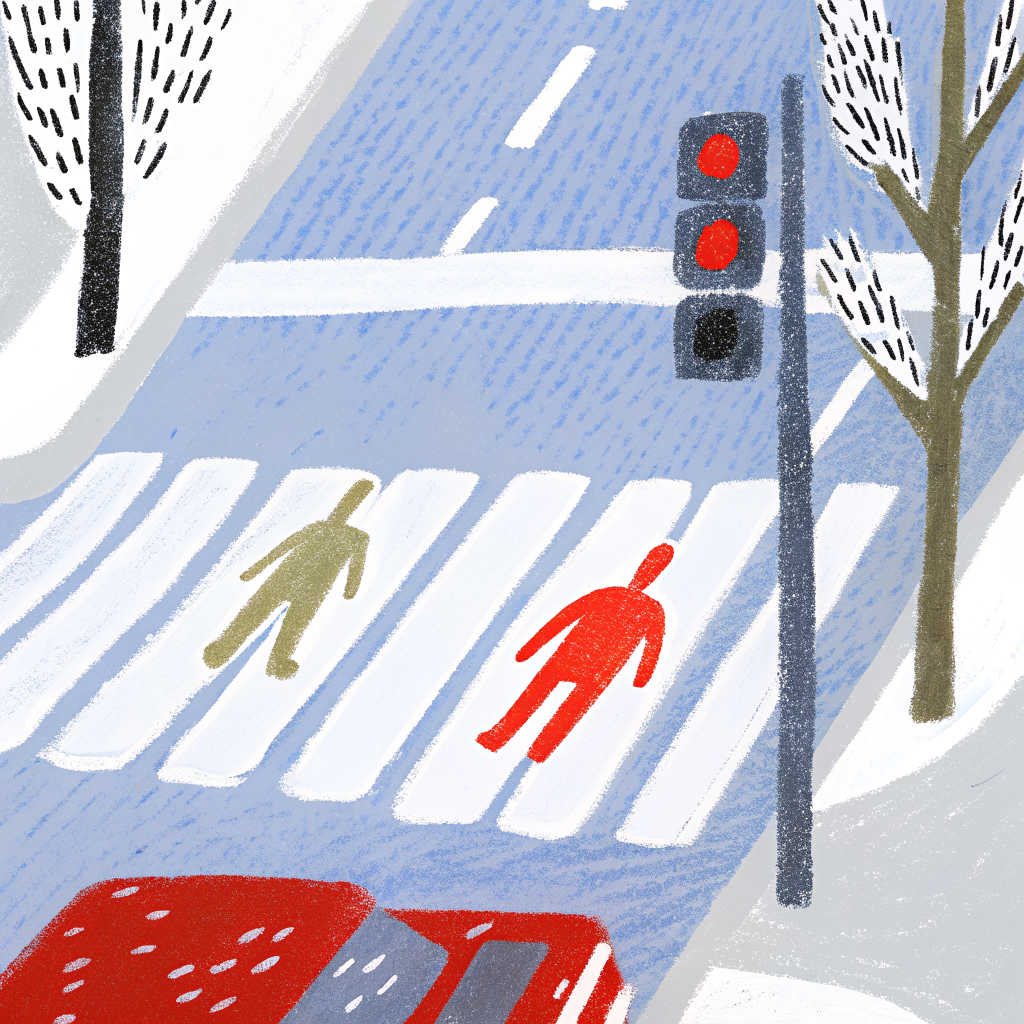
Hai Nguyen was 41, and he was in a marked crosswalk when a car turning off Tully Road struck him just after noon on Aug. 4. Five days later he became the 14th pedestrian killed on San Jose streets this year — in a city that just finished celebrating its lowest traffic-death total in more than a decade.
San Jose's total road deaths are dropping. Its pedestrian deaths are not. That divergence is the uncomfortable subtext behind the Santa Clara County Medical Examiner's identification of Nguyen this week — and it landed on Tully Road, an East San Jose arterial a sitting councilmember named in January as still waiting on unfinished safety work. The city's Vision Zero message is that slower speeds and cheaper street redesigns are turning the tide. For people on foot, the tide hasn't turned.
The collision happened around noon on Aug. 4 at Tully Road and Lucretia Avenue. A woman driving a Nissan Sentra west on Tully turned right and hit Nguyen as he crossed Lucretia in a marked crosswalk, NBC Bay Area reported (external source, opens in a new tab) from a police account. Officers rendered aid; the driver stayed and cooperated. Nguyen was hospitalized with life-threatening injuries and died on Sunday, Aug. 9. Police counted him as the year's 14th pedestrian fatality and its 28th traffic death overall.
Those two categories are the whole story, because they are moving in opposite directions.
Seven months ago the city had a genuinely good number to point to. Forty-one people died on San Jose roadways in 2025 — down 16% from the 49 killed the year before, and the fewest since 2012, San José Spotlight reported (external source, opens in a new tab). It was the second straight annual decline after fatalities crested at 63 in 2022. Clarrissa Cabansagan, who runs the Silicon Valley Bicycle Coalition, called the drop "a tremendous win," and said she could finally stop telling people that someone dies on the city's streets every week.
The exception was pedestrians. As deaths fell for drivers, cyclists and motorcyclists, foot traffic stayed flat — 20 pedestrians killed in 2025. This year, with four-plus months still on the calendar, the count is already at 14. That is a pace to match or overtake last year's toll, not undercut it.
Where Nguyen died sharpens the point. Tully Road has taken pedestrians' lives before: in the spring of 2023, a woman was struck and killed crossing it at Lanai Avenue, roughly two miles east, in one of at least 10 pedestrian deaths San Jose logged that year. And the corridor is on the city's own radar. Pam Foley, who represents District 9 and sat on San Jose's Vision Zero Task Force before it was wound down last year, singled out Tully Road in January as a place where safety projects were underway but incomplete. The work was proceeding "little by little," she said, and the constraint was money — "more funding is really what we need." Federal dollars for automated speed cameras, a tool safety advocates have pushed hard, had stalled, she added.
San Jose was an early Vision Zero adopter, the fourth U.S. city to sign on, back in 2015. Its playbook leans on "quick build" redesigns — fast, low-cost reconfigurations meant to slow drivers and give walkers more room — alongside lowered speed limits on 18 roads and a multilingual "Slow Down, San Jose" campaign. The official targets: cut deaths and severe injuries 30% by 2030, and reach zero by 2040.
People who support those goals argue the clock is the problem. Jordan Moldow, who chairs a resident committee that helps steer the city's traffic-safety agenda, told San José Spotlight the city could "be moving faster," and framed the stakes plainly: each fatality, he said, is somebody's resident, family member or loved one.
The work was proceeding "little by little," she said, and the constraint was money — "more funding is really what we need."
Nguyen did what pedestrians are instructed to do. He used a marked crosswalk. His name is now attached to a figure San Jose keeps saying it wants to drive down — and, for people walking, hasn't.
The Discussion
Sign in to join the discussion.
Loading…