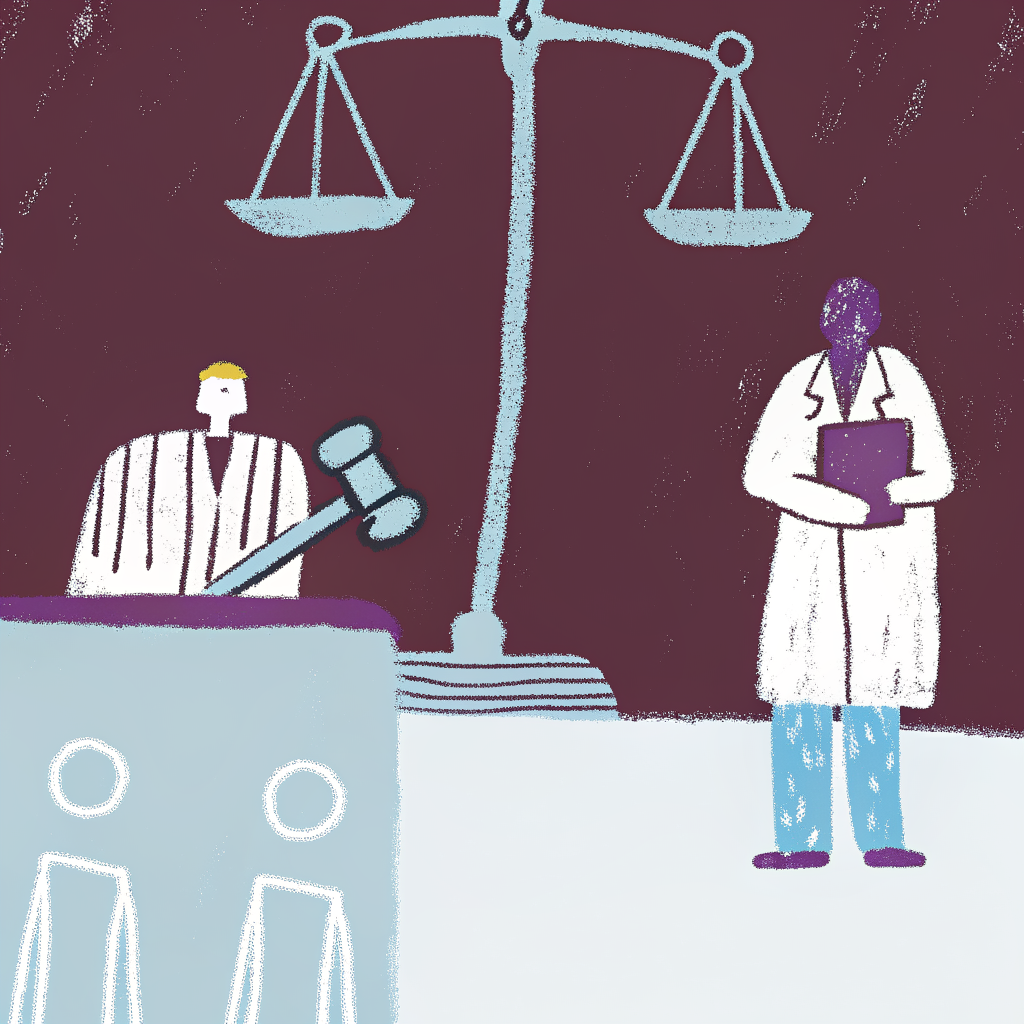
The federal appeals court based in San Francisco — the Ninth Circuit — ruled Friday, 2-1, that the Trump administration's drive to shut down gender-affirming care counts as a legitimate policy aim, not the kind of improper purpose that lets a court quash a Justice Department subpoena of a provider. It is the first time a federal appeals court has revived one of the roughly two dozen demands the administration has aimed at clinics treating transgender youth.
The dispute itself is out of state: QueerDoc, a small Washington telehealth clinic, fought its subpoena in a Seattle courtroom. What makes Friday's decision matter here is where it came from. The Ninth Circuit's rulings bind federal courts across California — the same circuit where Attorney General Rob Bonta and a string of hospitals have spent a year resisting DOJ demands for transgender patients' files. By ruling that a president may steer DOJ's enforcement toward his own policy aims, the panel undercut the main theory California providers have leaned on to defeat these subpoenas: that they are political intimidation dressed up as fraud investigations.
The decision, reported by Reuters and the Associated Press, revives a subpoena that a Seattle federal judge, Jamal Whitehead, had thrown out as issued in bad faith. Judge Carlos Bea, a George W. Bush nominee, wrote for the majority that the president may direct the Justice Department to use its statutory powers in line with "his broader policy goals," according to Reuters' reading of the opinion. Trump appointee Judge Daniel Bress joined him. The two judges also described the long-term risks and effectiveness of the treatments as uncertain.
The panel stopped short of forcing the clinic to turn over anything. As the Associated Press reported, it returned the case to Whitehead to consider QueerDoc's other objections — that the demand is too broad and too heavy a burden for a small practice. The subpoena had asked for personnel records, billing files, correspondence with drug manufacturers, and a roster of patients prescribed puberty blockers or hormone therapy.
Judge Richard Paez, a Clinton appointee, dissented. He pointed to what he called "a mountain of evidence" that the department had wielded the threat of criminal investigation to push providers into dropping the care, Reuters reported.
None of that is hypothetical in California. The QueerDoc subpoena is one of more than 20 the Justice Department issued in the summer of 2025, following a January 2025 executive order that told DOJ to make youth gender medicine an investigative priority, CalMatters has reported (external source, opens in a new tab). The demands reached back through years of records — names, birthdates, home addresses, Social Security numbers.
He pointed to what he called "a mountain of evidence" that the department had wielded the threat of criminal investigation to push providers into dropping the care, Reuters reported.
Bonta has been in the fight the whole time. In December he and 20 other attorneys general filed an amicus brief (external source, opens in a new tab) supporting a Colorado children's hospital trying to quash its subpoena. He described the demand as an assault on transgender adolescents' privacy and branded DOJ's interpretation of federal drug law a "flagrant overreach." His office had already backed similar challenges by hospitals in Boston and Philadelphia, both of which won.
California families have felt the pressure directly. Children's Hospital Los Angeles shut its Center for Transyouth Health last July, cutting off some 3,000 young patients; the following January, DOJ agreed to abandon its bid for those patients' records through 2029. Khadijah Silver of Lawyers for Good Government, which represented the families, told CalMatters the effort was "basically a fishing expedition" launched without probable cause.
Friday's ruling points the opposite direction. Brett Shumate, who runs DOJ's civil division, posted on X that the order confirms the department can probe whether hospitals prescribing hormones and puberty blockers to minors broke federal law. QueerDoc founder and CEO Crystal Beal told Reuters that patients deserve to seek care without fearing their records will "become a tool of political investigation."
The practical upshot: California providers now face binding circuit precedent that a president's policy motive alone won't sink a subpoena — even as the QueerDoc case that produced it heads back to Seattle still unresolved.
The Discussion
Sign in to join the discussion.
Loading…