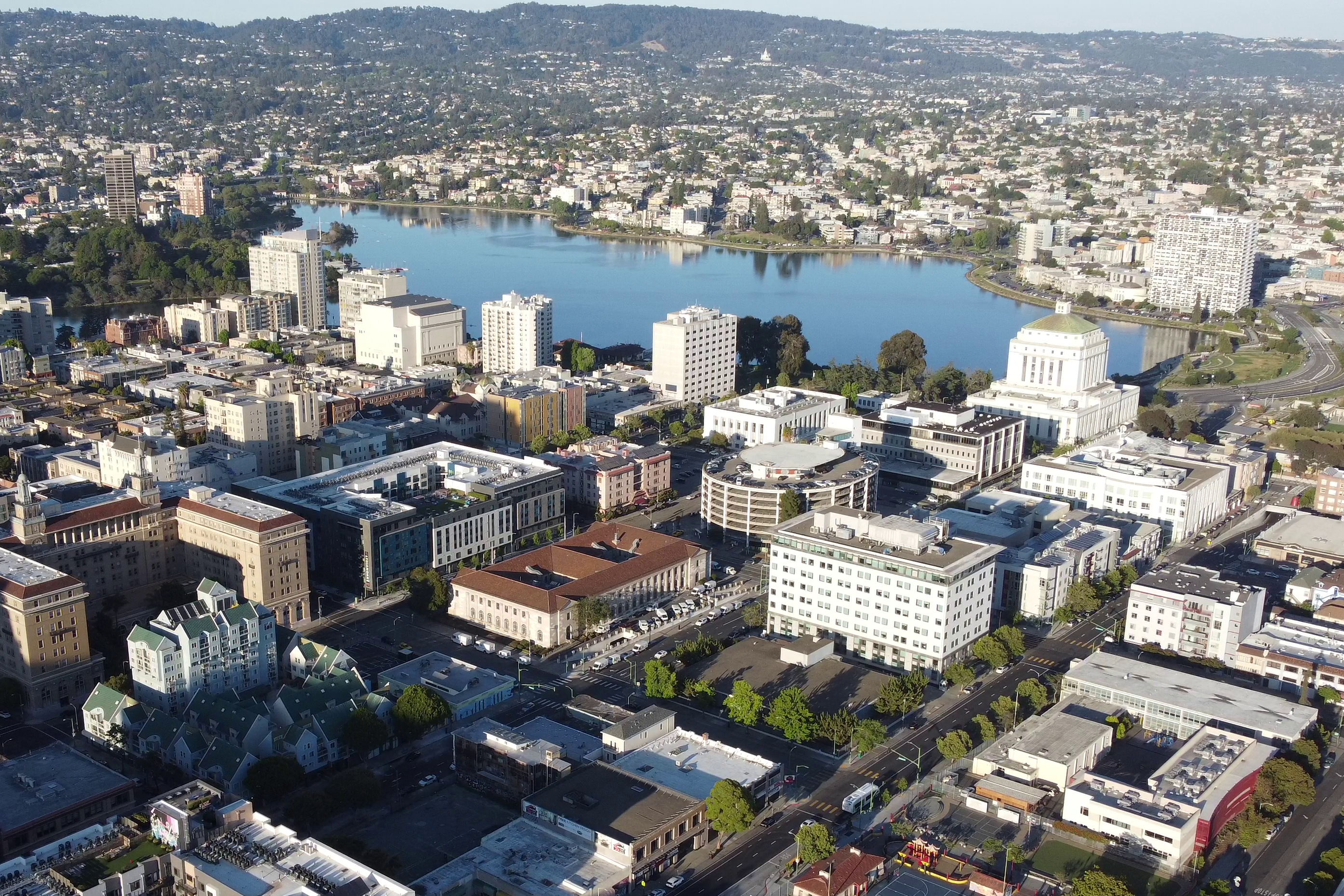
Oakland home values continue to fall — among the fastest declines in the nation — and a certain crowd is treating this like a crisis. But let's take a breath and remember something they apparently skipped in Econ 101: when you build more of something, it tends to get cheaper.
Downtown Oakland and the Embarcadero corridor have seen a surge of new apartment and condo construction over the past few years. Unlike much of the Bay Area, where NIMBYs strangle every proposed project in a thicket of environmental reviews and community objections, Oakland actually let developers build. And now — shocker — there's more housing, and prices are softening.
As one Bay Area commuter put it: "More housing translates to lower prices. People — ie NIMBYs — are too obsessed with seeing home prices skyrocket." They also offered some practical advice: if your property has dropped in value, appeal your tax assessment and save some money. Not bad.
Studios in Adams Point — a walkable neighborhood near BART with a Whole Foods — are reportedly going for around $1,600 a month. For the inner Bay Area, that's genuinely competitive. Another local noted this is simply "what making housing more affordable looks like. You can't make something get cheaper and be a good investment at the same time."
That's the tension no one wants to acknowledge. For years, Bay Area homeowners and politicians have simultaneously demanded "affordable housing" while also expecting their property values to climb forever. Those two things are fundamentally incompatible. You have to pick one.
Now, is supply the only factor in Oakland's decline? Of course not. The city still struggles with crime, homelessness, and a downtown that lost significant foot traffic post-pandemic. Employers have left or downsized. These are real headwinds. But the building boom is clearly a major driver, and it's the one factor that's actually good news for regular people trying to find a place to live without selling a kidney.
The lesson for San Francisco is obvious: build more housing and prices come down. Stop building and keep wondering why a one-bedroom costs $3,200. Oakland is running the experiment our city refuses to try at scale. The results are in, and they look a lot like basic economics.
The Discussion
Sign in to join the discussion.
Loading…