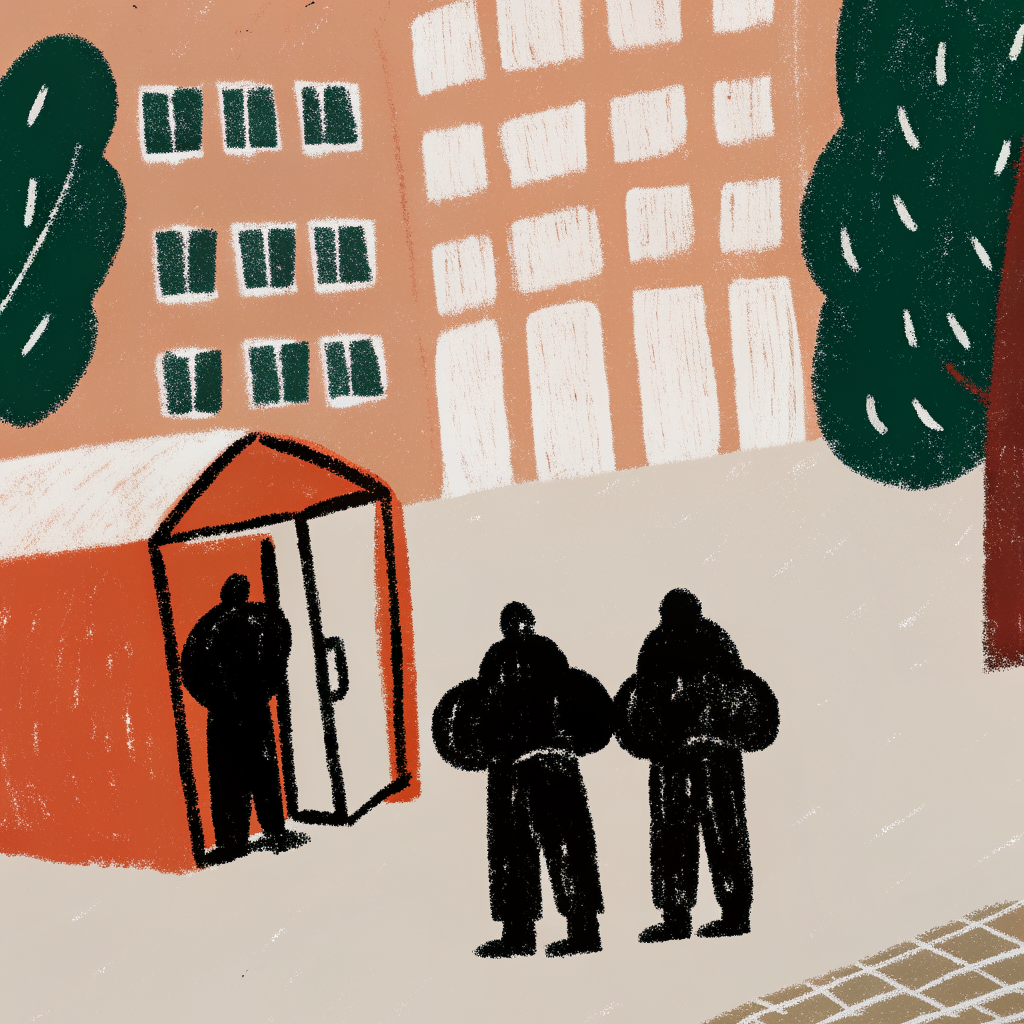
Under Mayor Daniel Lurie's Citywide Good Neighbor Policy, every city-funded shelter, drop-in center and supportive-housing site must now walk its perimeter three times a day, post a QR code so neighbors can lodge complaints, and answer those complaints within 24 hours — or risk having its contract clawed back. What the policy does not include is a single new dollar to do it.
Lurie has cast the rules as a fairness measure for neighborhoods that agree to host services. But the policy text and the mayor's own enforcement schedule describe something narrower: the city is shifting responsibility for street conditions onto the nonprofits it pays, asking them to monitor and report the very people they serve — while the adult shelter waitlist still tops 500. Homeless advocates call it policing dressed as tidiness. And the mayor's gentle "corrective action" framing sits atop real financial penalties that take effect in January.
San Francisco made the Citywide Good Neighbor Policy (external source, opens in a new tab) official this summer, and it reaches nearly every kind of site the city pays for. Programs funded through the homelessness, public health and housing departments are all covered — from emergency shelters and transitional housing to drop-in centers and long-term supportive housing — according to the draft that circulated for public comment (external source, opens in a new tab) in May.
The obligations are concrete. Staff must inspect and log the area around their building at least three times daily, keep entrances and sidewalks passable, acknowledge a neighbor's complaint within a day and try to resolve routine ones inside three. The city switched the policy on July 1. The part with contractual bite arrives in January: providers will post QR codes for residents to file grievances, and a pattern of unresolved ones can force staffing changes or contract action, the San Francisco Chronicle reported (external source, opens in a new tab).
Lurie describes the rules as a mutual promise. "When a community steps up to accept a new facility and help get people off the street, they should be able to feel confident that the provider will support them and ensure street conditions are acceptable," the mayor said in his announcement (external source, opens in a new tab). "With this new policy, we are giving neighbors and providers clear expectations, consistency across neighborhoods, and open communication so issues can be addressed quickly." The city stresses that its enforcement is meant to lean on training and technical assistance before punishment.
Providers' advocates read the same pages and see a mandate to police their own clients. Writing for Street Sheet, the paper of the Coalition on Homelessness, organizer Lukas Illa pointed out that the policy's definition of a neighborhood "concern" stretches to loitering, encampments and, in practice, the mere visible presence of homeless people. When those concerns come in, Illa wrote, providers are expected to route them to city agencies — including the Police Department and the largely police-staffed street teams. The escalation ladder for a provider that falls short, he noted, runs through payment holds and scope cuts all the way to losing the contract entirely.
That is the heart of the objection. A resident who reports someone they assume is homeless standing outside a shelter can start a clock that, left unanswered, counts against the shelter's funding. Nonprofits that are already thin — the city separately pays for roughly 30 ambassador programs to patrol street homelessness — are being asked to add perimeter duty with no money for the staff to do it, or for the indoor and community space that might keep clients off the sidewalk to begin with. As Illa noted, the adult shelter waitlist sat above 500 people this spring.
The pressure behind the policy is real. The Controller's street inspections for the year ending June 2025 turned up feces on 34% of nearly 2,600 sampled routes and a large dumped item on about a third, numbers GrowSF invoked (external source, opens in a new tab) in praising the rules as a path to opening more beds. Clean sidewalks are a legitimate goal. What the policy never answers is who funds the work — and whether tying "acceptable street conditions" to a shelter's contract nudges providers toward moving poverty out of sight rather than indoors.
The Discussion
Sign in to join the discussion.
Loading…