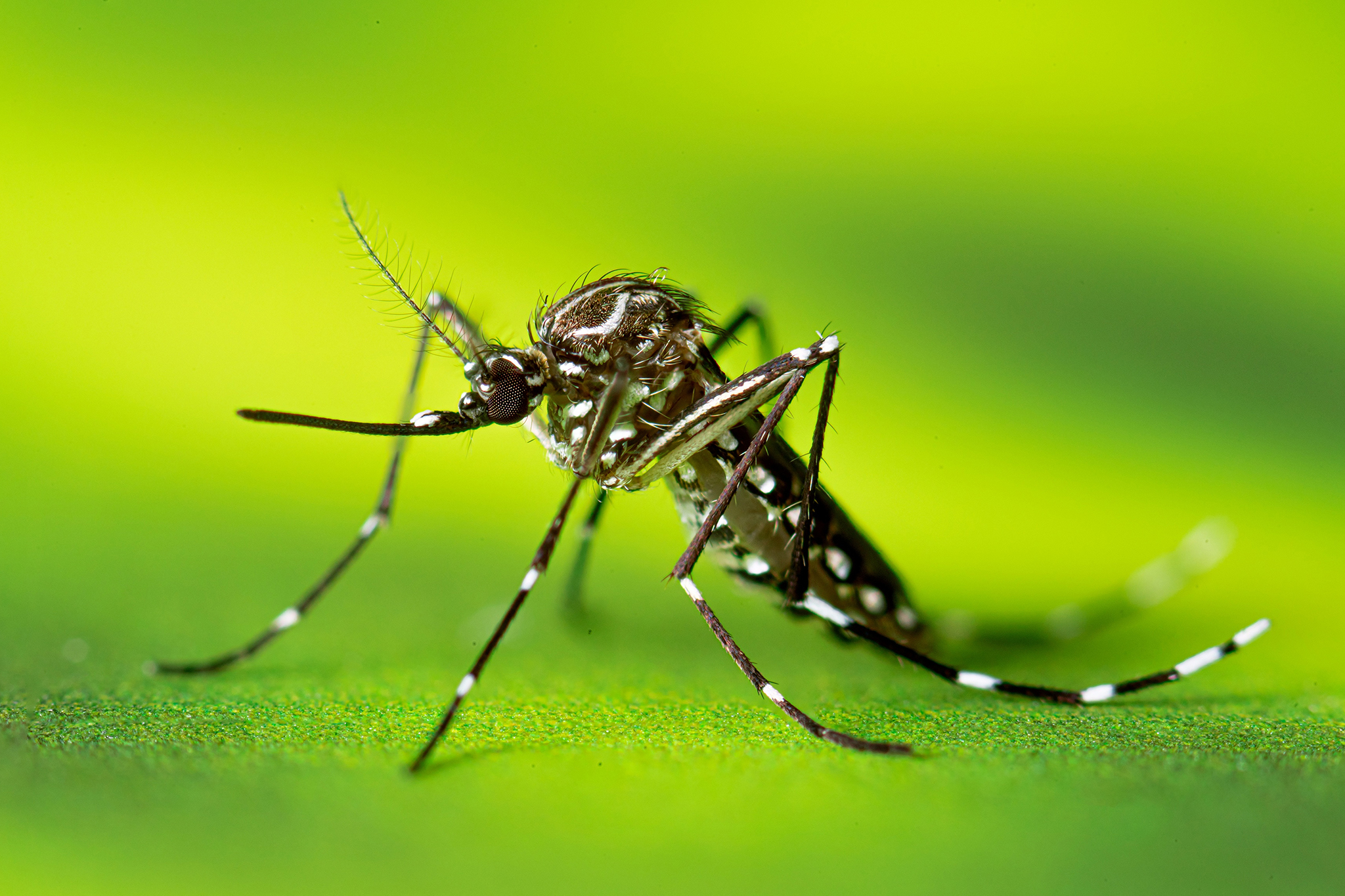
An invasive mosquito capable of spreading dengue, Zika, and yellow fever was detected for the first time in Castro Valley on July 20, the Alameda County Mosquito Abatement District confirmed in an official press release — and the district sent a truck through the neighborhood three nights later to kill the larvae before more adults could emerge.
The discovery marks the farthest west the species has been found in Alameda County, where it had previously been limited to the corridor of eastern cities — Livermore, Pleasanton, Dublin, and Fremont — since its first county appearances in 2024. Officials are invoking an established rapid-response protocol and asking Castro Valley residents to help prevent the mosquito from becoming permanently established in a densely settled, unincorporated Bay Area community.
District staff found multiple Aedes aegypti specimens in traps set in the neighborhood bounded by Norbridge and Forest avenues and Sapphire Street, according to Castro Valley Patch, which reported on the incident the day after the treatment. The consecutive positive trap results from the same block indicated the mosquitoes had already located standing water in which to reproduce.
"We detected this mosquito in back-to-back traps in the area, indicating that Aedes aegypti has found standing water sites to reproduce," Operations Director Erick Gaona said in a statement reported by Patch. "Our goal is to deliver the treatment into cryptic water sources that are difficult for our staff to access."
In response, the Alameda County Mosquito Abatement District conducted a Wide Area Larvicide Spray (WALS) treatment on the night of July 23, running from 11 p.m. to 1 a.m., the District's official 2026 treatment log shows. The product applied was VectoBac® WDG, a formulation of Bacillus thuringiensis subspecies israelensis (Bti) — a naturally occurring soil bacterium that kills mosquito and black-fly larvae but is classified as non-toxic to humans, birds, fish, and pollinators. A truck-mounted mister dispersed the larvicide as a fine mist, designed to drift into hidden, water-holding containers in backyard and residential spaces that inspectors cannot directly access.
The Castro Valley detection is significant for its geography. Every prior confirmed Alameda County detection had been in the eastern reaches of the county — Livermore, Pleasanton, Dublin, and Fremont — all since 2024, per the District's invasive-species tracking page. Castro Valley, an unincorporated community of roughly 65,000 people just inland from Oakland and San Leandro, lies roughly 15 to 20 miles west of those prior finds, extending the species' documented footprint toward the urban core of the Bay Area.
Aedes aegypti first appeared in California in Fresno, Madera, and San Mateo counties in 2013 and has since been documented in at least 28 counties statewide. In parts of Southern California it has been linked to rare instances of locally acquired dengue fever — a transmission pattern that has not yet been recorded in the Bay Area but that public health officials treat as a credible threat wherever the mosquito establishes itself.
The species presents different control challenges than California's native mosquitoes. It is a daytime biter — most active in early morning and late afternoon — aggressive enough to bite repeatedly in a short span, and small enough to escape notice. It can complete its entire life cycle in a container no larger than a bottle cap, and its eggs can survive dry conditions for months, making accidental spread via moved planters, buckets, or yard debris a persistent risk.
In remarks about the District's ongoing response to the species' spread across Alameda County, General Manager Ryan Clausnitzer pressed residents to act quickly. "The quickest way to prevent this annoying and potentially dangerous mosquito species from becoming established is to act now," he said. "We urge residents to grant yard access so we can ensure no one is accidentally breeding mosquitoes."
The District is asking Castro Valley residents to report unusual mosquito activity to the District's hotline, eliminate standing water from outdoor containers at least once a week, and allow certified District technicians to inspect their properties. Treatment notifications and an updated schedule of any future applications are posted at mosquitoes.org.
The Discussion
Loading…