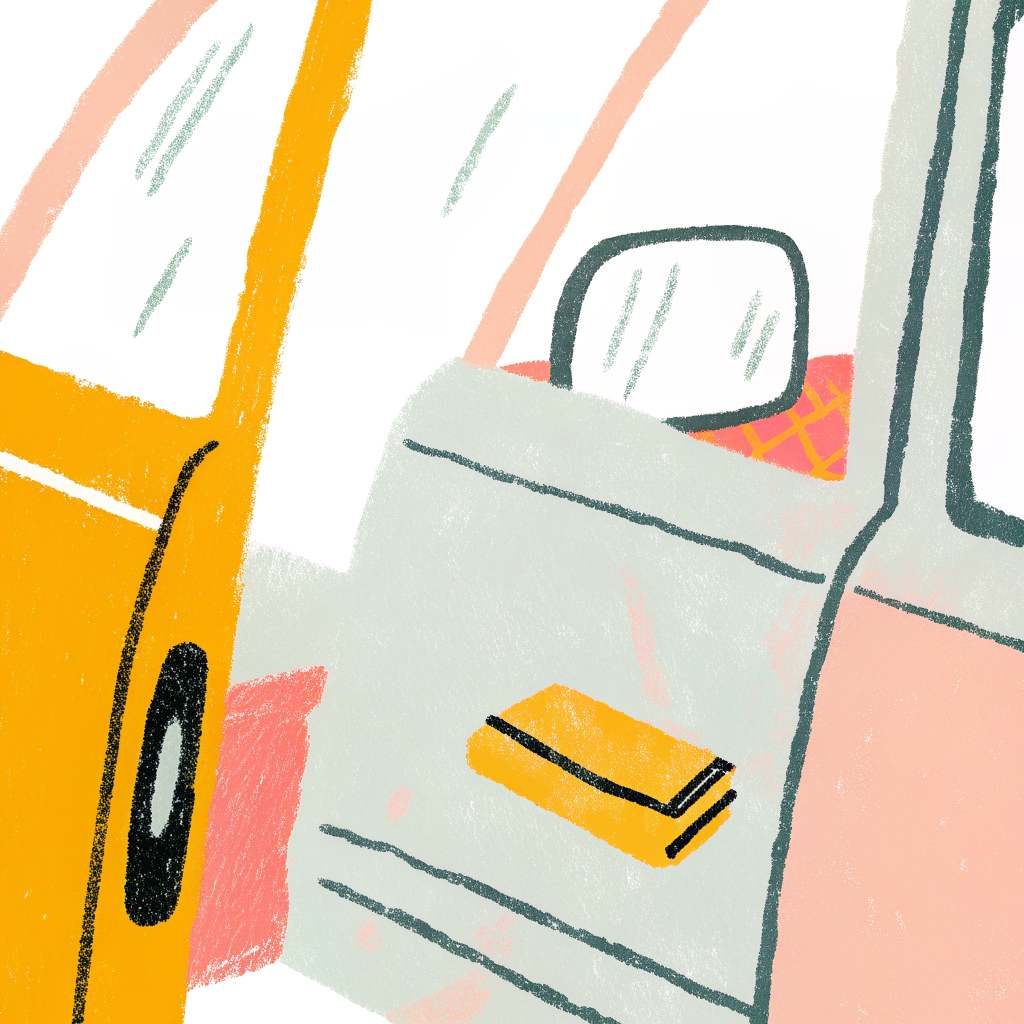
A cluster of keyless "relay" car break-ins hit Glen Park this summer, leaving no broken glass and often taking little or nothing. It's the same no-smash method NBC Bay Area caught on home-security video in a San Jose neighborhood last fall.
Nothing was broken, and that was the unsettling part. On a foggy Glen Park block this summer, a resident named Alex Hao walked up to find her car door hanging ajar, her glovebox rifled, and a pair of sunglasses gone from the console — with no shattered window to explain any of it. Hao's account, and those of several neighbors, were reported by The San Francisco Standard's Jillian D'Onfro on Aug. 15 (external source, opens in a new tab). The Standard counted a small cluster: cars opened, searched, and abandoned without the familiar signature of the smashed window. Some were barely robbed at all.
It is easy to file that under Glen Park eccentricity — a courteous intruder in a fog-wrapped village of stairways and eucalyptus. But the method is neither new nor unique to this corner of the city. Nearly a year earlier, NBC Bay Area's Robert Handa documented the same pattern in the Cambrian neighborhood of San Jose (external source, opens in a new tab), where home-security cameras recorded thieves strolling up to parked cars and going through them "without breaking windows or locks." That, the station reported, was the second such rash residents had flagged in a single week. Glen Park is less a mystery than the newest dot on a Bay Area map.
The trick is the keyless "relay attack." A fob resting on a hallway table never stops broadcasting; a thief near the house captures that signal, an accomplice near the curb rebroadcasts it, and the car — convinced its key is inches away — obligingly unlocks. The Bay Area YouTuber and former NASA engineer Mark Rober demonstrated it this spring, and the automotive outlet MotorBiscuit laid out the mechanics (external source, opens in a new tab): a rig Rober first paid $12,000 for on the dark web turned out to be reproducible from an old video baby monitor for around $100, and where the prototype needed seven minutes, the rebuilt version opened a 2026 Hyundai Sonata in roughly ten seconds. By that account, relay devices are tied to something like half a million stolen cars a year in the U.S. — one every 48 seconds — and Germany's ADAC has found that about 85% of keyless-entry models can be popped this way.
In Glen Park the haul has been stranger and slighter. Per the Standard, Hao lost only her sunglasses; days later a neighbor's door sat cracked open with nothing missing, the loose paperwork restacked into a tidy pile as if the visit were meant to be noticed. A third resident, Dennise Gearty, had an air compressor taken from her trunk and still felt lucky — "you don't have to replace the glass, and there's nothing wrong with the car," she told the paper. Neither woman's security camera caught anything; Gearty suspects a signal jammer. The SFPD, the Standard reported, did not answer questions about how widespread the attacks have become.
The defense is nearly free: a few cents of aluminum foil or a metal tin around the fob forms a Faraday cage and smothers the signal, the fix Rober himself endorses. Hao bought a signal-blocking pouch and skipped the police report. Walk her block tomorrow and you'll notice nothing amiss — which, this summer, is exactly what a break-in has come to look like.
The Discussion
Sign in to join the discussion.
Loading…