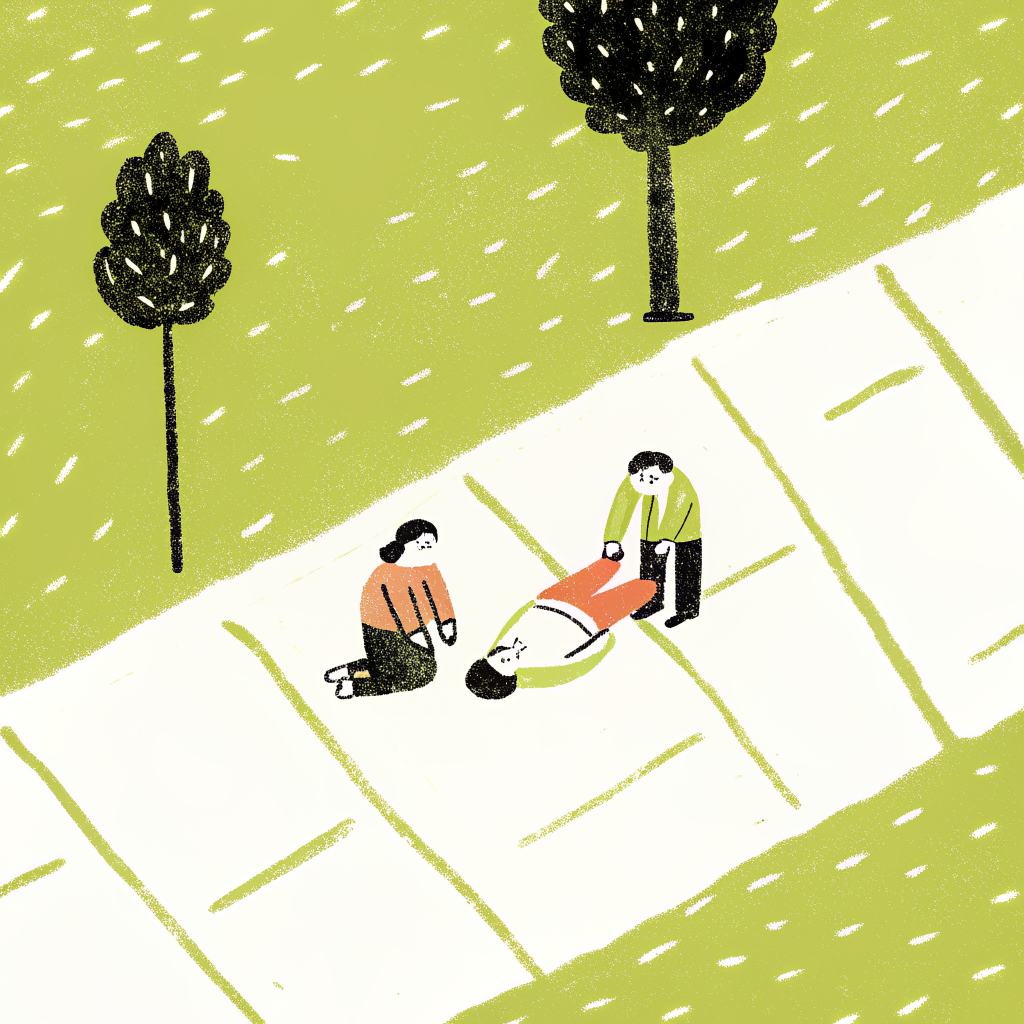
For a few hours Saturday, a chest-compression manikin will be sitting on the sidewalk outside your Marin grocery store, ferry terminal or shopping center — and an EMS professional will spend a few minutes teaching you how to keep someone alive until the ambulance arrives.
Marin's annual Sidewalk CPR event returns for its 15th year on Saturday, Aug. 15, at 13 outdoor locations stretching from Novato down to Muir Beach, with training offered from 10 a.m. until 2 p.m. The county's Health and Human Services department and its Emergency Medical Services Agency run it, and the instruction is free, drop-in and hands-on — covering the skills that decide whether a cardiac arrest, an overdose or a bad bleed ends in a funeral: hands-only CPR, defibrillator use, naloxone and Stop the Bleed. The premise is blunt: the person most likely to save your life is a bystander, and right now most bystanders freeze.
The event is deliberately low-friction. There is no sign-up, no fee and no classroom. Instructors from local fire departments, hospitals and volunteer disaster-response teams set up in high-traffic spots — a Target entrance, a ferry line, a feed barn — and walk anyone who stops through four skills in a few minutes each.
The centerpiece is hands-only CPR: chest compressions, no rescue breaths, the technique the American Heart Association now pushes for untrained bystanders because it's simpler and people are likelier to actually do it. Participants also practice with an automated external defibrillator (AED), the shock boxes bolted to walls in airports, schools and malls that can restart a heart in the right rhythm. Two additions reflect the emergencies Marin actually sees: administering naloxone to reverse an opioid overdose, and Stop the Bleed compression techniques to control heavy bleeding before medics arrive.
Why bother? The numbers make the case. Roughly 350,000 people suffer an out-of-hospital cardiac arrest in the U.S. each year, and about 90% of them die, according to the American Heart Association's 2025 guidelines (external source, opens in a new tab). Immediate bystander CPR can double or triple the odds of survival — yet only about 42% of victims get it. Every trained neighbor narrows that gap.
Christian Lombard, an EMS specialist with the county, has pitched the event as a cheap civic investment: a few minutes of instruction, he argues in the county's announcement (external source, opens in a new tab), is enough to turn an ordinary passerby into someone who can act in the seconds that count. It is the same logic public-health agencies lean on to justify mass first-aid drives — preparedness spreads person to person.
Where to find a station, grouped by area:
- Highway 101 corridor: Corte Madera Town Center; Montecito Plaza in San Rafael; Larkspur Landing's Marin Country Mart; the Bon Air center in Greenbrae; and Vintage Oaks in Novato, by the Target.
- Southern Marin and the water: The Depot in downtown Mill Valley; the Sausalito ferry terminal; the Angel Island ferry dock in Tiburon; the Target in Marin City.
- Ross Valley and the coast: Bolinas Park in Fairfax; Toby's Feed Barn in Point Reyes Station; the Village Green in Stinson Beach; and the Muir Beach parking lot.
That geographic spread is intentional. The West Marin and coastal sites — Point Reyes Station, Stinson Beach, Muir Beach — sit farthest from the county's hospitals and wait longest for an ambulance, which is exactly where a trained bystander matters most. Ferry terminals and shopping centers, meanwhile, put the lesson in front of weekend crowds who might never see a county health flyer.
Sidewalk CPR is a national push, running in cities from Los Angeles to New York, but Marin has kept its version alive for a decade and a half. All ages are welcome, and the format is built so you can pick up a skill on the way into the store and still finish your Saturday errands within the hour.
The window is narrow — four hours, closing at 2 p.m., Saturday only. After that, the manikins go back in the truck for another year.
The Discussion
Sign in to join the discussion.
Loading…