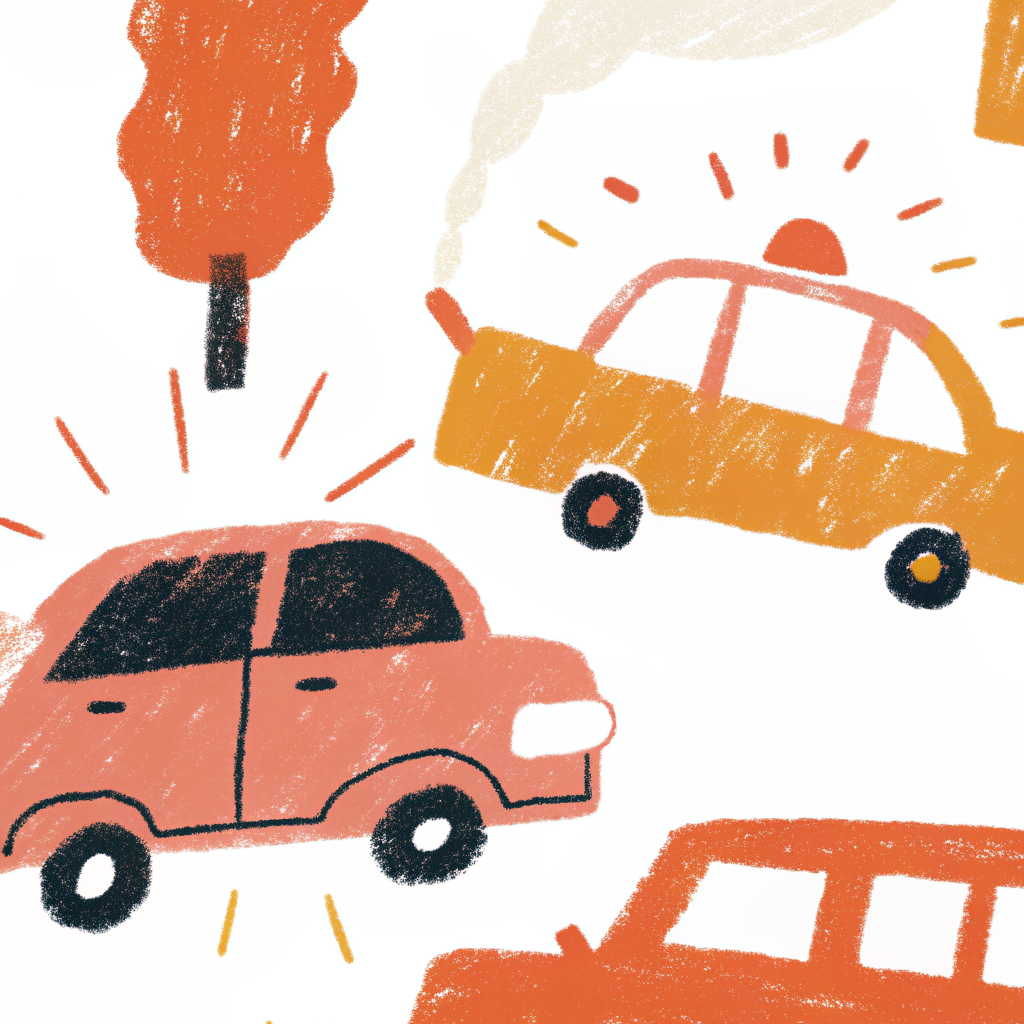
On July 19, an SFPD pursuit of a vehicle packed with teenagers ended with the car plowed into an occupied sedan, a fire hydrant and an Audi dealership on South Van Ness Avenue — eight people hurt. It was the second time in 17 months that a police chase wrecked in the dense heart of the Mission. The first time, elected officials and a police commissioner demanded to know why. This time, so far, no one has.
San Francisco expanded its police-pursuit authority in March 2024 when voters passed Proposition E, loosening restrictions so officers could chase a far wider range of suspects. Critics warned the change would produce more crashes in crowded neighborhoods. In February 2025, a 30-minute chase ended in a parklet crash in the Mission that injured six, and Supervisor Jackie Fielder, a police commissioner and street-safety advocates publicly questioned whether the pursuit was worth the risk. Seventeen months later, the same neighborhood absorbed a nearly identical wreck with even more casualties — and the pointed scrutiny that followed the first crash has not materialized for the second.
The sequence, as SFPD described it to Mission Local (external source, opens in a new tab), was brief and violent. Around Guerrero and 19th streets on the evening of Sunday, July 19, patrol officers clocked a vehicle with seven people inside moving "erratically." When they signaled it to stop, the driver accelerated away, coming close to sideswiping a second patrol unit, then slammed into an occupied car — knocking it into a fire hydrant and the front of the Audi dealership at South Van Ness Avenue and 14th Street.
Everyone in the fleeing vehicle, from a 13-year-old to a 24-year-old, was taken to a hospital; so was one occupant of the car it hit, with injuries described as non-life-threatening. The booking sheet for the driver, Jason Ulloa Vasquez, 18, of Oakland, runs long: felony evading that caused serious injury, impaired driving on alcohol and cannabis, endangering a child, a red-light violation and operating without a license. He is jailed without bail. Officers also arrested a 23-year-old passenger, Pedro Enquie Padilla Ulloa, accusing him of battering an officer and resisting. The department's Traffic Collision Investigation Unit has the case open.
NBC Bay Area, whose reporter Marianne Favro covered the scene (external source, opens in a new tab), independently confirmed the wreck and reported that the child-endangerment count traces to the 13-year-old riding among the passengers. The station also caught the neighborhood's unease. One resident, Donnie Beasley, said he passes the corner daily on foot and shuddered at what "could've happened" — "flying debris or maybe even worse," he told the station. Cleanup crews spent the next day hauling off wrecked vehicles, swapping in a new fire hydrant and boarding up the dealership's shattered window.
Around Guerrero and 19th streets on the evening of Sunday, July 19, patrol officers clocked a vehicle with seven people inside moving "erratically."
What that coverage did not ask is the question City Hall was pressing a year earlier: should the chase have happened at all?
That debate is not hypothetical here. Proposition E, the March 2024 ballot measure authored by then-Mayor London Breed and approved by about 60 percent of voters (external source, opens in a new tab), loosened restrictions on vehicle chases alongside new surveillance powers, KQED reported. Before Prop E, department policy generally barred pursuits unless a suspect had committed a violent felony or posed an imminent danger; the measure let officers chase for any felony or violent misdemeanor.
The trade-off critics predicted arrived fast. On Feb. 9, 2025, officers chased a stolen Audi for about half an hour before it crashed through the parklet outside the Napper Tandy bar in the Mission, injuring six. That pursuit, KQED noted, "would've been barred before Prop E." (external source, opens in a new tab) Police Commissioner Max Carter-Oberstone said at the time: "There was a real concern that if we liberalized our policy even further, that we would have more collisions, more injuries to innocent members of the public. That's what we got this week." Chief Bill Scott conceded the chase would not have occurred under the old policy but said "the driver of that vehicle ran into that parklet, not the officers."
The neighborhood's own supervisor pushed hardest. Jackie Fielder, who represents the Mission, said she had "serious questions related to why SFPD needed to engage in a dangerous high-speed chase in a residential neighborhood," CBS News Bay Area reported (external source, opens in a new tab), calling it a "miracle" no one died. Luke Bornheimer, executive director of the group Streets Forward, told the same outlet the crash was "the unfortunate result of a policy allowing police chases that decreases public safety."
The July crash differs in one telling way. The February pursuit chased a felony — a stolen car. July's began with officers describing "erratic" driving, the kind of marginal, discretionary encounter Prop E's opponents warned would now justify high-speed chases through packed corridors. Whether the decision to pursue met SFPD's post–Prop E threshold is exactly what the Traffic Collision Investigation Unit is positioned to determine — and exactly what the department has not addressed publicly. SFPD did not say whether the pursuit complied with its own guidelines.
Eighteen months into the Prop E era, the Mission has now hosted two multi-injury pursuit crashes blocks apart. The first produced a public reckoning. The second, for now, has produced a booking log.
The Discussion
Sign in to join the discussion.
Loading…