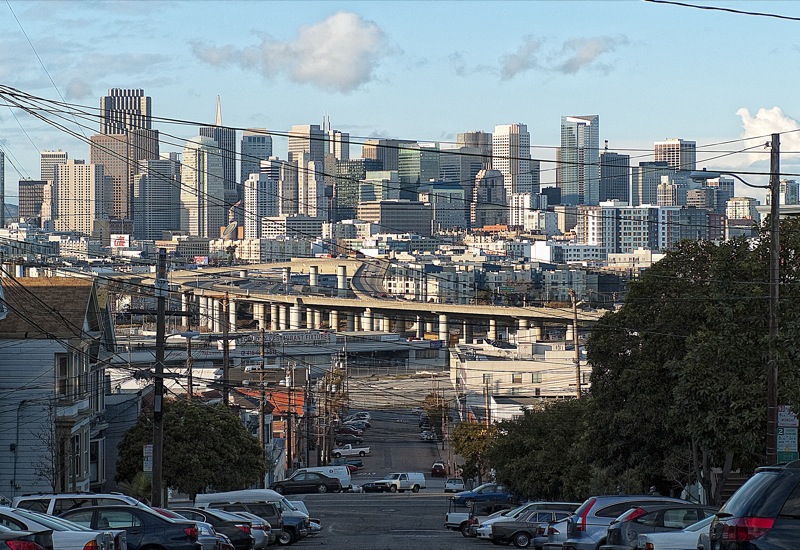
Take a look at Coit Tower and the Bay Bridge sitting side by side against the San Francisco skyline, and you're looking at something this city hasn't been able to replicate in nearly a century: ambitious public infrastructure that actually got built.
Both landmarks emerged from the 1930s — an era when San Francisco was in the grip of the Great Depression but still managed to deliver iconic, functional, enduring structures. Coit Tower was completed in 1933, just five months after construction began. The Bay Bridge opened in 1936 after roughly three and a half years of work. Let that sink in.
Now consider that it took over two decades and $6.5 billion — yes, billion — to replace just the eastern span of the Bay Bridge, a project that was plagued by delays, cost overruns, and quality control scandals involving faulty bolts. The original bridge, all of it, was built for around $77 million (about $1.7 billion adjusted for inflation). We got less bridge for more money. Progress!
Coit Tower, funded by a private bequest from Lillie Hitchcock Coit, is a reminder of what happens when a clear vision meets streamlined execution. No endless environmental reviews. No decade-long permitting battles. No five layers of bureaucratic approval. Someone had an idea, the city said yes, and they built the thing.
We're not saying environmental review is pointless or that every project should be a free-for-all. But when you gaze at these two structures framed against the same sky, you can't help but wonder: what happened to a city that could build?
San Francisco's landmarks aren't just postcards. They're monuments to a time when this city had the political will to get things done — a quality we could desperately use a lot more of today.
The Discussion
Loading…