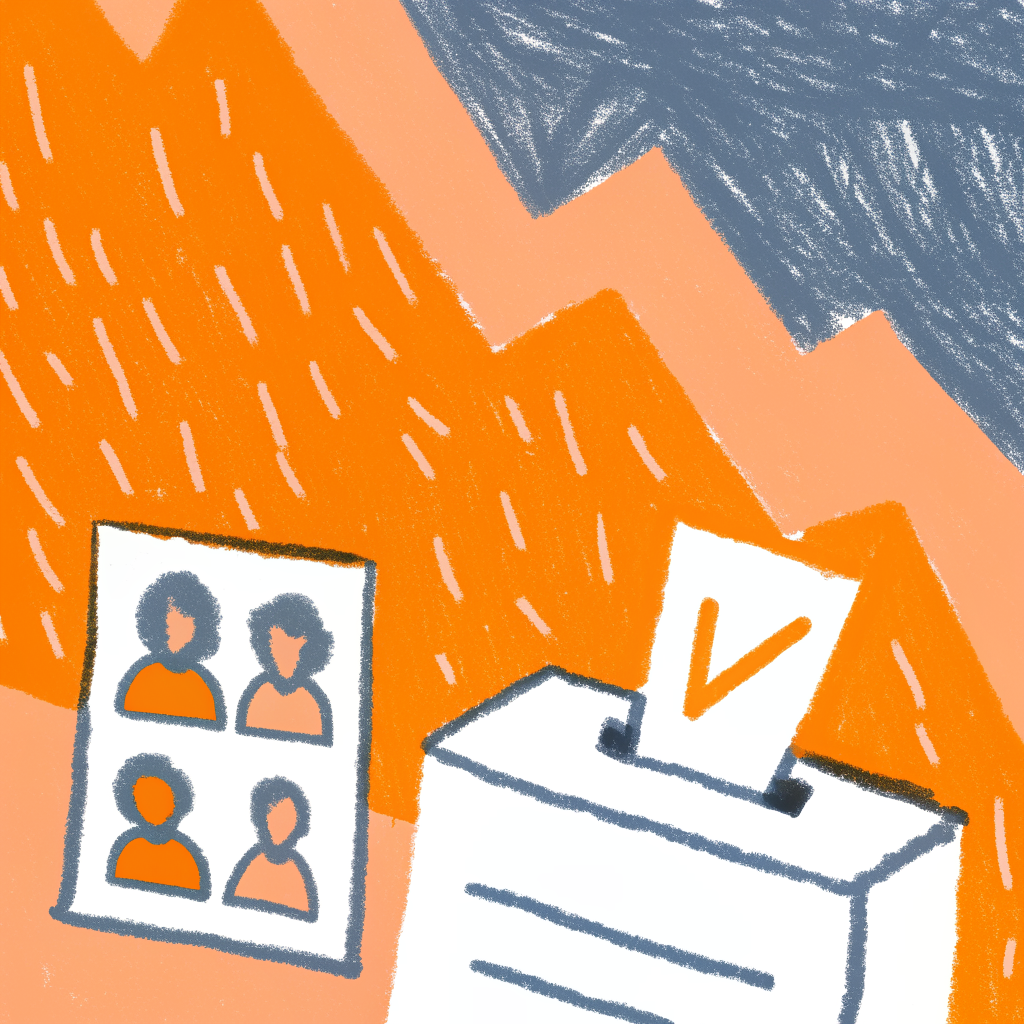
Proposition 39, the Republican-backed measure to require government-issued ID at California polls, is losing 51% to 42% in the first independent poll of the November race — nearly 30 points beneath the 71% support its own campaign has been citing.
The UC Berkeley Institute of Governmental Studies survey, co-sponsored by the Los Angeles Times and released Aug. 14, is the clearest read yet on one of the most fiercely contested measures on California's November ballot. It lands as Reform California — the $13-million campaign run by GOP Assemblymember Carl DeMaio — insists the initiative has a clear path to passage. The gap between the two numbers is the story: an initiative that polled well on its face is cratering as voters learn what it actually does, a pattern IGS documented months before Election Day.
California voters are on track to reject a constitutional amendment requiring government-issued identification at the polls, according to the first independent survey of the contest. In the UC Berkeley IGS poll (external source, opens in a new tab) co-sponsored by the Los Angeles Times, 51% of likely voters oppose Proposition 39 and 42% support it, with 7% undecided — a deficit that matters because, as IGS has repeatedly found, late-deciding Californians tend to break against ballot measures rather than for them.
That 42% collides with the number Prop 39's backers have been advertising. Reform California, the committee behind the measure led by Republican Assemblymember Carl DeMaio, has pointed to internal polling putting support at 71% (external source, opens in a new tab) and says it sees a clear path to victory in November. The independent read is nearly 30 points lower.
The collapse tracks with what happens when voters hear the details. A Berkeley poll in April found 56% initially backed a voter ID requirement — then support fell to 39% once respondents learned the measure's political context (external source, opens in a new tab), NBC Bay Area reported. The August figure, 42%, sits squarely in that post-context range.
Prop 39 would do more than ask for ID. It would mandate a government-issued ID for in-person voting and a partial ID number written on mail-ballot envelopes, and it would order the secretary of state and county officials to confirm that every registered voter is a U.S. citizen using government data, according to CalMatters' voter guide (external source, opens in a new tab). California already requires an ID and Social Security number to register, but does not ask for identification at polling places. The state's nonpartisan analysts peg the cost of the new system at tens of millions to low hundreds of millions of dollars a year.
Proponents frame it as basic election hygiene. DeMaio told NBC Bay Area (external source, opens in a new tab) that voting should stay convenient and easy while still requiring identification — satisfied, he said, by any of a range of government IDs, or by a partial ID number for those voting by mail.
Opponents argue the measure solves a problem that doesn't exist while creating new ones. David Trujillo, executive director of ACLU California Action, said California's elections are already secure and called the initiative "voter suppression, pure and simple" (external source, opens in a new tab) that would burden voters lacking ready access to documents. Common Cause California's executive director, Darius Kemp, told NBC Bay Area the text leaves out basic safeguards — including any process for curing ballots when a signature or verification number doesn't match.
The poll's partisan lines are stark. More than eight in 10 Democrats oppose Prop 39; more than nine in 10 Republicans support it. The measure's fate rests with voters unaffiliated with either party — and they oppose it 54% to 36%, the same bloc that has powered California's rejection of past GOP-led ballot fights.
The measure reaches voters on a ballot already crowded with 14 propositions, including the billionaire wealth tax drawing the bulk of the campaign spending. Prop 39's own trajectory turned partly on wording: earlier this year, Attorney General Rob Bonta's office revised the ballot title and summary (external source, opens in a new tab), a change Republicans denounced as rigging the language against them. With the independent number now public and undecideds historically breaking "no," the campaign that claims 71% has under three months to close a gap it may not officially concede exists.
The Discussion
Sign in to join the discussion.
Loading…