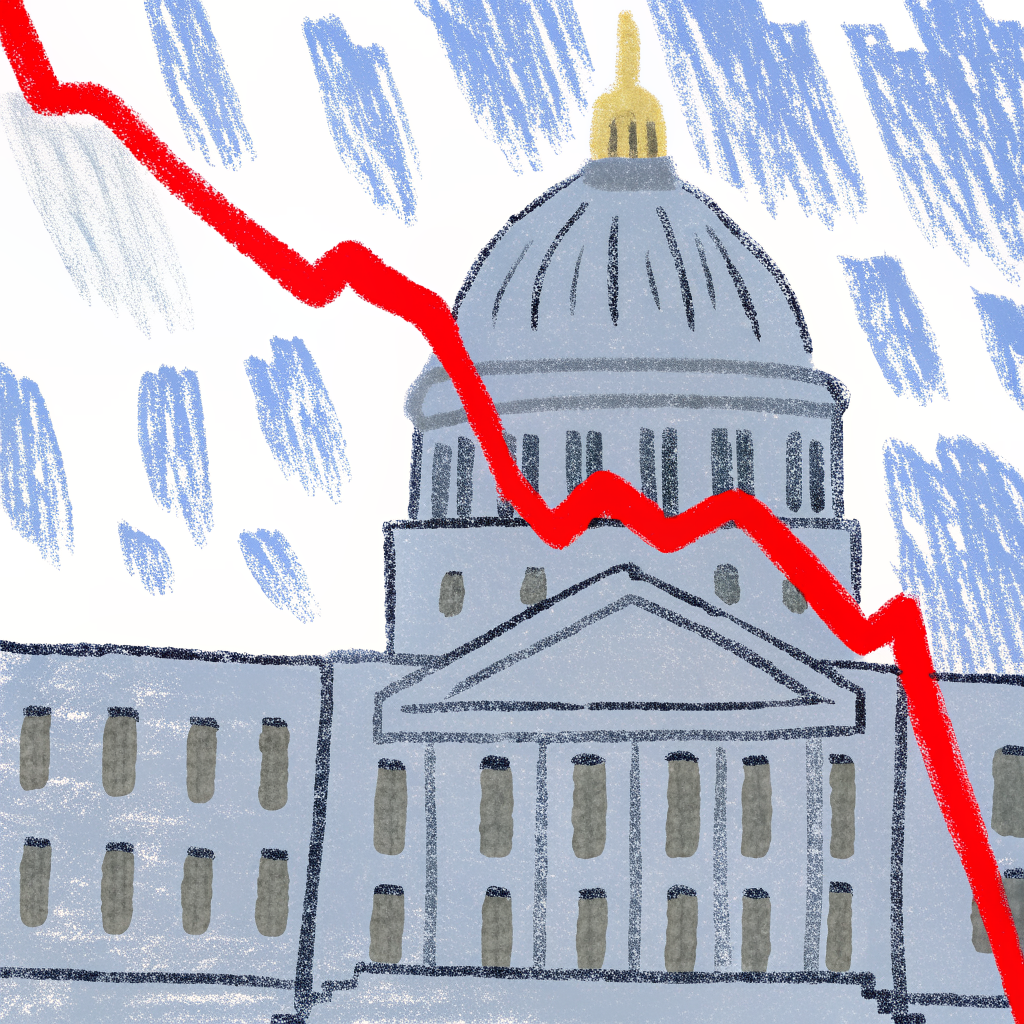
California shed 20,500 nonfarm payroll jobs in July — its worst single-month drop in more than a year — even as the state's unemployment rate ticked down to 5.1%. Both numbers moved for the same reason: fewer people are working, and tens of thousands more have simply stopped looking.
The Employment Development Department's July report, released Aug. 21, is a warning that the improvement in California's headline jobless rate is largely a statistical illusion — the rate fell on a shrinking labor force, not on hiring. But the pain is uneven. Even as statewide payrolls contracted and the region's tech sector kept bleeding jobs, the Bay Area as a whole actually added positions in July, with the South Bay hitting record employment. The question is how long an AI-fueled boom can lift output while leaving most workers behind.
California lost 20,500 nonfarm payroll jobs in July, according to preliminary data from the state Employment Development Department (external source, opens in a new tab) — the biggest monthly drop since June 2025, and the second month of the last three in which statewide employment fell.
And yet the unemployment rate improved, sliding to 5.1%. It had measured 5.2% a month earlier and 5.5% last July. The EDD figures explain the paradox: the rate dropped not because employers hired, but because roughly 70,300 workers walked out of the labor pool in July alone. The number of employed Californians fell by about 52,000. Once people stop looking for work, the government stops counting them as unemployed.
Former EDD director Michael Bernick, now an employment attorney at Duane Morris, said the rate improved only because "workers departed the labor market." He told the Bay Area News Group (external source, opens in a new tab) the shrinkage reflected retirements, immigration policy and falling participation among working-age men. Over the past year, an estimated 286,300 workers have left the state's labor force.
Not just tech
The losses reached well beyond Silicon Valley. Statewide, the single largest monthly decline came in professional and business services, down 15,300 — a swing EDD called out as running "against trends for this time of year," driven by cuts in computer systems design and advertising. Leisure and hospitality gave up 7,400 jobs and financial activities lost 3,600. Construction, trade and other services all added workers. Health care and education, the state's most durable engine, added just 2,100 jobs, a fraction of its recent pace.
Former EDD director Michael Bernick, now an employment attorney at Duane Morris, said the rate improved only because "workers departed the labor market."
The Bay Area went the other way
Here the statewide gloom breaks down. The nine-county Bay Area added roughly 2,300 jobs in July, rebounding from a 5,600-job loss in June, per EDD estimates cited by the Bay Area News Group. The South Bay reached a record 1,175,200 jobs, led by educational services, construction and government hiring. The East Bay added 1,100. The San Francisco–San Mateo metro was an outlier, losing about 1,400 jobs on a seasonally adjusted basis, with the tech-heavy information sector shedding roughly 1,700 there.
Tech remained the region's drag, with layoffs of about 4,400 jobs across the Bay Area's metros, according to Beacon Economics estimates. Offsetting them: hotels and restaurants added 1,500 jobs during a midsummer travel season juiced by World Cup matches and watch parties, and health care added another 600.
The regional rebound bucked a worsening state and national picture, Scott Anderson, chief U.S. economist at BMO Capital Markets, told the Bay Area News Group; he described a Bay Area labor market that had "regained its footing in July."
A jobless boom
The deeper worry among economists is that the region's engine no longer throws off jobs the way it once did. California has drawn more new venture capital this year than every other state combined — money that inflates output and wealth without the broad hiring earlier tech booms delivered. Steve Levy, who directs a Palo Alto research group studying the state economy, called the venture and job gains good news but said it remained unclear how they would reach low- and moderate-wage workers.
Russell Hancock, who leads the San Jose think tank Joint Venture Silicon Valley, was starker: the valley's engine, he said, is no longer producing the "explosive job growth" of earlier innovation waves. For the roughly 286,000 Californians who have left the workforce in the past year, that is the whole story — an economy expanding on paper while fewer of them are counted in it at all.
The Discussion
Sign in to join the discussion.
Loading…