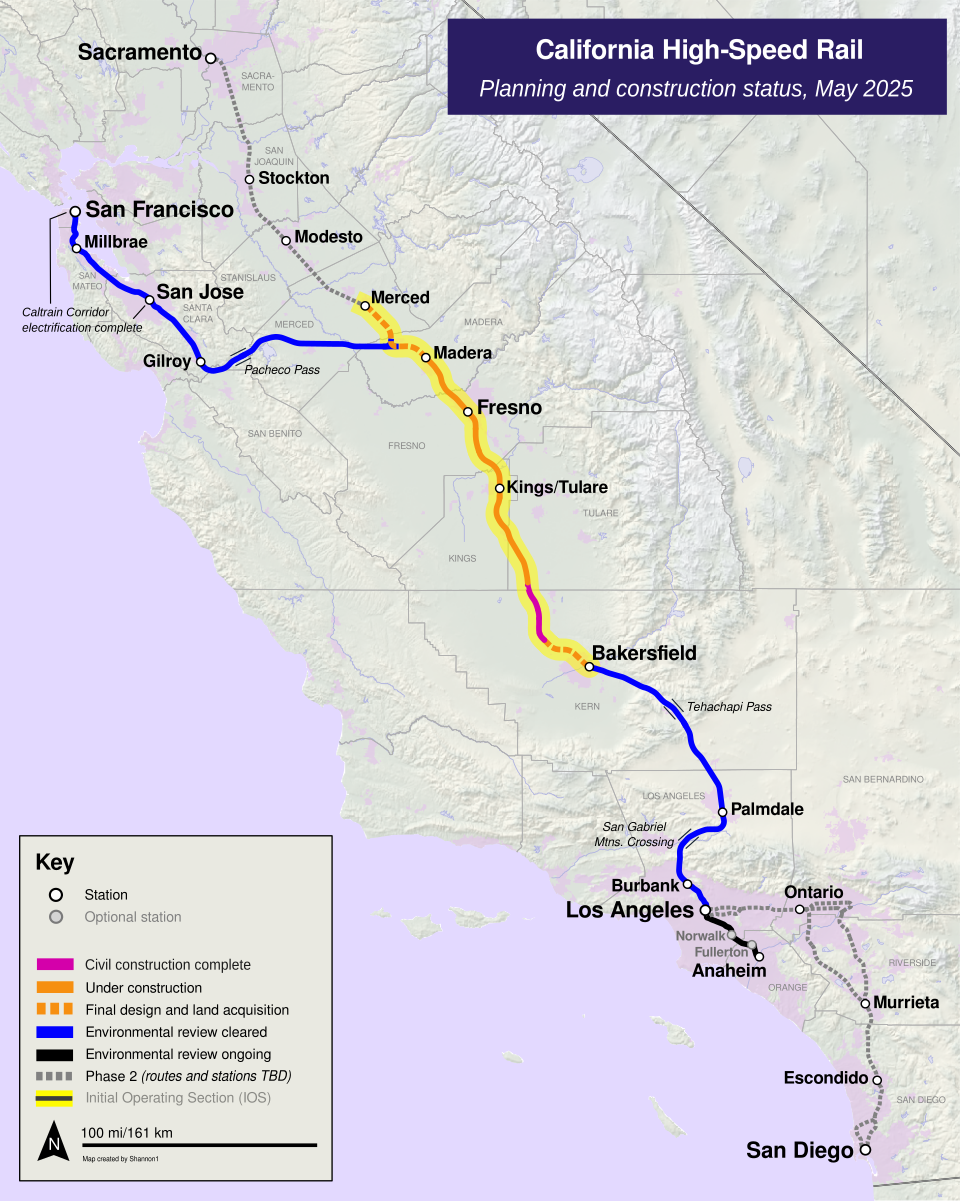
California's high-speed rail project — the gleaming, transformative infrastructure moonshot voters approved back in 2008 — continues its remarkable tradition of getting more expensive while getting no closer to your daily commute.
The original price tag? About $33 billion when Californians voted for it. The current estimate has ballooned past $128 billion, with timelines that keep sliding further into the future. At this rate, one Bay Area resident quipped, "In 20 years it will be a trillion-dollar train and probably still unfinished. But these billions of tax dollars are going to make some people very rich."
Meanwhile, China has built over 31,000 miles of high-speed rail. Japan operates roughly 1,900 miles. California can't finish a single corridor through the Central Valley.
Now, before anyone accuses us of being anti-rail curmudgeons: wanting a bullet train and wanting accountability for the people spending your money are not competing impulses. As one local put it perfectly: "You are allowed to support high-speed rail and demand accountability for leaders who mismanage high-speed projects rather than give them a free pass on spending an extra $90 billion of taxpayer money. In fact, the first in practice demands the second."
That's exactly right. The problem was never the vision — it was the execution. Eighteen years of lawsuits, planning mistakes, bloated contracts, and bureaucratic inertia have turned a no-brainer infrastructure investment into a cautionary tale about what happens when government agencies face zero consequences for blowing past budgets.
To be fair, the project hasn't been a total black hole. The $2.4 billion Caltrain electrification, partially funded by high-speed rail dollars, is actually up and running. SF-to-San Jose express service now takes 60 minutes instead of nearly two hours. That's real, tangible progress — proof that when money meets competent execution, good things happen.
But that's the exception, not the rule. California taxpayers deserve a state that can build things on time and on budget. Until Sacramento starts treating cost overruns like the crisis they are — firing people, restructuring contracts, imposing real oversight — we're just writing blank checks with "trust us" in the memo line.
We want the train. We just also want receipts.
The Discussion
Loading…