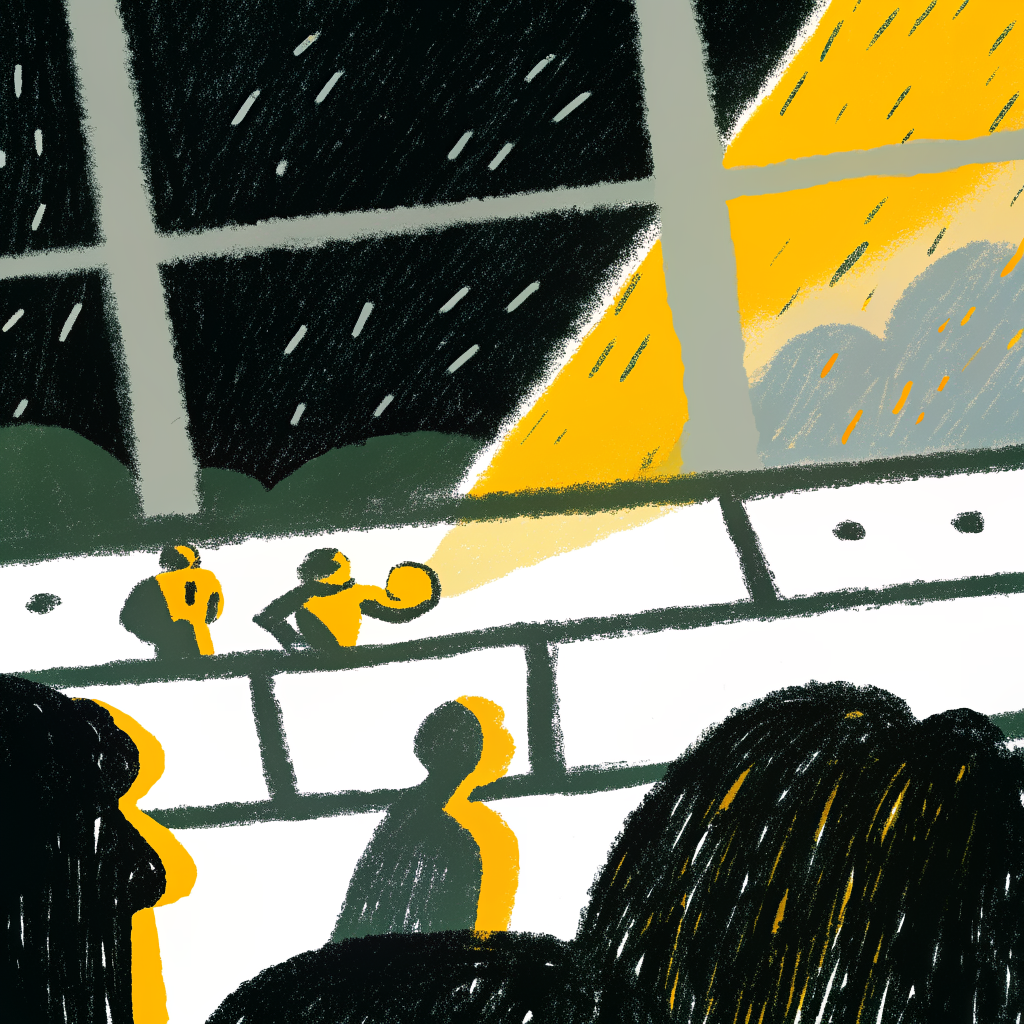
Cal fired Justin Wilcox, hired Cal alum and Oregon defensive coordinator Tosh Lupoi, and spent its offseason doing the one thing the transfer-portal era rewards above all others: keeping its best player. Sophomore quarterback Jaron-Keawe Sagapolutele stayed on a reported $3 million NIL deal, and the entire 2026 season — a favorable ACC schedule, a rebuilt front seven, a credible 5-to-8 win range — is an argument about whether money buys a program a floor, or just a very expensive question at quarterback.
On Christmas Eve, in a stadium 2,400 miles from Berkeley, Cal built a 21–0 lead and then watched it die. Hawaii scored 22 points in the fourth quarter of the 2025 Hawaii Bowl and won 35–31, the last of them a 22-yard touchdown with ten seconds left. It was the kind of loss that tells you less about a football team than about the moment it's in — a program on interim coaching, playing out the string, waiting for the next thing to start. The next thing has a name now: Tosh Lupoi. And the season it's about to produce is one of the more interesting in the Bay Area, because Cal has spent the offseason making a bet most schools its size can't afford to make.
The firing, and the hire
Justin Wilcox was fired on November 23, 2025, a few days after a 31–10 loss to Stanford that was exactly as grim as the scoreline. Nine years, 48–55, a defensive coach whose defenses stopped being the point. Cal owes him a buyout north of $10.8 million, which is its own quiet commentary on how badly the athletic department wanted a different answer. Two weeks later it hired one: Lupoi, a Cal alum and former linebacker who spent 2025 as Oregon's defensive coordinator, where his unit finished third nationally in total defense at 251.6 yards a game.
The symmetry is almost too neat. Cal spent a decade being coached by a defensive mind whose teams top out at seven wins, and its solution is another defensive mind — younger, five-year deal, the alum who left and came home. What's different is everything around him. Lupoi inherited a roster and immediately did the modern thing: he went shopping, and he protected his one irreplaceable asset.
The asset
Jaron-Keawe Sagapolutele is a sophomore. He is also, functionally, the most important football decision Cal made this year. A five-star who flipped from Oregon in January 2025 and then took 98 percent of the snaps as a true freshman — 3,454 yards, 18 touchdowns, a 131.06 rating on a .500 team — he is exactly the kind of player the portal era is built to poach. Lupoi's first job wasn't scheme. It was retention. Cal kept him, per the SF Standard, on a reported $3 million NIL deal, inside a football NIL budget of roughly $30 million that meets the ACC's floor and sits well under Miami's reported $44 million.
Ron Rivera, of all people, runs the athletic department as general manager now, and his framing of the market is the most honest thing anyone at Cal has said all summer: "When we're having those recruiting battles, if you're not coming within three times the offer of someone else, you can imagine how you would advise your child." That's the league Cal is in — not just the ACC, but the auction underneath it. A program that raised a record $88.5 million in athletic gifts is spending a real chunk of it to make sure its quarterback answers the phone in his own building.
Here's the wrinkle that makes it a season instead of a coronation: the backup is good. Jackson Brousseau, a 6-foot-4 Colorado State transfer, posted a better raw efficiency number in 2025 — a 132.06 rating across eight starts, 63.7 percent completions, nine touchdowns to three picks. On paper that's a real competition. In practice, you don't pay a man $3 million to hold a clipboard. But if Sagapolutele stumbles behind a rebuilt line and a first-year play-caller, Cal has a floor most teams would envy, and a very awkward conversation waiting.
What's actually new
The staff turnover is total, and it's young. The offensive coordinator is Jordan Somerville, 29, up from the Tampa Bay Buccaneers. The defensive coordinator is Michael Hutchings, 30, the Vikings' former safeties coach, with Da'Von Brown alongside him coaching the secondary and Darrion Daniels arriving from Oregon to fix the line. The expectation is a 4-2-5 that mirrors what Lupoi ran with the Ducks.
The fix has a clear target. Wilcox's 2025 defense was strong in the secondary — Hezekiah Masses had five interceptions and held opposing receivers under 48 percent — and structurally rotten up front: 105th nationally in rush yards per carry allowed, 100th in sacks, 102nd in tackles for loss. You cannot survive an ACC schedule getting shoved off the ball. Lupoi's entire professional identity is built on not getting shoved off the ball. If the 32 portal additions — the class ranked 14th nationally and second in the ACC — landed in the right places, that's the position group that decides whether Cal is 6–6 or 8–4.
The other decisive group is the one catching passes. Cal reloaded the receiver room through the portal (Ian Strong, Chase Hendricks, Cooper Perry among them), which is either a sign of ambition or a sign that the returning production wasn't there. For a quarterback this expensive, the honest question is whether he has anyone to throw to who's been in the building longer than he has.
The schedule, and the ghost
Here is the part that should make Cal fans quietly optimistic and permanently sad at the same time. The 2026 slate is favorable. Cal's first full nine-game ACC season includes no top-15 opponents and skips Miami, Duke, Florida State, Georgia Tech, and Louisville entirely. The non-conference is UCLA (September 5, with FanDuel opening Cal −3.5), Wagner, and UNLV. The road ACC games — NC State, SMU, Syracuse, Virginia — are all winnable. This is the schedule of a team that could get to eight.
And then, on September 25, Clemson comes to Berkeley for the first time in history. That's the sentence that carries the whole realignment story inside it. Cal used to open its falls against Washington and Oregon and USC, against schools with the same time zone and the same century of grudges. Now Dabo Swinney flies his team across the country to play a home ACC game against a program that got here because the Pac-12 died and the ACC offered a lifeboat at 30 cents on the dollar. It'll be a great night at Memorial Stadium. It will also be proof that the old maps are gone.
The range
Vegas has Cal's win total at 6.5. SP+ ranks the Bears 56th nationally and 13th in the ACC — roughly 6–6. College Football News says 7–5; CBS leans under at 5–7; SI's Jake Curtis is the optimistic outlier at 8–4. Cluster all of it and you get a credible band of five to eight wins, which is another way of saying: the schedule won't beat this team, and the schedule won't save it either. The binding variables are internal — a first-time head coach, a first-year coordinator on each side, a portal class that has to gel by October, and a $3 million sophomore who has to prove the money was a floor and not a ceiling.
That's the honest read on Cal 2026. Not a prediction — a preview owes you the range, not the certainty. The Bears have done the expensive, correct thing at the most important position, hired the alum who knows how to build a front, and drawn a schedule that gives a good team room to be good. Whether that adds up to a program finding its footing in a conference it never chose, or another 7–6 with a prettier quarterback, is the question the fall exists to answer. I'll be watching the front seven. That's where the season lives.
The Discussion
Sign in to join the discussion.
Loading…