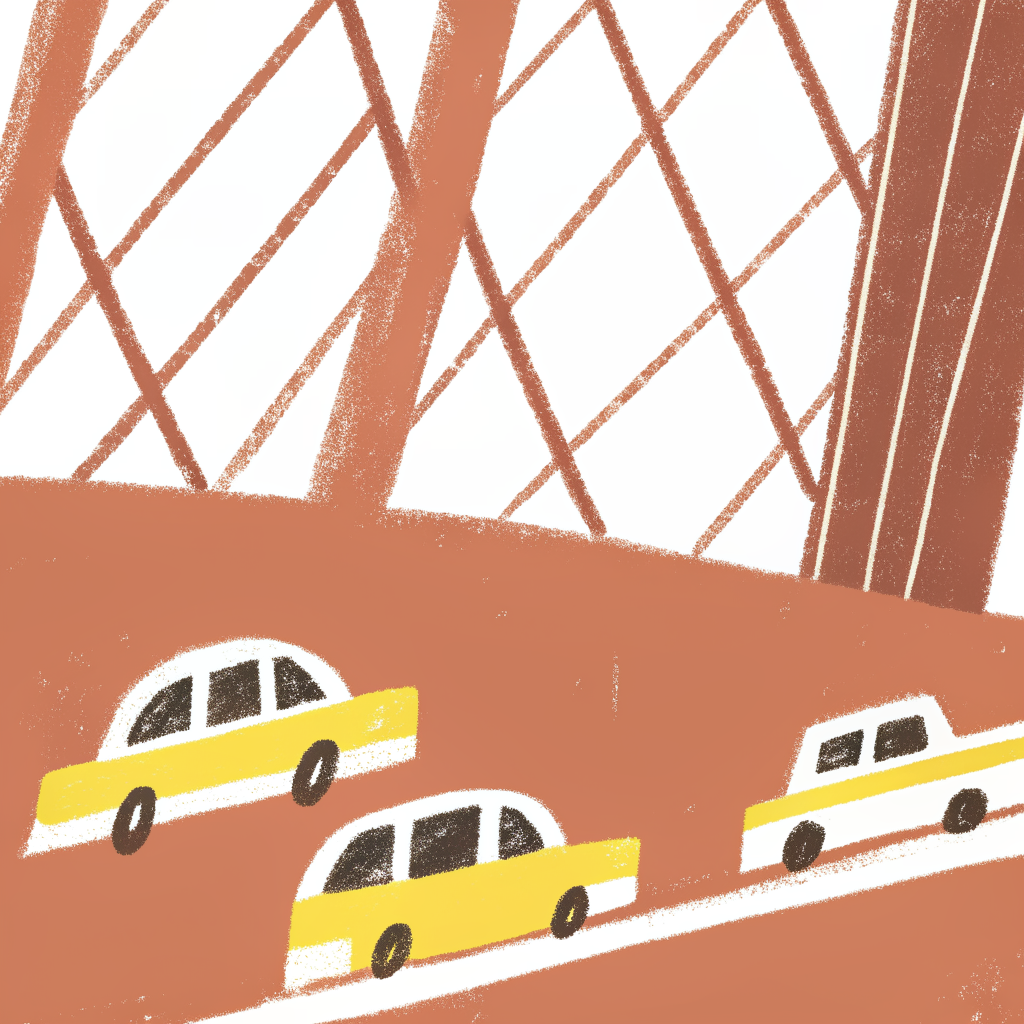
The MacArthur Maze-to-Bay Bridge slog has a new badge of dishonor, but the ranking behind it is easier to report than to independently audit.
KGO reported, citing the Mercury News, that a Resume.io survey ranked the East Bay approach to the Bay Bridge as California’s most frustrating commute. Resume.io’s public survey page confirms the national project and its methodology, but does not display the California corridor table, making the local ranking a reported finding rather than a fully visible primary record.
KGO’s account (external source, opens in a new tab) said drivers on the corridor would trade about $3,200 in yearly pay to avoid the trip, or roughly $13 per workday.
The public survey material from Resume.io (external source, opens in a new tab) supports the broader national frame: the company says 3,017 employees answered the survey, and the mean dollar value workers put on skipping a strenuous commute was $3,252 a year. What that page does not show is the California corridor table or the MacArthur Maze ranking. For now, the state-level ranking should be read as KGO’s report through Mercury News, not as a ranking independently visible on Resume.io’s published page.
The result still lands on a commute most Bay Area drivers know without a survey. The Maze concentrates East Bay, North Bay, Central Valley and Peninsula-bound traffic before the Bay Bridge approach narrows into a toll plaza and bridge crossing. KGO quoted ABC7 Insider Phil Matier describing the interchange as both the east anchor of the Bay Bridge and a regional conduit, with traffic squeezed before crossing the bay.
MTC spokesman John Goodwin told KGO the survey’s most revealing point was “people putting a price on congestion avoidance.” He also told the station that bridge travel remains below 2019 levels, broadly around 90% of pre-pandemic traffic.
The toll price is no longer hypothetical. The regional toll authority’s January notice (external source, opens in a new tab) says tolls rose Jan. 1, 2026, to $8.50 for regular two-axle cars and trucks on the seven state-owned bridges, including the Bay Bridge. The schedule adds another 50 cents each January through 2030, when the FasTrak toll reaches $10.50.
A separate BATA policy summary (external source, opens in a new tab) says the added money is limited to upkeep, preservation and operation of the seven state-owned crossings. The agency also says the 2026 increase is separate from the last Regional Measure 3 toll increase, which took effect Jan. 1, 2025.
MTC spokesman John Goodwin told KGO the survey’s most revealing point was “people putting a price on congestion avoidance.”
That makes the survey useful less as a definitive traffic ranking than as a commuter-cost snapshot. East Bay drivers already pay a bridge toll to reach San Francisco by car. Resume.io’s national survey suggests workers assign a much larger private price to escaping the time and stress of the trip. The missing public California table is the caveat: the frustration is easy to believe, but the local league table still needs the underlying data to be fully checked.
The Discussion
Sign in to join the discussion.
Loading…