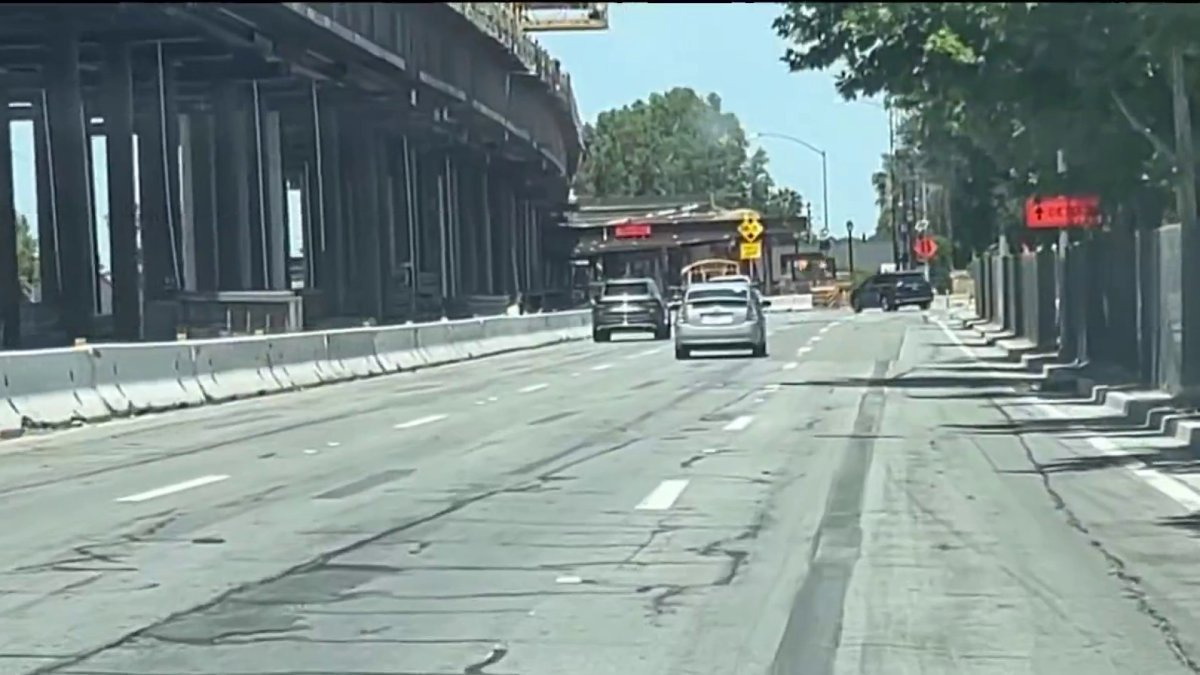
A new national research report finds deficient roads and traffic congestion already cost the average Bay Area driver more than $4,600 a year — and the region is about to lose the two main revenue streams it depends on to fix them.
The report, released Thursday by TRIP, a Washington, D.C.-based transportation research nonprofit, documents the per-driver toll of crumbling pavement and gridlock across California's metro regions. But the harder numbers may be on the funding side: the federal Bipartisan Infrastructure Law, which has been pumping billions into California highways, transit, and rail, is set to expire at the end of September. At the same time, California's gas tax receipts — the traditional backbone of road maintenance — are shrinking as more drivers shift to electric and hybrid vehicles. The double squeeze is forcing lawmakers to confront a question they don't yet have an answer to: who pays for Bay Area roads when the old money runs out?
The TRIP report, released Thursday and covering six California metropolitan areas including San Francisco-Oakland and San Jose, put dollar figures on what Bay Area commuters already feel in their steering wheels and bank accounts.
Across the broader Bay Area, deficient roads and traffic delays cost the average driver more than $4,600 annually in vehicle repairs, wasted fuel, and lost time, according to the TRIP analysis. In the San Jose metropolitan area, those costs run somewhat lower — averaging nearly $3,300 per motorist per year — a gap that reflects differences in traffic patterns and pavement conditions between the two regions rather than any particular advantage for Silicon Valley drivers.
Those costs land on top of some of the nation's highest housing expenses and a transit network that has struggled for years to recapture ridership lost during the pandemic.
What gives the TRIP figures particular urgency this summer is the funding cliff approaching from two directions simultaneously.
The federal Bipartisan Infrastructure Law, signed in 2021, has been the primary driver of large-scale highway, transit, and rail investment across California for the past several years. But that authorization expires at the end of September, and there is no current federal legislation positioned to replace it at equivalent scale. Exactly what happens to California's project pipeline if Congress doesn't act — or acts only partially — remains unresolved.
Meanwhile, a structural erosion is eating away at the state's other main road-funding tool. California's gas tax, long the bedrock of highway maintenance revenue, is generating less money every year as the state's EV adoption rate — among the highest in the country — accelerates. Fewer gas-burning vehicles means fewer fill-ups means fewer cents-per-gallon flowing into road repair funds. That trend will only steepen as EV mandates tighten.
Compounding both problems, construction costs for road and highway work have risen sharply in recent years, meaning each repair dollar buys less pavement than it once did.
"The Bay Area is facing some of the most complex transportation challenges in the state — from congestion, to climate resilience, to major regional mega-projects," Assemblymember Lori Wilson, D-Suisun City, said at the TRIP report's release, as covered by NBC Bay Area. "Meeting those challenges requires stable, long-term funding."
What stable, long-term funding actually looks like is the unsettled question. Bay Area voters will weigh in on one piece of the puzzle in November, when the Connect Bay Area sales tax measure appears on ballots in five counties — but that measure is aimed at transit agencies, not road maintenance, and requires majority approval to pass.
The roads funding gap has no comparable ballot fix in the works. State and local officials are left watching the federal clock tick toward October while gas tax revenues keep sliding — and TRIP's annual per-driver cost figures keep climbing.
The Discussion
Loading…