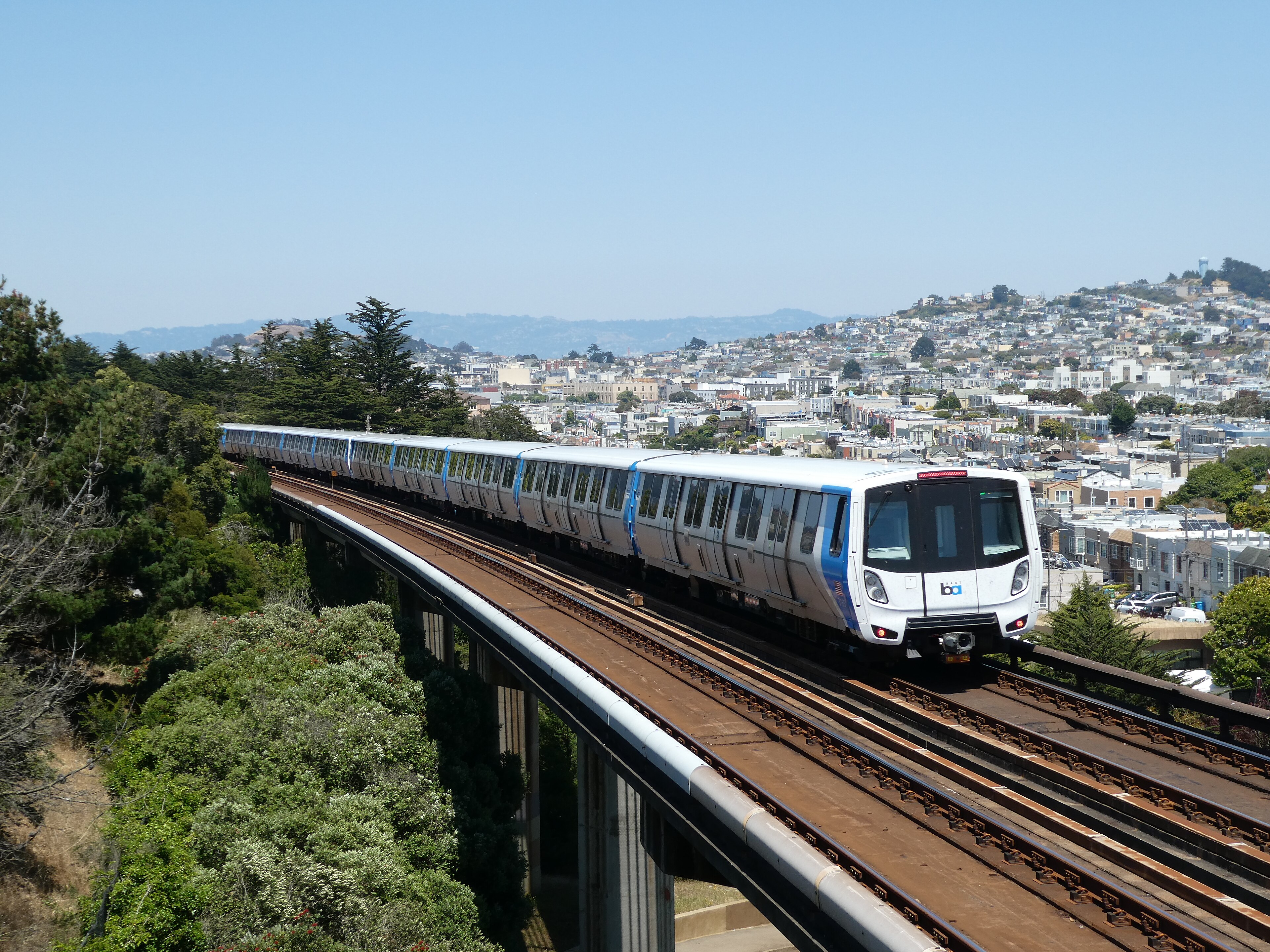
If you've ever white-knuckled a BART handrail while a stranger's backpack slowly merges with your ribcage, allow us to introduce you to an alternate reality: the San Francisco Bay Ferry.
Commuters who ride the ferry from Jack London Square in Oakland to the Ferry Building in SF speak about it with a reverence usually reserved for In-N-Out or the first sunny day after June fog. As one Bay Area commuter put it, "The comfort, dignity, and vibes are unparalleled." Another local summed it up even more simply: "Most pleasant commute I've ever had."
And honestly? They're right. You get views of the Bay Bridge, the skyline, Alcatraz — the kind of scenery that reminds you why you tolerate paying $3,800 for a one-bedroom. On a good day, it's less commute, more decompression chamber.
So what's the catch? The same thing that plagues every promising piece of Bay Area transit infrastructure: it doesn't run often enough.
Miss your boat by two minutes and you're looking at a long wait with no great backup plan. BART isn't a quick walk from Jack London, and pivoting mid-commute turns your zen morning into a logistical scramble. The frequency problem also means ferries can get packed on game days, holidays, and basically any time San Francisco decides to throw a parade.
Here's what frustrates us at The Dissent: the ferry system is a transit success story that the region seems almost allergic to scaling. Riders love it. It works. It reduces car traffic on the bridges. And yet, as one ferry commuter noted with unmistakable anxiety, "The bad thing is the uncertainty of whether such a luxury will continue."
That shouldn't be the takeaway from a functioning public transit option. Instead of dumping billions into projects that go over budget and behind schedule — looking at you, every major California rail project — why not invest in something people already use and genuinely enjoy? Free parking validation at the terminal, onboard drinks after a long day, actual scenic beauty — this is what transit should feel like.
The ferry doesn't need a rebrand. It needs more boats, more runs, and a government that recognizes when something is working and gets out of the way. Scale the win. It's not complicated.
The Discussion
Loading…