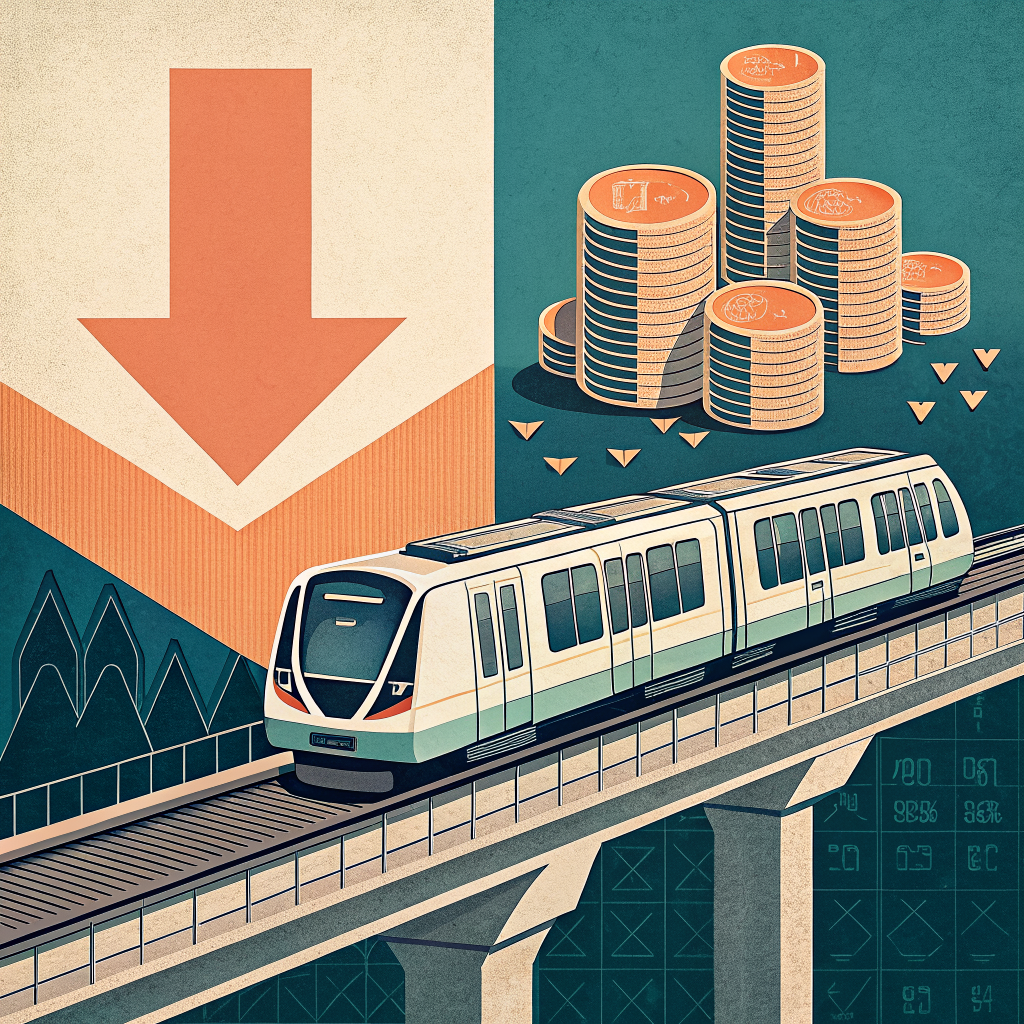
In May 2026, BART logged 202,650 average weekday trips — its highest since before the pandemic. Two weeks later, the BART Board adopted a budget that eliminates 63 jobs, borrows $88.5 million to avoid service cuts, and still depends on Bay Area voters to pass a November sales tax measure to survive.
The juxtaposition — record-ish ridership headline, financial crisis budget — captures the paradox that makes Bay Area transit feel so dissonant right now. Trains that look emptier than a decade ago are logging the best numbers they've had since COVID. Both facts are true. And they tell the same story: the pandemic rewired how the Bay Area moves, and no amount of milestone press releases changes that math.
BART's May numbers were genuinely impressive by the system's own recent history. The 202,650 average weekday ridership figure — released June 15 — was 12 percent above May 2025. The month included four of BART's busiest ridership days since the pandemic. Weekend ridership surged 18 percent above April, driven by BTS concerts at Stanford Stadium, Bay to Breakers, Carnaval San Francisco, and the start of FIFA World Cup events funneling fans to the Milpitas transit hub. "BART saw an increase of more than 160% in ridership at Milpitas Station Saturday compared with the previous weekend," said BART General Manager Bob Powers. "Now the world is seeing how far the Bay Area's transit network has come."
But BART buried its own caveat inside the same celebratory press release: "Ridership continues to move in the right direction, but growth alone is not enough to close BART's structural funding gap. The Bay Area's high rates of remote and hybrid work have fundamentally changed travel patterns, reducing the fare revenue that historically funded a large share of BART operations."
The FY27 budget — adopted by the board on June 11, four days before the ridership press release dropped — makes clear just how serious the mismatch is. BART faces a $375 million structural deficit for the fiscal year starting July 1. To avoid cutting service, the board approved a plan that includes $18.2 million in ongoing cuts, elimination of 63 full-time operating positions, and borrowing $88.5 million. The budget also assumes a regional transit sales tax measure wins on the November ballot, generating $74 million in new revenue. If voters say no, BART has a prepared Alternative Service Plan — shorthand for cuts and fare hikes.
BART saw an increase of more than 160% in ridership at Milpitas Station Saturday compared with the previous weekend," said BART General Manager Bob Powers.
"This is a leaner budget with less spending and a smaller headcount," said BART Board President Melissa Hernandez. "The board challenged staff to find efficiencies and reduce costs in a way that would not be experienced by the riders and would not negatively impact the improvements we have made resulting in the highest reliability and satisfaction rates in years."
The underlying number that explains why trains feel empty even on record days: BART's own budget documents state that "the number of trips served each year remains at about half of what it was pre-pandemic." At peak, BART averaged well over 400,000 weekday trips. May 2026's 202,650 is a genuine milestone relative to the last six years — and roughly half of normal relative to 2019.
The growth that is happening skews heavily toward events, weekends, and new travel corridors. BART's May data shows the strongest year-over-year gains at SFO, South San Francisco, Berryessa/North San Jose, Milpitas, and Antioch — stations serving airports, the South Bay, and the World Cup venue corridor. The traditional peak-hour SF-to-East Bay commute that once filled trains shoulder to shoulder hasn't returned, and BART acknowledges it may never fully come back.
Annual data from BART's ridership reports underscores the trend: 2024 averaged 165,502 weekday trips across 50.6 million total annual trips; 2025 averaged 180,649 weekday trips and 55.6 million total. The trajectory is real and consistent. Whether it's fast enough to matter financially is a different question — one that Bay Area voters will have a direct hand in answering in November.
The SF Chronicle framed the puzzle this week: "BART may have more riders than ever, so why do trains seem empty?" The answer embedded in BART's own documents is that "more than ever" means "more than any point in the last six years" — not more than the Bay Area's transit system was built to carry. Record low is still a record, technically. But it doesn't feel like one in a half-empty car at rush hour.
The Discussion
Sign in to join the discussion.
Loading…