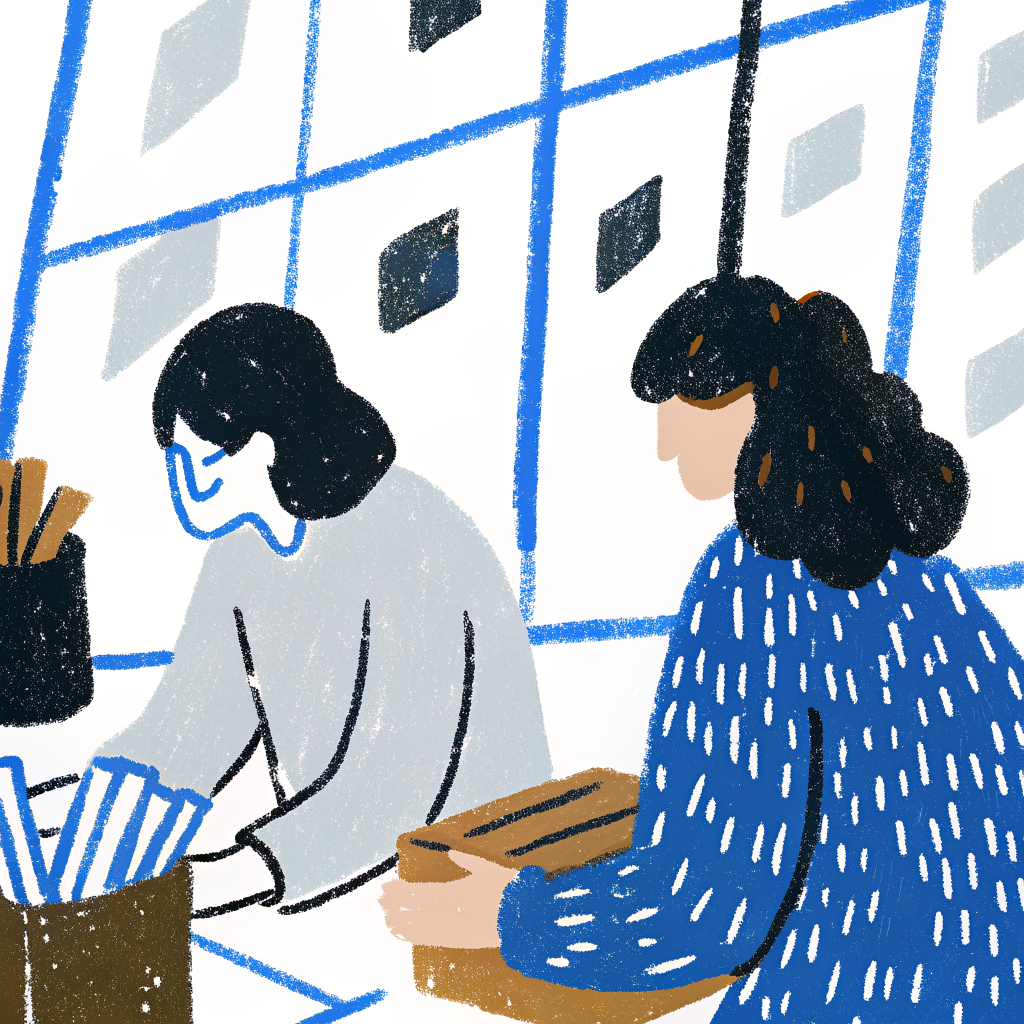
From its Berkeley office near MLK Jr. Way and Dwight, the Prisoners Literature Project mails over 45,000 books annually to incarcerated people across 1,000 facilities, run by 300 volunteers on a $250,000 budget.
Most nights at 2500 Martin Luther King Jr. Way, volunteers sit around a table in an office next to a chiropractic clinic, pulling letters from a box addressed to them by people incarcerated across the country. Each letter arrives with a request for something to read—sci-fi thrillers, true crime, trade manuals, comic books. The most common request: a dictionary.
The Prisoners Literature Project, founded in 1980 or 1981 by activists operating out of San Francisco’s Bound Together Books, moved to this Berkeley office in the 1990s. Today, it’s the largest books-to-prisoners nonprofit in the Bay Area, with 300 volunteers rotating through monthly shifts. In 2025, the group sent over 45,000 books in more than 15,000 packages to incarcerated people in over 1,000 facilities nationwide.
The organization operates on an annual budget around $250,000, with tax filings showing $224,916 in revenue for fiscal year 2024. More than $90,000 of that goes to postage each year. The rest covers rent, discounted book purchases, and the administrative costs of running a collective that makes decisions by consensus rather than hierarchy.
Letters from inmates often include instructions for navigating prison censorship. "Three books maximum, and they must be new," one note reads. "No stains, ink, or stickers." Volunteers weigh packages on a digital scale—under two pounds for Kern Valley State Prison’s rules—wrap books with resource guides, attach handwritten responses, and bind them with elastic cord for mailing.
On a typical Wednesday evening, 11 volunteers work to fulfill about 50 requests. One volunteer, Leslie, who asked her last name not be used, packaged Mandarin and Cantonese phrasebooks along with a Latin American Spanish dictionary for a person incarcerated in Kern Valley State Prison. Across the room, another volunteer wrapped Octavia E. Butler’s "The Parable of the Sower" and Lev Grossman’s "The Magicians."
Three books maximum, and they must be new," one note reads.
The letters that accompany requests often carry messages of gratitude. "For many of us, [books] are our escape, a figurative (and sometimes literal) doorway to freedom," one reads. Another: "I am a lifer with no parole. Y’all are the only communication I’ve had."
The project’s headquarters, near the corner of Dwight Way on the edge of downtown Berkeley, resembles a small library with floor-to-ceiling bookshelves. More than a dozen Bay Area bookstores donate regularly, including Pegasus in downtown Berkeley, which asks customers at checkout if they’d like to buy a book for an inmate.
Inmates retain First Amendment rights to read while confined, but correctional facilities restrict tens of thousands of titles based on content or contraband concerns. Everything from James Joyce’s "Ulysses" to Barack Obama’s "The Audacity of Hope" to Strunk & White’s "The Elements of Style" has been banned at one facility or another.
The Prisoners Literature Project began by serving five to 10 requests per month. Word spread among incarcerated populations, and demand grew. Now, nearly four decades later, volunteers continue to sit at that table on MLK Jr. Way, answering letters and sending books into a system where, for many, those packages represent the only connection to the world beyond their walls.
The Discussion
Sign in to join the discussion.
Loading…