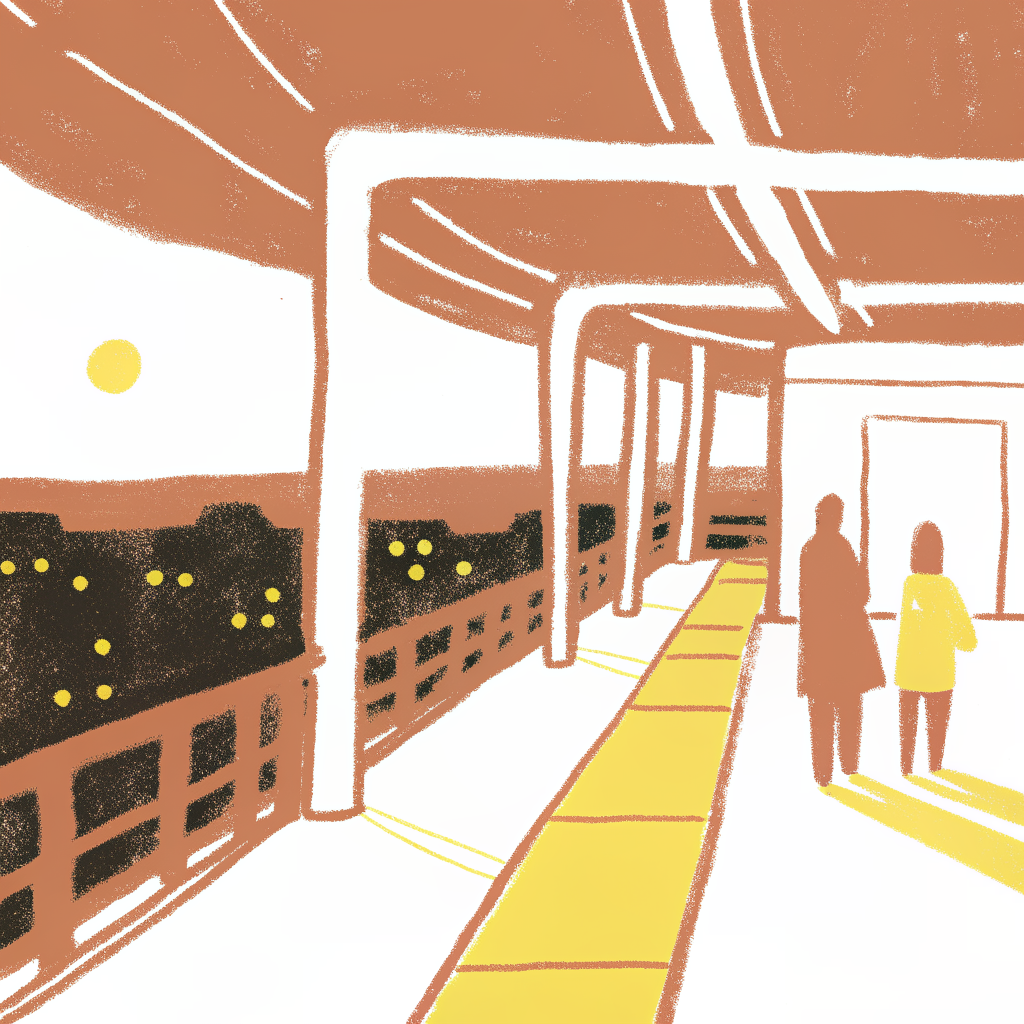
Nowhere in the nine-county Bay Area does a neighborhood start its workday earlier than the stretch of Antioch inside the 94509 postal zone, where close to one in two employed residents is already commuting before 7 a.m. That statistic, drawn from new census reporting, is best read not as a habit but as a receipt for the region's housing math.
A San Francisco Chronicle study of federal commuting records mapped which corners of the region rise earliest, and the pattern forms a rough halo around the expensive center: the outer edges of Contra Costa, Solano, Sonoma and the bottom of Santa Clara County, where more than four in ten workers head out before dawn. Transit agencies and community newsrooms have spent years documenting the force behind that map — jobs and rents piled up in San Francisco and Silicon Valley, and the workers who serve them pushed to the affordable fringe, where a lower rent is repaid in commuting hours. The pre-sunrise departure is simply what that trade looks like at the start of the day.
The earliest risers in the Bay Area do not live near the region's job centers. In its examination of federal census figures (external source, opens in a new tab), the San Francisco Chronicle found that the Antioch postal zone of 94509 tops every populous ZIP code in the region for the share of workers who depart before 7 a.m. — roughly half of them. Nearby communities in Oakley, Pittsburg and Rio Vista follow closely, and so do farm-country pockets such as Cloverdale, Dixon and Gilroy, where agricultural shifts start before light. Flip the map toward the urban core and the alarm clocks go quiet: across most of San Francisco and Oakland, under a quarter of commuters leave that early.
Read carefully, the Chronicle's map is really a chart of how far people have been pushed from their jobs. The East Contra Costa ZIP codes it singles out carry typical commutes at or beyond 40 minutes, roughly ten minutes past the regional norm of a half-hour. That gap is a function of price more than distance.
The underlying dynamic is well documented. Contra Costa carries the region's heaviest load of extreme commuters — people who spend more than an hour traveling one way — per the Bay Area Equity Atlas (external source, opens in a new tab), a data project tracking economic and racial disparity across the nine counties. Reporting last year by the immigrant-focused newsroom El Tímpano (external source, opens in a new tab) put numbers on it: as of 2020, about 44,800 Contra Costa workers — 9.1% of the county's workforce — traveled 90 minutes or more each way, roughly twice the Bay Area average of 4.6%. The Metropolitan Transportation Commission's John Goodwin told that outlet that a 2022 count found nearly 60,000 county residents in the 60-to-89-minute band and more than 26,000 above 90 minutes.
Goodwin's explanation was blunt: the two engines of the regional economy, he noted, are also two of its priciest places to live. "They're really expensive places to live," he said, as quoted by El Tímpano — which is why the county holding the five longest-commute cities of 2018 (Antioch, Brentwood, Pittsburg, Hercules and Oakley) sits an hour or more from the paychecks.
Those hours have a human ledger. El Tímpano followed Hector Mejia, 48, of Bethel Island, who pedaled an hour to the Antioch BART platform, then rode about 90 minutes into San Francisco for kitchen and construction gigs paying between $16 and $25 — close to three hours one way. He kept at it, he explained, because the fare beat the cost of gas and bridge tolls and let him keep sending money home. By 7 a.m., the reporters observed, the station lot had already filled.
That platform is part of the pattern, not separate from it. BART's East Contra Costa extension (external source, opens in a new tab) reached Antioch in May 2018, chasing the very migration these numbers describe. The Chronicle's fresh snapshot only confirms where the chase led: a metro in which the most affordable bed and the earliest alarm increasingly share an address.
The Discussion
Sign in to join the discussion.
Loading…