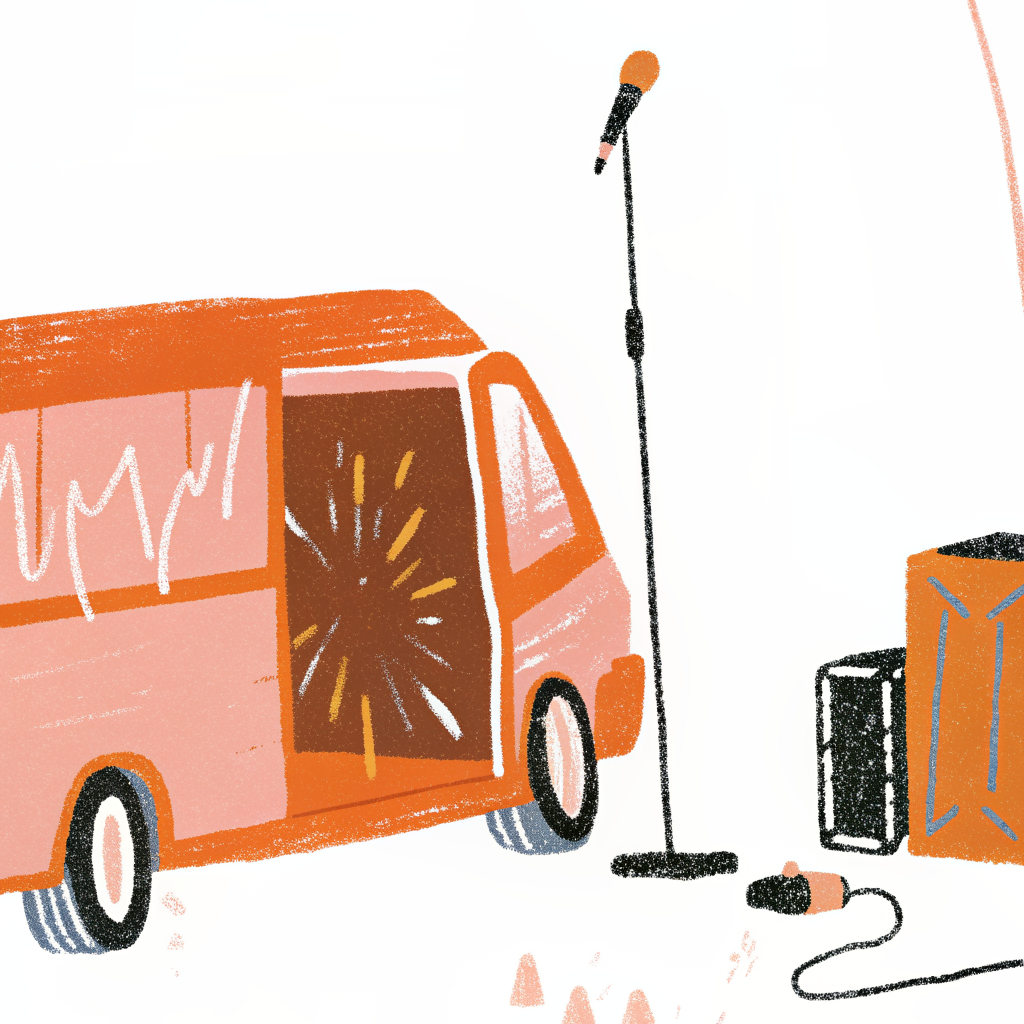
For the second time since spring, an out-of-town band lost its gear to an Oakland vehicle break-in on the eve of a Berkeley concert — this time Brooklyn's Elizabeth and the Catapult, whose car was emptied of instruments, amps and hard drives days before a headlining show.
A touring act rolls into the East Bay, parks a vehicle loaded with irreplaceable gear, and gets cleaned out before reaching a Berkeley stage. It happened to the jazz trio Moonchild in April and, this week, to Elizabeth and the Catapult. Two thefts four months apart are not a crime wave — Oakland's reported crime is falling sharply — but they expose a specific vulnerability the falling numbers don't capture, one touring musicians keep paying for out of pocket and through their fans.
The theft, which the band announced on Instagram (external source, opens in a new tab) and KRON4 first reported, is a small story with a familiar shape: a touring act rolls into the East Bay, parks a vehicle loaded with irreplaceable gear, and gets cleaned out before reaching a Berkeley stage — the same sequence that hit the jazz trio Moonchild in April. It is not evidence of a crime wave; Oakland's reported crime is falling sharply. But it is a specific vulnerability the falling numbers don't capture, and one touring musicians keep paying for out of pocket and through fans.
Elizabeth Ziman (external source, opens in a new tab) — the Brooklyn singer-songwriter who records as Elizabeth and the Catapult — broke the news the way touring musicians increasingly must, in a social-media post that doubled as a plea for help. Someone had gotten into the band's car in Oakland overnight, she said, and taken nearly all of it: the instruments, the amplifiers, the computers, the hard drives that held the band's work. The band said the group itself was unharmed — the thing, she wrote, that mattered most. The Dissent could not independently confirm the break-in beyond the band's own account and KRON4's report of it; Oakland police have not released an incident report.
The band was in town for a headlining stop at The Back Room in Berkeley (external source, opens in a new tab), accompanied by Jon Titterington on piano and guitar. Within a day, the band said, fans had covered the immediate losses — luggage, clothes, cash — and the group said the outpouring was enough to keep the tour moving toward Portland and Seattle.
The episode echoes what happened to another visiting act this spring. In late April, the Grammy-nominated Los Angeles jazz trio Moonchild had its entire 20-foot U-Haul stolen from a hotel lot near the Oakland waterfront around 4:30 a.m., hours before the band was set to play the UC Theatre in Berkeley (external source, opens in a new tab). Surveillance video showed a sedan pulling alongside the truck; it was gone in about two minutes. AirTags hidden in the gear were later stripped off and scattered across Oakland and San Leandro, a detail band member Andris Mattson took as a sign of an organized crew. The loss ran into the six figures and forced Moonchild to postpone (external source, opens in a new tab) the rest of its West Coast tour. "Some of these instruments we lost, we've had them for years," Mattson told KTVU (external source, opens in a new tab). "It's not something you can replace."
Two thefts four months apart do not make a crime wave, and Oakland's own numbers cut hard against any impression that the city is growing more dangerous. Police reported that overall crime fell about 29% in the first quarter of 2026 (external source, opens in a new tab) against the same stretch of 2025, with burglary down 54% and robbery down 30% — part of a broad decline city officials have promoted for more than a year.
What the two cases share is narrower and more specific than any citywide trend: an out-of-town band, a vehicle packed with a season's worth of gear left in a lot, and a Berkeley marquee waiting on the other side. That is the uncomfortable throughline — a risk that lives in the gaps a falling burglary count doesn't measure, and that falls hardest on musicians who arrive with everything they own in one trunk and no easy way to replace it.
Some of these instruments we lost, we've had them for years," Mattson told KTVU.
Neither theft appears to have produced an arrest. What both produced instead is a now-familiar sequence: the online plea, the fundraiser, the wave of donations that lets the show — or the rest of the tour — go on. For working touring acts moving through the East Bay, community generosity has become a de facto insurance policy, filling the space where recovery and prosecution rarely follow. For Elizabeth and the Catapult, it worked fast enough to keep the tour alive. The gear, and whoever took it, is still gone.
The Discussion
Sign in to join the discussion.
Loading…