The $10 price tag on a weed-choked East Oakland lot made the headlines. But the number that actually decides whether it becomes housing is $40 million — and the county tool that unstuck it had gone unused for a decade.
Alameda County's supervisors voted 5-0 in mid-July to hand 8215 MacArthur Blvd. — a 15,000-square-foot parcel vacant for three decades and buried under about $1.7 million in delinquent taxes — to the Black Cultural Zone Community Development Corporation for $10. Officials are selling it as a template for as many as 10 more tax-defaulted lots across East and West Oakland. Yet the legal tool behind it, a Chapter 8 sale, has proven so difficult that the county hadn't closed one since 2016 — and the people promoting it are strikingly frank about why the rest of the pipeline could crawl.
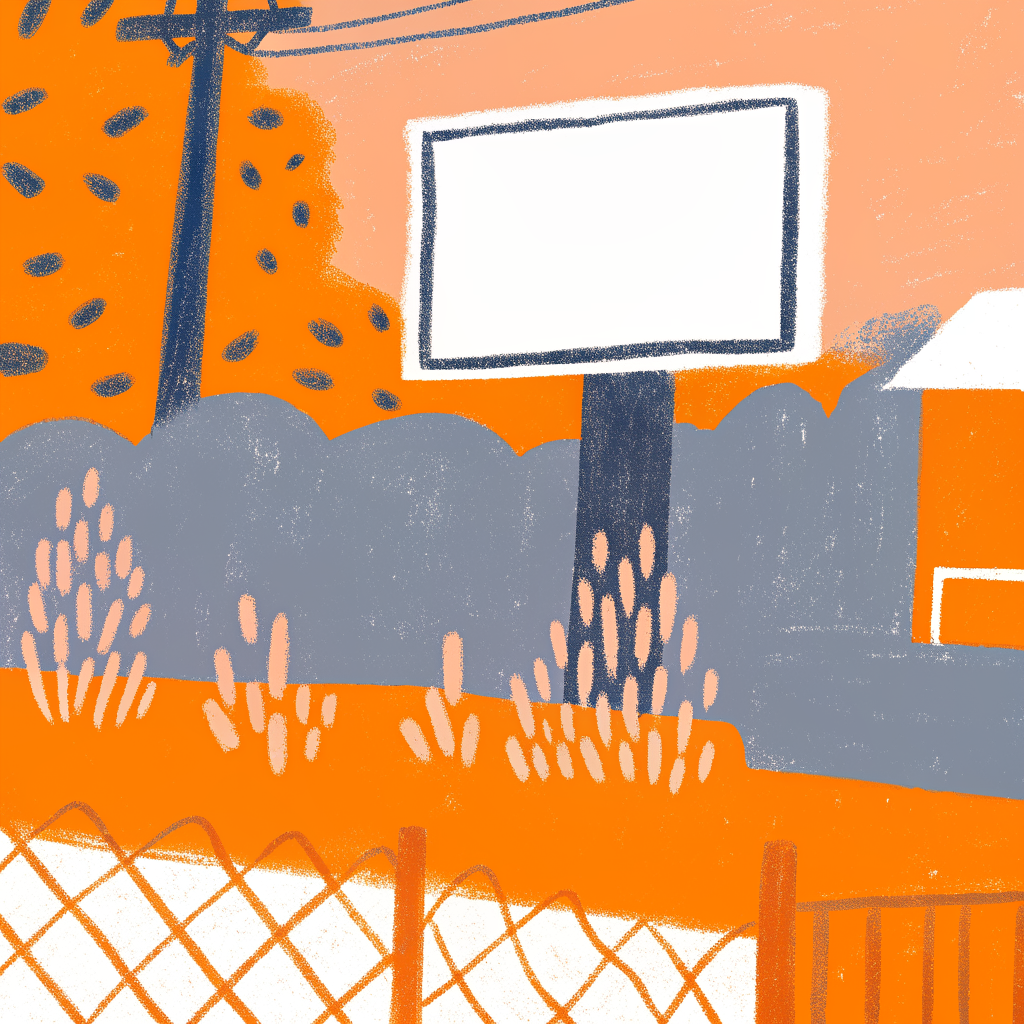
For thirty years, a fenced-off lot where MacArthur Boulevard meets 83rd Avenue in deep East Oakland has been a monument to bureaucratic limbo: weeds overtopping the chain-link, abandoned cars, dumped garbage, and a single billboard poking out of the brush. In mid-July, the county's supervisors voted to give it away to a nonprofit for the price of a sandwich.
Supervisor Nate Miley, who represents the district, told the hearing the county had been waiting "a long, long time" and framed the transfer as a strategy the board wanted to keep using, The Oaklandside reported (external source, opens in a new tab). Once the vote landed, the supervisors stepped off the dais for a group photo; Miley called it "historic."
The $10 is the eye-catching figure. It is also the one that matters least.
Why a giveaway is legal
The county never held title to the site. Instead it invoked Chapter 8 of California's tax code, which lets a public agency steer a tax-defaulted property toward public use and skip the usual auction. The maneuver hinges on a simple imbalance. The lot first defaulted in 1995; a nonprofit bought it in 2005 to build housing, then folded in 2013 having built nothing, leaving a debt that kept swelling against a company that no longer existed. By this summer, the liens, penalties and unpaid taxes ran to roughly $1.7 million — while an April appraisal put the land itself at $900,000, according to reporting by KQED. When the debt outruns the value, the county gets to name any price.
Casey Farmer, who administers the Chapter 8 program under Treasurer-Tax Collector Henry Levy, rejects the idea that a nominal sale means the county is walking away from the money owed. "It's hard to describe it as giving up," she said, arguing the only route back to a tax-paying, useful parcel is a new owner willing to shoulder it. The lot had drawn no bidders at auction — first in 2013 at a $634,255 opening, again in 2023.
A decade of "roadbumps"
It's hard to describe it as giving up," she said, arguing the only route back to a tax-paying, useful parcel is a new owner willing to shoulder it.
The candid part is how rarely any of this works. Levy told the board he'd assumed he would reach for Chapter 8 routinely after taking office a decade ago, only to hit what he called "innumerable roadbumps." The county's previous completed sale dates to 2016, a cluster of small city-owned lots. Before landing BCZ, Farmer's office pitched the parcel to several neighborhood groups; all passed — too pricey for some, too small for others, and encumbered by a Clear Channel billboard that, she said, has gone rent-free since the old owner dissolved.
That backstory tempers the county's talk of roughly 10 more eligible lots. Some could be contaminated, Farmer cautioned, and local officials have lined up federal dollars to cover environmental testing so future buyers aren't stuck with the bill. Even this deal isn't final: it awaits the California State Controller's sign-off, likely a month or more away.
The $40 million question
For the buyer, $10 only opens the door. "If you think, 'You're getting the property for $10' — yeah, but still we have to raise $40 million in order to build it," Regina Davis, BCZ's deputy CEO of real estate, told KQED. Winning the tax credits that underwrite affordable housing generally demands a project near 100 units, she said, and no housing plan is locked in. BCZ — for which this is a sixth MacArthur-corridor acquisition — intends to clean and activate the site first, echoing its nearby Liberation Park, which hosted about a hundred events a year before any structure rose.
BCZ chief executive Carolyn Johnson, who as a Castlemont High student walked past this same empty lot four decades ago, said in a statement that converting it into a community asset is what "radical placekeeping" looks like. Whether the county has found a repeatable formula — or a one-off that needed the right arithmetic, a willing nonprofit and a federal grant all at once — is what the next nine parcels will reveal.
The Discussion
Sign in to join the discussion.
Loading…