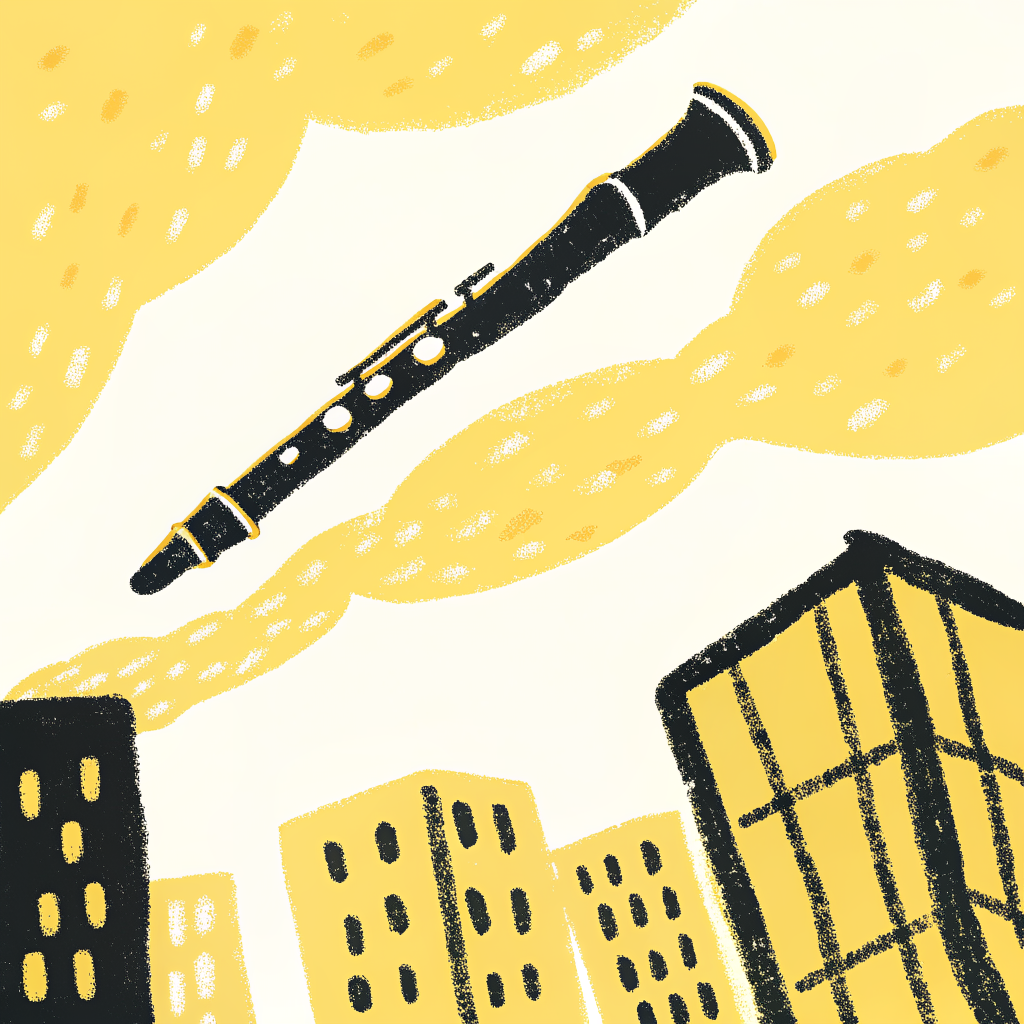
San Francisco's noise ordinance sets a hard 10 p.m. limit for residential instrument practice, but the real boundary for apartment musicians is often set earlier — by building rules, neighbor tolerance, and the absence of affordable soundproofed alternatives.
A recent thread on r/sanfrancisco opens with a question anyone in a dense building will recognize: a clarinetist practicing in an apartment in the evenings, running up against the building's 10 p.m. quiet hour, with neighbors already asking her to stop earlier still. The instrument, her partner noted in the post, has no real mute solution.
The city's ordinance provides the hard frame. San Francisco Police Code Article 29 sets residential noise limits at 45 dBA between 10 p.m. and 7 a.m. and 55 dBA between 7 a.m. and 10 p.m., measured inside a receiving unit — with a parallel cap of 5 dBA above ambient, whichever is more restrictive. Enforcement authority falls to SFPD; Article 29 designates the Chief of Police to address noise "created by humans or any other noise source not specifically assigned or designated to another Department or Agency." The clarinet is not specifically assigned.
What the SF Planning Code says from the opposite direction is less obvious. The Planning Department's published accessory-use guidance lists "music rehearsal studio" among permitted uses inside any residential dwelling — no conditional use permit required — so long as the studio occupies no more than one-third of the unit's floor area. The department places this carve-out alongside home offices and fortune tellers. The permission is real, requires no filing, and settles the zoning question entirely. It does not touch the decibel one. A musician can legally designate her living room a rehearsal studio and still exceed Article 29's limits from the same chair.
For those who can't engineer enough separation from their neighbors, a thin but real network of off-site options exists. The Community Music Center, in the Mission, rents soundproofed rehearsal rooms by the hour and posts a volume cap of under 80 dB. SF Pink Door describes itself on its website as "a musician-run creative sanctuary and studio space" that is "centrally located" with "no loud neighbors" — a selling point addressed, almost sympathetically, to exactly the situation the Reddit thread describes. Pink Door runs on a community membership model with both free and paid tiers; its street address is not publicly listed on the site.
The broader noise complaint landscape is measurable in bulk but not in kind. The Mission logged 2,350 total 311 requests in the past seven days; the Outer Richmond had 396 in the same window, according to DataSF. Neither figure separates noise from other service-request types, and the city's 311 taxonomy offers no way to distinguish a clarinet from a home theater or a party upstairs — every complaint lands in a catch-all category the SF Chronicle's analysis of city data labeled "other excessive noise." By dedicated noise complaint rate, North Beach ran 34 complaints per 1,000 residents between July 2024 and June 2025, second citywide only to the Tenderloin at 42 per 1,000.
The musician's actual window is the gap between the ordinance and the neighbor's patience. Article 29 permits practice before 10 p.m. at 55 dBA; the planning code allows the room she's sitting in. The building's own quiet-hour policy may be stricter than either. Her neighbors have already signaled they aren't measuring by the ordinance's ceiling. The clarinet stops when they say so, or someone files a 311 report, or someone calls an officer to arrive with a sound meter. All three are legal. Only one keeps the musician playing.
The Discussion
Sign in to join the discussion.
Loading…