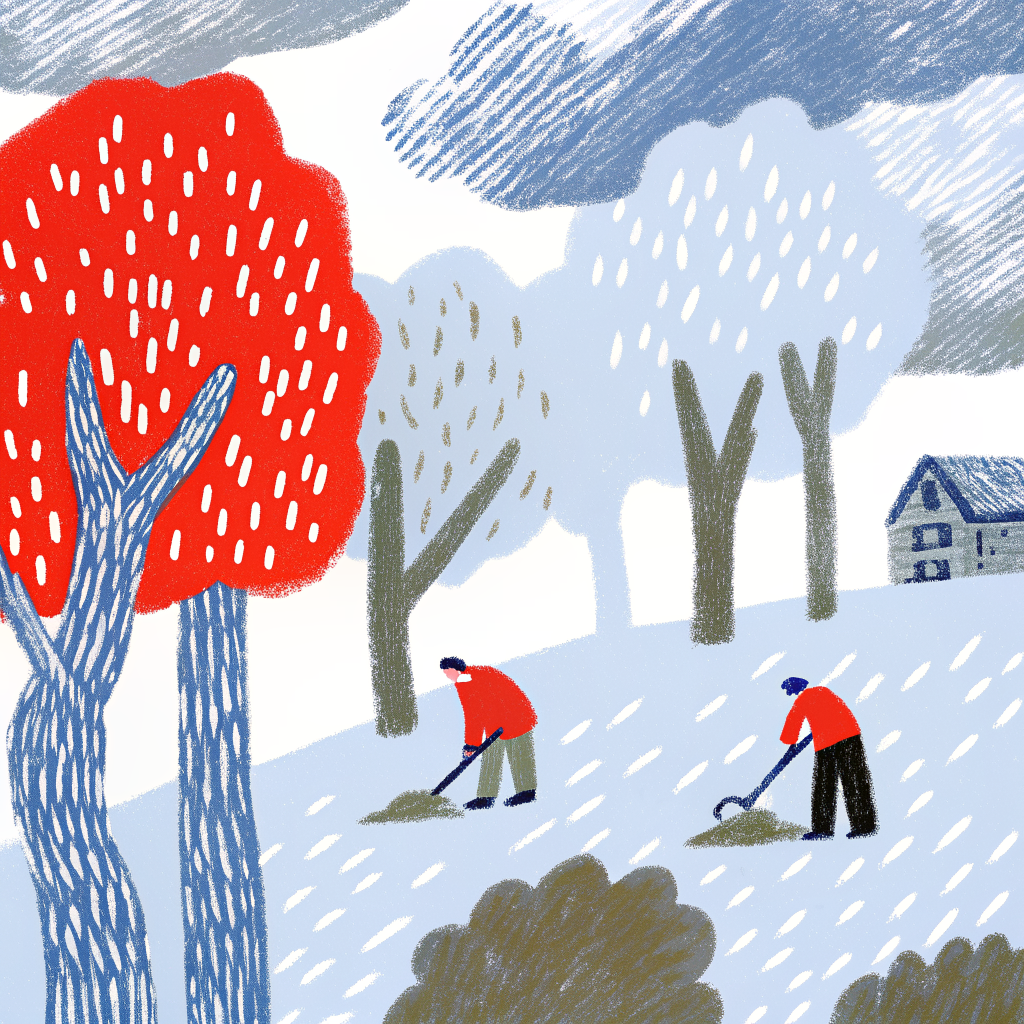
On a rainy spring morning in Occidental, a cluster of teenagers in orange ponchos were pruning a tree on a forested preserve 20 miles from their Santa Rosa neighborhood — trimming branches as part of a gang-violence-prevention effort that measures its results in calm rather than arrests.
Stand for the Land, run by the Santa Rosa nonprofit LandPaths, pays and mentors at-risk teens to do land stewardship in the open space west of the city. More than a year in, organizers say it's working — participants report less gang involvement and more quiet. But the effort sits on a paradox familiar to anyone in violence prevention: the safer a place gets, the harder it becomes to keep the money that made it safer. In Santa Rosa, two decades of falling gang violence are now part of the argument against continued funding.
The initiative runs on a referral pipeline through the City of Santa Rosa. According to LandPaths' own account (external source, opens in a new tab), it is a partnership between the nonprofit, Santa Rosa City Schools, Santa Rosa High School's Restorative Resources staff, and the city's Violence Prevention Partnership, aimed at youth flagged for gang prevention or intervention. Teens are picked up from Elsie Allen and Santa Rosa high schools and driven out to properties like the Ocean Song/Myers Preserve.
Much of that outdoor work is led by Danny Chaparro, LandPaths' New Audiences manager, who grew up in the low-income, heavily Latino Roseland neighborhood and calls himself a former at-risk kid. In reporting by KRCB's Shandra Back, his fingers carry a "Roseland" tattoo — a deliberate choice, he told the station, so that the first thing people notice is the neighborhood he wants seen as a place that can flourish, not merely survive.
His method is deliberately modest. "My supervisor always says, 'Nature's enough. Just get them outside,'" Chaparro told KRCB, and said he stands by it. He recounted a camping trip where he challenged a rowdy group to stay silent for two minutes, then let the timer run past five while the teens sat watching the stars without speaking — an experience, he said, that left them describing a peace they had never felt.
The teenagers describe the same pull. One 18-year-old participant, Alejandro Elizarraraz, told the station that the preserve felt like another world from Roseland, a place of concrete and little green space, and that he would take a Saturday on the hillside over one spent idle at home.
The behavioral claim isn't only anecdotal. As KRCB noted, the California Conservation Corps has documented participants reporting reduced gang involvement and fewer risky behaviors during conservation work, and the National Institutes of Health has published research linking youth time in nature to better mental-health and attention outcomes.
The trouble is money. The city's Violence Prevention Partnership, which grew out of the Mayor's Gang Prevention Task Force, bankrolls the effort. Per the city's own history (external source, opens in a new tab), voters passed Measure O in 2004 — a quarter-cent sales tax dedicated to violence prevention — and extended it another 20 years in 2022. That local base underwrites the CHOICE Grant Program and others.
But as KQED's California Report noted this week, the partnership's long run of success cuts both ways: Santa Rosa has grown safe enough that it no longer qualifies for some outside grants that steer money toward high-violence jurisdictions, even as organizers argue the underlying need persists. Chaparro told KRCB he isn't sure how long the work can last, pointing to what he called a lack of commitment to sustain or expand the funding, and calling the uncertainty concerning.
That is the quiet bind beneath a feel-good story: prevention that works erodes the emergency that justifies paying for it. The kids being driven to the redwoods still come from the same blocks — but the numbers that earned them the ride are the ones fading from the grant applications.
The Discussion
Sign in to join the discussion.
Loading…