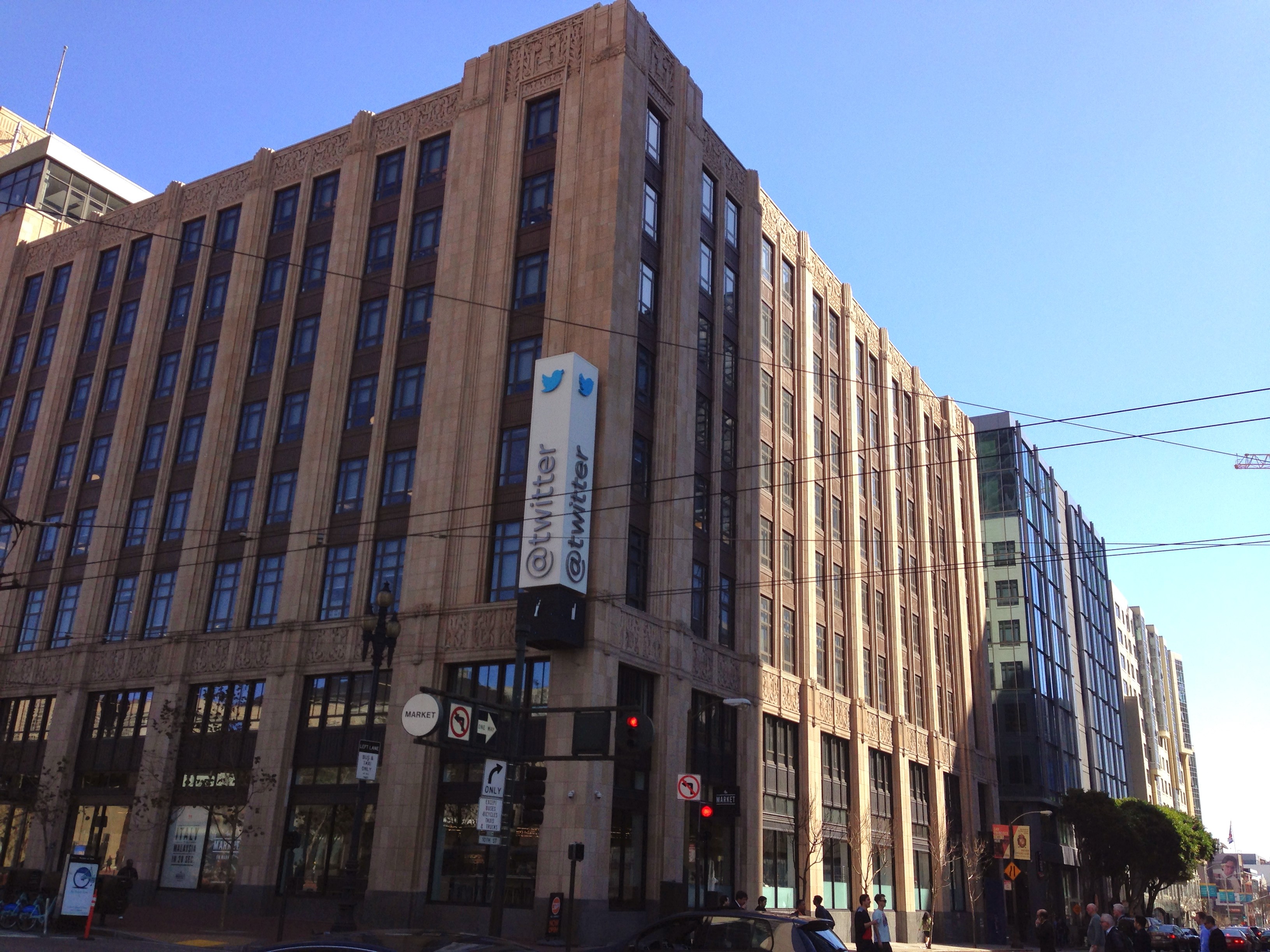
Jonathan Weber's new Simon & Schuster history of San Francisco tech politics starts in South Park and buries its sharpest claim inside a Mid-Market real estate deal worth nearly a billion dollars.
South Park — the two-block oval park tucked behind Brannan Street in SoMa, once a gathering point for the designers and writers who gave the early Bay Area web its sensibility — is where Jonathan Weber begins City on the Edge: Technology, Politics, and the Fight for the Soul of San Francisco, his newly published Simon & Schuster history of the tech industry's three-decade hold on the city.
The choice of starting point is deliberate. Weber, who covered Silicon Valley as the Los Angeles Times' first-ever reporter on that beat and later founded the San Francisco Standard, argues that the internet's transformation of the city was not fundamentally a story about chips or code. It was a story about a creative community on the physical and cultural periphery of the Valley proper — designers, writers, and visual artists who gave the early web a character that hardware companies had never needed. "The Valley is about tech, it's about engineering," Weber quotes Twitter co-founder Evan Williams. "And the city is the Web. It's about writing. It's about art."
The book traces that character through three decades of boom and bust, from the Mosaic era to the inauguration of Mayor Daniel Lurie in 2025 — 30 years in which the tech industry moved from a SoMa curiosity to the dominant force in the city's politics and housing market.
Its most pointed revelation, which Weber describes as "previously untold," concerns the building at 1355 Market Street — the former Merchandise Mart that became Twitter's headquarters after the 2011 "Twitter Tax Break," a payroll tax exemption for companies leasing space in the Mid-Market corridor.
The standard account of the tax break treats it as a giveaway to the tech industry. Weber's account, based on sources he says he is confident in, reframes the story as a real estate transaction. In his telling, former Mayor Willie Brown — who denies the involvement — helped facilitate the relationship between Alvin Dworman, the New York–based chairman of ADCO who owned the building, and the city officials moving the tax break forward. Before the exemption passed, Dworman sold the building to real estate firm Shorenstein for $120 million, with a profit-participation clause written into the deal. Shorenstein spent roughly $200 million on renovations and rechristened the property Market Square. Several years later, it sold 90 percent of the building for $900 million.
"If you want to look for who made money, it was Shorenstein, way more than any of the tech companies," Weber told Mission Local in an interview published Monday, conducted at a café in the Outer Richmond. "That profit dwarfs what Twitter would have owed. So that just puts the 'giveaway to the tech industry' thing in perspective a little bit."
The building at 1355 Market still stands, Twitter's signage long since removed. The surrounding Mid-Market corridor — the blocks the tax break was meant to revitalize — remains a patchwork, some storefronts filled, others not, the decade-old policy still visible in the uneven texture of the street.
That gap between what a deal does to the policy record and what it does to a block is the kind of accounting Weber's book attempts across the full arc: from the South Park coffeeshops of 1993 to the busloads of tech workers who reshaped the rental market, to the real estate firms who may have understood the stakes earlier than anyone.
City on the Edge is out now from Simon & Schuster.
The Discussion
Loading…