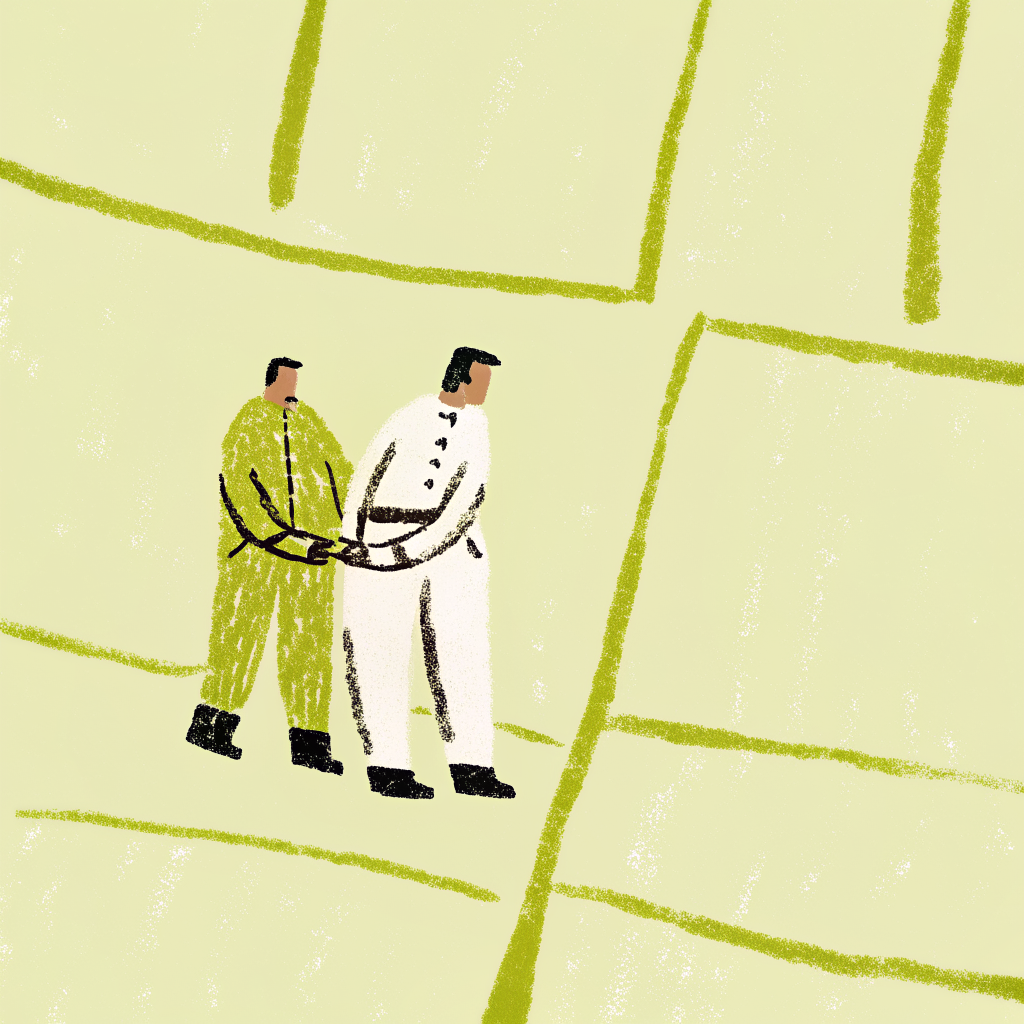
Julio Cesar Palafox, a 34-year-old Bay Point resident indicted in 2024 on federal methamphetamine charges, was returned from Jalisco, Mexico, and jailed without bail — in a case the Justice Department is holding up as proof its cartel task force works.
The Palafox case is a routine drug indictment wrapped in an extraordinary political frame. Federal prosecutors in Oakland announced his return as a win for a Trump-administration task force created by executive order to dismantle cartels and deport dangerous non-citizens. But Palafox, by the government's own filing, is a U.S. citizen — and the charges against him, presumption of innocence intact, come from a grand jury indictment handed up in July 2024. What changed in 2026 was not the evidence but the machinery, and the messaging, built around it.
The U.S. Attorney's Office for the Northern District of California announced (external source, opens in a new tab) that Mexico had sent Palafox back across the border and that U.S. Marshals arrested him on a 2024 warrant. He has appeared before a federal magistrate in Oakland and is next due in court Aug. 17, before U.S. District Judge Araceli Martínez-Olguín.
The charges are serious. A grand jury indicted Palafox in July 2024 on multiple counts tied to distributing 500 grams or more of methamphetamine (Case No. 24-CR-00394-AMO). Prosecutors allege that from the town of Yahualica in Jalisco, he funneled hundreds of pounds of the drug into the Bay Area. Conviction could bring a life sentence and a $10 million fine. An indictment is only an allegation, and Palafox is presumed innocent.
Two features of the government's own account reward a close read.
Attorney Craig Missakian said Palafox's return showed traffickers "can run, but they cannot hide."
Start with the packaging. Prosecutors filed the case under a Homeland Security Task Force created by Executive Order 14159 — the one titled "Protecting the American People Against Invasion" — and described the program as a tool to remove "criminal aliens." Palafox is not one. He is an American, and the movement here ran the opposite direction from the initiative's premise: a foreign government expelled a U.S. citizen back to the United States to face trial. The invasion framing carries political weight; it does not describe this defendant.
Then the clock. Per the release and a fuller account carried by the Contra Costa Herald, Palafox was moved to the U.S. on July 24, 2026, and arraigned July 28 in the Central District of California before being transferred north. Local station KRON4 put the deportation a few days later, on July 28. Either way, the evidence behind the indictment is two years old; the fresh development is the paperwork of getting him into a courtroom.
The announcement also credited a long roster of agencies: the DEA, Homeland Security Investigations, the U.S. Marshals' Guadalajara field office, the Contra Costa County Sheriff's Office, and Jalisco's state public-security and immigration authorities. That cross-border coordination — not the substance of the case — is what officials chose to promote.
U.S. Attorney Craig Missakian said Palafox's return showed traffickers "can run, but they cannot hide." Bob P. Beris, who leads the DEA's San Francisco division, called the operation "a testament to great teamwork." HSI's local chief, Jeff Brannigan, said his agency would pursue traffickers "worldwide."
The local reality is plainer. The Contra Costa County Sheriff's Office lists Palafox — 5-foot-5, 160 pounds — as held on no bail at the West County Detention Facility in Richmond.
None of that is unusual for a federal drug prosecution. What is new is the label: a two-year-old Bay Point indictment recast as a front line in a declared war on "invasion," fronted by a defendant who carries the same passport as the prosecutors announcing his capture.
The Discussion
Sign in to join the discussion.
Loading…