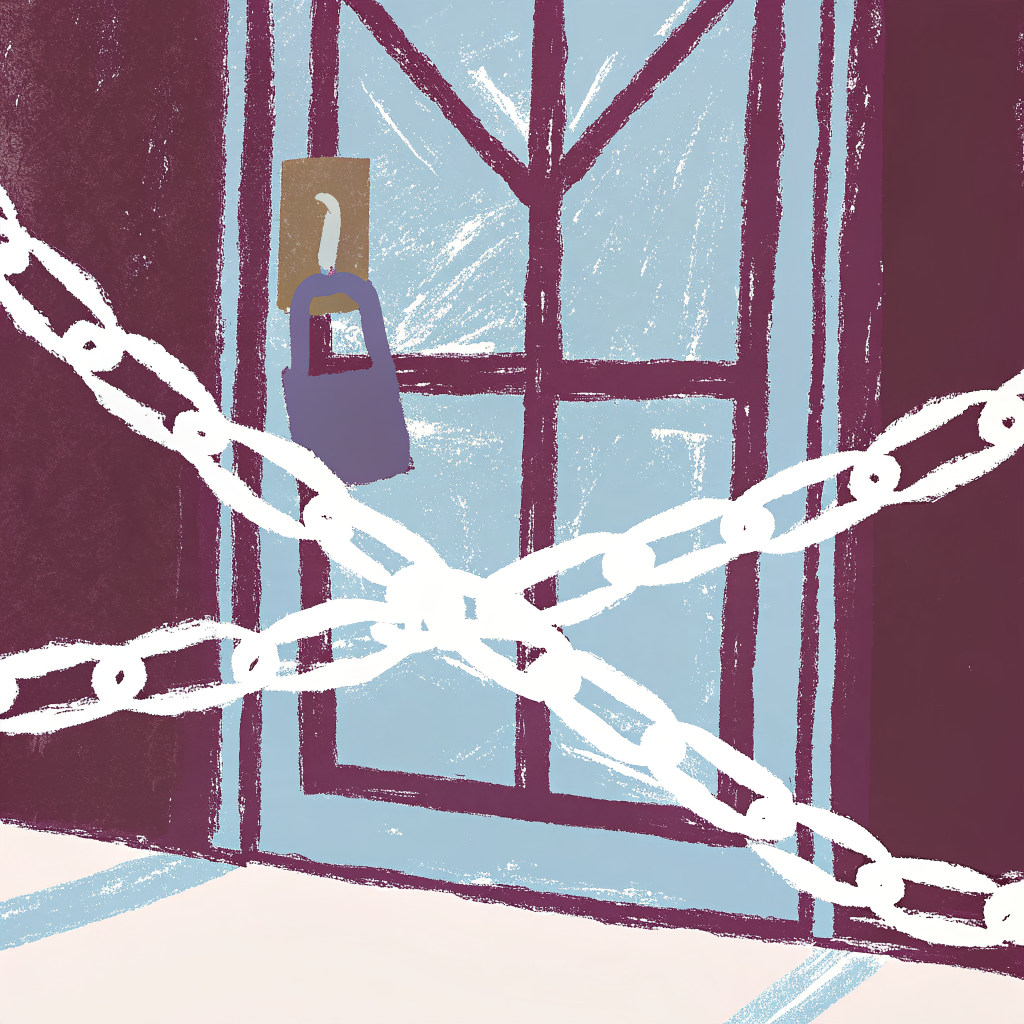
Last spring, a letter from the Justice Department told San Francisco's Asian Women's Shelter that the $500,000 grant funding its program for Arab and Muslim survivors of abuse "no longer effectuates the program goals or agency priorities." The three-year award simply disappeared — and it was only the first cut.
San Francisco's Asian Women's Shelter runs the only LGBTQ+-specific domestic violence program in the city and tailored services for Arab, immigrant and trafficking survivors, with more than half of its $5.2 million budget coming from federal grants. That reliance has become a liability under the second Trump administration — and the shelter is now a local test case for a proposed federal rule that would make politically motivated grant terminations like the one it already suffered far easier to repeat, even as San Francisco absorbs its own receding federal money and cannot backfill the loss.
The 40-year-old nonprofit, whose staff joke that its name is a misnomer — "not only Asians, not only women, not only shelter" — runs the only LGBTQ+-specific domestic violence program in a city with the nation's highest share of queer residents, plus tailored services for Arab, immigrant and trafficking survivors. More than half of its $5.2 million budget comes from federal grants. That reliance has become a liability: its work sits squarely against the second Trump administration's stated priorities, and the administration is now advancing a rule that would make politically motivated grant terminations like the one it already suffered far easier to repeat.
San Francisco's Asian Women's Shelter (SFAWS) is, by the numbers, one of the busiest safety nets for abuse survivors in the city few residents ever see. It maintains a five-room confidential shelter, and its 24/7 crisis line answers roughly 1,100 calls a year in more than 40 languages. Separately, more than 200 clients take part in a shelter program annually, two-thirds of them families. It operates the only domestic violence program in San Francisco built specifically for LGBTQ+ survivors, in a city of more than 800,000 with no confidential shelter dedicated to queer victims.
In April 2025, the Department of Justice sent SFAWS a letter rescinding a $500,000 grant it had awarded only months earlier. The three-year award was the main source of funding for the shelter's program for Arab and Muslim survivors of domestic violence and human trafficking — a program designed to serve 14 families, including 31 children. The DOJ wrote that its priorities had "changed" to focus on "supporting certain law enforcement operations, combatting violent crime, protecting American children, and supporting American victims of trafficking and sexual assault," per a copy of the letter obtained by KQED. The department did not spell out how a program for abuse survivors conflicted with those goals.
SFAWS was not singled out. Its grant was one of 373 Office of Justice Programs awards — roughly $500 million nationwide — that the DOJ abruptly canceled in April 2025, according to an analysis by the Council on Criminal Justice. About $81 million of that hit California organizations, including Stop AAPI Hate, the San Francisco coalition that lost a $2 million award, and Oakland's Youth Alive, which lost $2 million more, the San Francisco Chronicle reported.
For the survivors on the receiving end, the services are the difference between escape and entrapment. Monica Paz, a trans woman who sought help from SFAWS, told The 19th an advocate met her at work to build a safety plan, found a hotel that would take her dog, and sat with her for more than 10 hours at a police station while she filed a report. "I would have left an hour after waiting," Paz said. "I stayed there for the entire time because I knew that I was not alone."
Another survivor, an Arab immigrant whose Arab Women's Services program funding was cut, told KQED that without the shelter, "either I'm in a hospital or I'm dead." Her case manager, Rakya Ahmed, described the slow trust-building the work requires: "Some girls, they call me mom. They melt my heart, you know, when they hug you. They are far away from family, they don't have anybody here."
The lost grant was only the opening move. SFAWS says a separate Trump policy shift on homelessness funding now threatens one of its largest revenue sources, and other federal housing money was not renewed. City funding — about 20 percent of its budget — has grown less reliable as San Francisco absorbs its own federal losses; Mayor Daniel Lurie signed a $16.9 billion budget this summer explicitly framed around receding federal money. If the grants keep slipping, SFAWS has said it would have to lay off staff, shutter its youth violence prevention program, and lose the ability to house 45 clients and their dependents.
What makes the case a bellwether rather than a one-off is what Washington is doing next. The administration has proposed a rule that would make it easier to terminate federal grants for political reasons — codifying the exact mechanism that stripped SFAWS of its Arab-survivor program. Critics, including California Attorney General Rob Bonta, have accused the DOJ of hypocrisy, noting that Attorney General Pam Bondi spent her confirmation hearings pledging to help trafficking survivors — the very people these canceled grants served.
SFAWS's 24/7 crisis line, 1-877-751-0880, remains open. So does the question the DOJ never answered: which of its new priorities a shelter for battered families was found to be violating.
The Discussion
Loading…